Author Archives: The Hyphenates

The Masaki Kobayashi Cheat Sheet

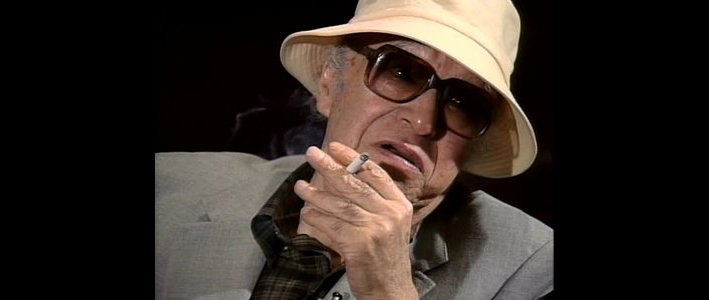
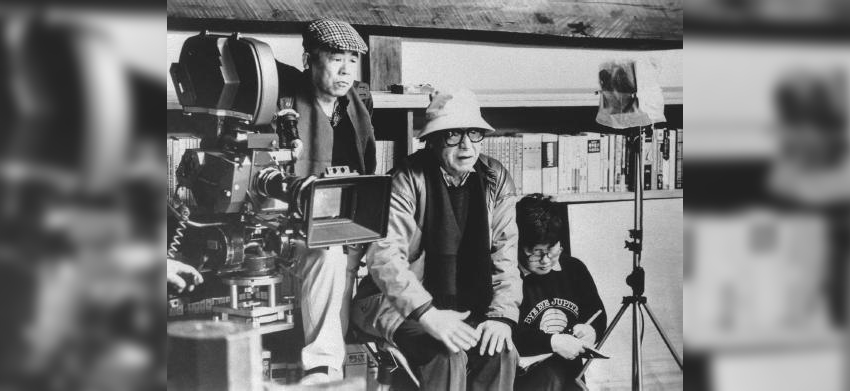
Masaki Kobayashi Wide

Want to become an instant expert in our filmmaker of the month without committing yourself to an entire filmography? Then you need the Hell Is For Hyphenates Cheat Sheet: a double that will bring you totally up to speed before our next episode lands…
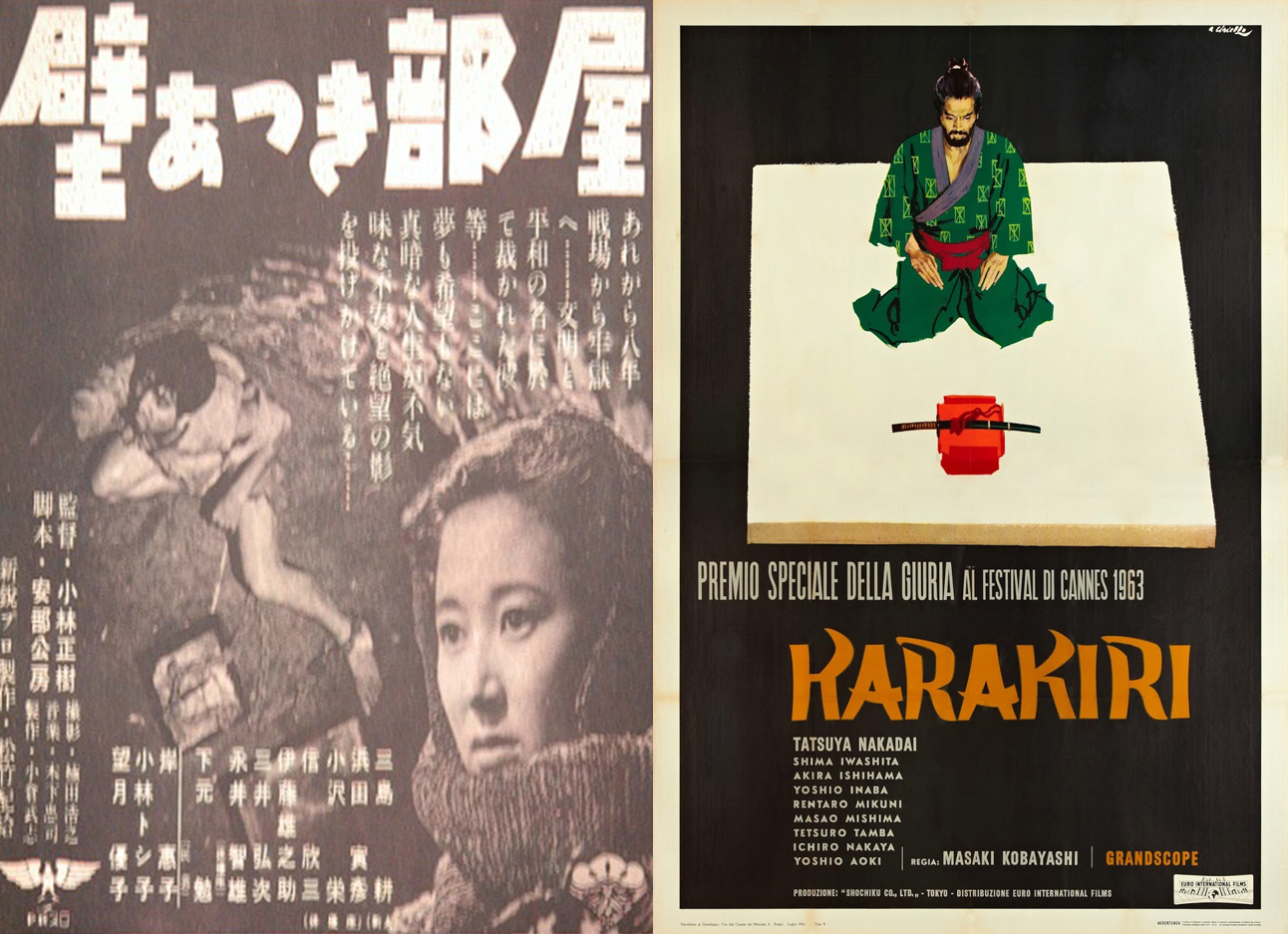
MK Films

THE THICK-WALLED ROOM (1956) and HARAKIRI (1962)

If you want to know what Kobayashi is all about, you can't go wrong with this double. The Thick-Walled Room is a story about imprisoned former soldiers in post-war Japan, jailed for crimes against humanity. It was ready for release in 1953, but was deemed too inflammatory, and sat on the shelf for three years. Inflammatory is an understatement. Kobayashi and writer Kôbô Abe don't hold back in their criticisms of Japan and the Allied Forces, and the crimes that take place when desperate men are in combat. But it's the emotional journey of the central characters that keeps us engaged, and Kobayashi's incredible use of metaphor and surrealism. Then, follow it up with Harakiri, the tale of a samurai who appears at the estate of a large clan requesting the opportunity to commit seppuku in their courtyard. But the country is full of ronin who have made similar requests as a bluff in order to extract money or employment from sympathetic clans, and this group isn't having it: if he wants to kill himself, they're going to make sure he follows through. What follows is an extraordinarily tense battle of wits between the ragged samurai warrior (an all-time performance by Kobayashi's most frequent collaborator Tatsuya Nakadei) and the clan's senior counsellor (an amazing and memorable turn from Rentarō Mukini). Our guest Mark Protosevich described Harakiri as one of his top ten favourite films of all time, and you won't be hard-pressed to see why.

Substitutions: If you can't get or have already seen The Thick-Walled Room, try Kwaidan (1964), Kobayashi's award-winning ghost story anthology that Roger Ebert described as “among the most beautiful films I've ever seen”. If you can't get or have already seen Harakiri, swap in Samurai Rebellion (1967), a film about the futility of honour in feudal Japan, and the only time Kobayashi worked with the great Toshiro Mifune.

The Hidden Gem: Want to watch something a little off the beaten track? Well, we're not sure if The Human Condition necessarily qualifies. In The Story of Cinema, British film critic David Shipman called it “unquestionably the greatest film ever made”, and in the New York Times, AO Scott said that the film “can clarify and enrich your understanding of what it is to be alive”. So it's hardly obscure, but we put it here because it has a total running time of about ten hours, and thus earns its place as a wildcard entry. (Although it's considered a single work, it is most commonly released as three distinct films, with an intermission breaking them into manageable 90 minute chapters.) The Human Condition is the story of Kaji, a pacifist who must deal with Japan’s oppressive war machine at the break-out of World War Two. The events closely echo Kobayashi's own story, both in terms of his stringent beliefs and his experiences in the war. This one is absolutely worth your time, and given its ten hour length, we don’t say that lightly.

The next episode of Hell Is For Hyphenates, featuring Mark Protosevich talking Masaki Kobayashi, will be released on the morning of May 31 (AEST).
Our Next Hyphenate Mark Protosevich

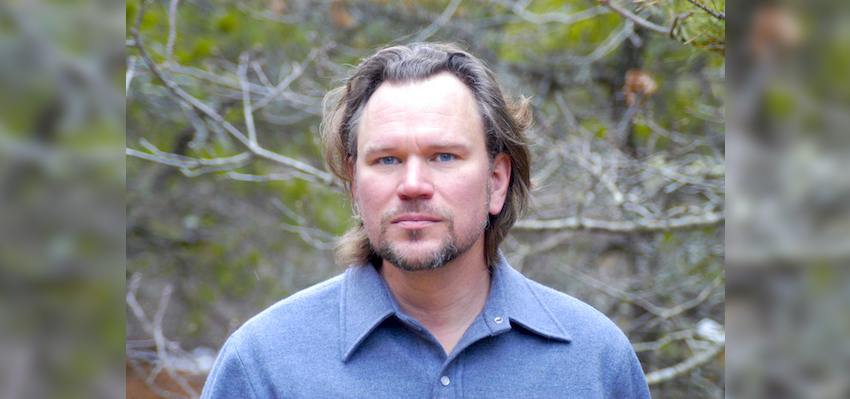
Mark Protosevich
Screenwriter and May 2015 Hyphenate Mark Protosevich

Five years! Five whole years! That's how long Hell Is For Hyphenates will have been running when our next episode is released at the end of the month. That's a whole lot of guests, a whole lot of filmmakers, and a frankly insane number of films. Which is just how we like it.

Joining us to celebrate the occasion will be our special guest: screenwriter Mark Protosevich. Mark has worked on 2000's The Cell, 2006's Poseiden, 2007's I Am Legend, 2011's Thor and 2013's Oldboy. He's also worked with Steven Spielberg on the fourth Jurassic Park, and wrote the script for the unproduced Batman Triumphant, which would have been the fifth instalment of the Tim Burton/Joel Schumacher series of Batman films.

We're delighted to have Mark on the show, and equally delighted at his Filmmaker of the Month:  Japanese filmmaker Masaki Kobayashi!

Directed by Masaki Kobayashi

It wasn't the filmmaker he chose that got us excited (although we are very excited to explore this little-discussed ouvre). It was the part of his email:

I woke up this morning and knew exactly which director I wanted to choose – Masaki Kobayashi. HARA KIRI is one of my top ten favorite films of all time. That’s not hyperbole. Also, I feel he’s not discussed as being in the ranks of the great directors, and I fully believe he is. Not just in terms of Japan, but the world.

The whole idea of our show is that we look at a filmmaker through the eyes of the person who loves that filmmaker more than anyone else. It doesn't matter if the guest wants to talk about Stan Brakhage or Brett Rattner: so long as they’re setting out to prove why their filmmaker of choice is the greatest, we know we're in for a great show.

So who is Masaki Kobayashi?

Kobayashi was a firm pacifist who was drafted into World War II. In protest, he refused any promotion above the rank of private, and later spent time as a prisoner of war. When the war ended, he returned to filmmaking and directed his first film Musuko no Sheishun (My Son's Youth) in 1952.

He is best known for three key works: the Human Condition trilogy, which from 1959 to 1961 explored the effects of World War II on a pacifist; the afore-mentioned Harakiri, which won the Special Jury Prize at the 1963 Cannes Film Festival; and the1964 ghost anthology Kwaidan, which also won the Special Jury Prize at Cannes, as well as receiving an Academy Award nomination for Best Foreign Language Film.

In the late 1960s he broke out of the studio system and formed the independent “Yonki-no-Kai” or “Club of the Four Knights” with Akira Kurosawa, Kon Ichikawa and Keisuke Kinoshita. In case you're wondering what The Avengers would look like with 20th century Japanese filmmakers.

But as fascinating as that biography is, there's far more to Kobayashi's work. How much more? Join us for our 5th anniversary episode on May 31 to find out!

Masaki Kobayashi
Our next filmmaker of the month, Masaki Kobayashi

Hyde On Campion

Hyde On Campion

The moment we started using Skype on the show, it opened up our guest options considerably. We were able to record with Brian Trenchard-Smith when he was on the Gold Coast in pre-production on Drive Hard, as well as Stephanie “Hex” Bendixsen in Sydney, C Robert Cargill in Texas, Lynn Shelton in Seattle, Drew McWeeny in Los Angeles and Desiree Akhavan in London. It's been brilliant.

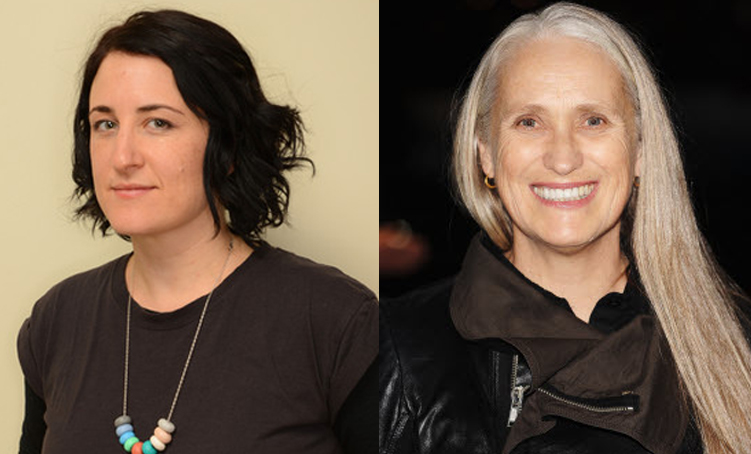
That said, the recordings are always more fun when we do them in person, because you can't beat the energy of everyone being in the room at the same time. So when our guest Sophie Hyde - who we were originally going to Skype with from her home in Adelaide - told us she was going to be in Melbourne two weeks earlier, we jumped at the chance to record the episode with all of us together. It did mean hurriedly finishing our Jane Campion refresh marathon ahead of the planned schedule, but it was totally worth it.

We had such an insanely great time chatting to Sophie, we almost forgot to record the actual episode. Good thing we did, as this talk with her about the films of Jane Campion is an absolute corker.

Because everyone knows Jane Campion, and everyone knows the films she's made, but few people talk about her style. What does the Jane Campion style look like? When you step back and look at her works as a whole, what emerges? You might be surprised to discover the answer, not to mention which of her films that all three of us consider to be a masterpiece. Particularly given how said film was received upon its release.

We also review a few of this month's new releases: Joss Whedon's The Avengers: Age of Ultron, Noah Baumbach's While We're Young and Xavier Dolan's Mommy. It's crazily fortuitous that we end up talking about Xavier Dolan on our Jane Campion episode. Why? Check out the following amazing clip from the 2014 Cannes Film Festival.

As if all that wasn't enough, we also ask a question that's been on our minds since last year: with the recent massive shifts in how entertainment is consumed and how audiences gravitate towards it, does it put pressure on independent dramas to use high-concept hooks to reinforce their authenticity? We're thinking in particular of the real-time shoots of two of last year's biggest dramas: Boyhood and 52 Tuesdays. It's an important question to ask, and one you can't possibly pass up when you have the director of 52 Tuesdays right there in the room.

If you've never listened to Hyphenates before, then this is a really good one to start with. We talk about the films you've also watched over the past month, we cover an important topic with someone who is an undeniable expert in it, and have one of Australia's most exciting new filmmakers talking about one of Australia's most legendary. We've really got it all this month. We even released the episode on Jane Campion’s birthday. Now that’s synergy, we assume.

If you want to brush up on the films of Jane Campion first, remember to check out our Cheat Sheet here, before listening to the episode here.

Hell Is For Hyphenates – April 2015

Filmmaker Sophie Hyde (52 Tuesdays) joins the Hyphenates as we look at this month’s new releases, ask if independent dramas need a high-concept hook to attract attention in the current media landscape, and explore the works of the legendary trans-Tasman auteur Jane Campion.

The Jane Campion Cheat Sheet

Jane Campion

Want to become an instant expert in our filmmaker of the month without committing yourself to an entire filmography? Then you need the Hell Is For Hyphenates Cheat Sheet: a double that will bring you totally up-to-speed before our next episode lands…

JC Films

THE PIANO (1993) and BRIGHT STAR (2009)

Campion was already well known for Sweetie and An Angel At My Table, but it was The Piano that really put her on the map. A critical and commercial success, it won three Academy Awards (Best Actress, Best Supporting Actress and Best Original Screenplay), and earned $140 million worldwide, a figure that was even more extraordinary in 1993 than it is now. But all that money and those awards are just window dressing: the real reason you need to watch The Piano is that it is still a stunning masterpiece, from its rich, analogous script to its sweeping cinematography. 22 years on, it's every bit as powerful as it was on its release. Maybe even more so. You'll want to follow that up with a viewing of Bright Star, Campion's 2009 film about the romance between Fanny Brawne and poet John Keats. On the surface, it looks a lot like The Piano: a period film in which passionate people struggle to convey that passion through the performance and appreciation of art. But underneath those superficial similarities, Bright Star is an entirely different work, deliberately restrained and distant. Watch these two back-to-back to see how an auteur such as Campion can take two strikingly similar outlines and create two entirely distinct and almost antithetical works.

Substitutions: If you can't get or have already seen The Piano, swap it out for Campion's debut feature Sweetie (1989). If can't get or have already seen Bright Star, check out The Portrait of a Lady (1996), her Henry James adaptation starring Nicole Kidman, John Malkovich and Barbara Hershey.

The Hidden Gem: Want to seek out something from off the beaten track? Try Campion's controversial film In The Cut (2003), with Meg Ryan, Mark Ruffalo and Jennifer Jason Leigh, a dark and surprisingly existential thriller about a woman who may possibly have encountered a serial killer.

The next episode of Hell Is For Hyphenates, featuring Sophie Hyde talking Jane Campion, will be released on the morning of April 30 (AEST).

Our Next Hyphenate Sophie Hyde

Writer, director and April 2015 Hyphenate Sophie Hyde

There's no point in us disguising our tactics any longer: whenever we see a debut film we love, we immediately begin pursuing that filmmaker to be on the show before their career takes off and we have little hope of booking them.

Such is the case with last year's 52 Tuesdays, an Australian film that knocked us both over. A coming-of-age story like no other, the film follows a 16-year-old girl who struggles to cope when her mother begins transitioning into a man. It was both set and filmed over the course of a year, as the pair spend their Tuesday afternoons together.

The film has just opened in the US to deservedly brilliant reviews, and we're delighted that director Sophie Hyde will be our next guest.

But which filmmaker has she chosen to speak about on the show?

None other than one of Australia's best-known filmmakers, Jane Campion!

Written and Directed by JC

Jane Campion is actually from New Zealand, but as with all successful New Zealand figures, we pretty quickly figured out a way to claim her for Australia. She received a lot of attention for her debut film Sweetie (1989) and her follow-up An Angel At My Table (1990), but it was The Piano (1993) with Holly Hunter, Harvey Keitel and Sam Neill that well and truly put her on the map.

From there, she made films such as The Portrait of a Lady (1996), Holy Smoke (1999), In the Cut (2003) and Bright Star (2009), and recently received huge acclaim for her mini-series Top of the Lake.

What is it about Campion's works that so appeal to Sophie Hyde? To find out, check back in with us when the episode is released on April 30.

Jane Campion
Our next filmmaker of the month, Jane Campion


McIntosh On Holofcener

McIntosh On Holofcener

The best moment leading up to the recording of this episode was when we decided it was time for us to delve back into our recurring mini-Hyphenate segment. Every few months we take a filmmaker with a finite filmography who may not have made enough films to qualify for the main stage (five is our maximum for the mini segment, but is also our minimum for the Filmmaker of the Month, and this month we've got five a piece).

We tentatively sent an email to our guest, Pollyanna McIntosh, to see what she thought. It's one thing to ask her to be on the show, another to ask her to choose a filmmaker to talk about, but another altogether to then say “Hey, wanna add another filmmaker to the discussion?”. We told her about the segment and said we were thinking about talking Bob Fosse, but we had some other filmmakers if she preferred one of them, or we didn't have to do the segment at all if it was all a bit much…

Within five minutes, Pollyanna - who was somewhere on the other side of the globe - sent back an email that read: “Bob Fosse! Bob Fosse! Bob Fosse!!!”

Oh yes, we thought. She's one of us.

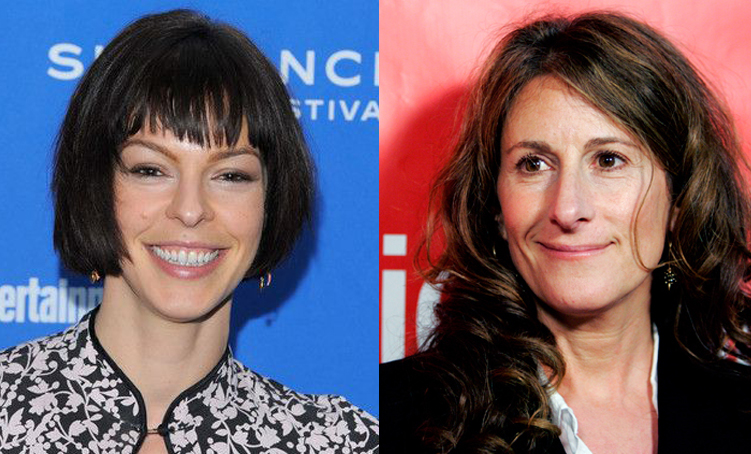
At this point, she'd already picked the great Nicole Holofcener as her filmmaker of the month. We've been fans of Holofcener for a long time, and feel something of a kinship to anyone who gets her. Holofcener doesn't (yet) have the broad name recognition that auteurs gain after a few films, and makes films that, on the surface, appear to be somewhere between that classically Sundance indie relationship drama and mainstream movie-star rom-comedy.

Dig a little deeper and you'll find some of the most touching, funny and thematically-complex work in cinema today. Explorations on the human condition deftly disguised as lightweight dramedies. It's a magician's trick, and Holfocener seems to be refining it with every film.

Talking about such wildly different filmmakers with distinct approaches to cinema is a lot of fun, particularly when you've got a guest who has such insight into their technique and effect. Even the erratic Skype connection we used to record the episode couldn't stop the enthusiasm. And we were so keen to get to the filmmakers, we only reviewed two films this month: Paul Thomas Anderson's Inherent Vice and Tim Burton's Big Eyes.

If you want to brush up on the films of Nicole Holofcener first, remember to check out our Cheat Sheet here, before listening to the episode here.

Hell Is For Hyphenates – March 2015

Actor Pollyanna McIntosh (Burke and Hare, The Woman, Filth) joins us this month as we look over a couple of the key films of March 2015, dive into the groundbreaking works of choreographer-turned-filmmaker Bob Fosse, and look at the incredible films of writer/director Nicole Holofcener.

The Nicole Holofcener Cheat Sheet

Nicole Holofcener

Want to become an instant expert in our filmmaker of the month without committing yourself to an entire filmography? Then you need the Hell Is For Hyphenates Cheat Sheet: a double that will bring you totally up-to-speed before our next episode lands…

NH Films

WALKING AND TALKING (1996) and ENOUGH SAID (2013)

Nicole Holofcener's only made five films, and frankly, they're all great and worthy of being singled out. But if you're only going to watch two, we recommend her first and last. (Well, not her last. Her most recent. But “first and most recent” doesn't have the same ring to it.) Kick off your evening with 1996's Walking and Talking, starring Catherine Keener and Anne Heche as lifelong friends dealing with polar opposite relationship issues. Yeah, it doesn't sound great, and most of that is down to our description, but as with all of Holofcener's films it's the execution that elevates it above every other film of similar ilk. Similarly, Enough Said (with Julia Louis-Dreyfus and James Gandolfini) takes a tired concept - two divorcees getting a second chance at etc - and turns it into a profound look at how we react to the new vs the familiar. Both are very funny and incredibly complex and make for a superb double feature.

Substitutions: If you can't get/have already seen Walking and Talking, you can swap it out for the similarly-ampersanded Lovely & Amazing (2001). If can't get/have already seen Enough Said, grab Please Give (2010) with Catherine Keener, Oliver Platt, Rebecca Hall and Amanda Peet.

The Hidden Gem: Want to seek out something from off the beaten track? Well, Holofcener doesn't really have an off-the-beaten track film. But the only one we haven't mentioned yet is Friends With Money (2006), her incredible ensemble work that takes the “first world problem” meme and turns it on its head three years before it happened.

The next episode of Hell Is For Hyphenates, featuring Pollyanna McIntosh talking Nicole Holofcener, will be released on the morning of March 31 (AEST).

Win Maps to the Stars and Pride!

d1b5b964b35fa448e42e4b16d29e4930

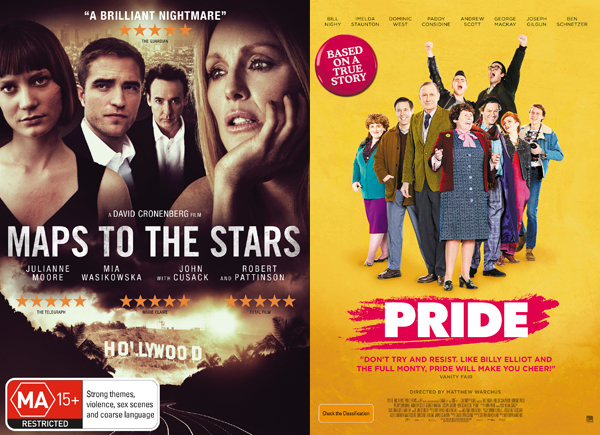
In February of 2011, we were joined by guest Josh Nelson, who chatted to us about the films of body horror maestro David Cronenberg. Last year we saw Cronenberg's evolution continue with Maps to the Stars, a creepy Hollywood story of narcissism, obsession and death. And now we have three copies to give away to three lucky listeners, thanks to eOne Entertainment!

But that's not all: the three winners will also receive a DVD of Pride (again, thanks to eOne Entertainment), the film that our December 2014 guest Richard Watts picked as one of that year's five best!

Maps to the Stars Pride

To win this unlikely pair of DVDs, simply answer the following question:

In the February 2011 episode of Hell Is For Hyphenates, Josh Nelson says he initially didn't like one of David Cronenberg's films, and now considers it “up with Videodrome as [Cronenberg's] masterpiece”. Which film was he referring to?

To enter, send your answer to co*********@*****************es.com by midnight on April 5. All correct answers will be mixed up together in some sort of accessible but hollow object, and the three winning entries chosen at random. The winners will be notified by email. No correspondence will be entered into, though we always love hearing from you.