Author Archives: The Hyphenates

Pedler On Coens

This month, only two of us had seen each of the films we reviewed: Martyn and Sophie had seen Anomalisa, Sophie and Lee had seen The Pearl Button, and Lee and Martyn had seen Batman v. Superman: Dawn of Justice. Somehow, symmetrically, we made it work.

After the reviews, we look at new releases streaming into your home. Will technology allow you to watch the latest big screen releases without ever leaving your couch? It's an issue that's dividing the biggest filmmakers in the world, but it may simply be inevitable.

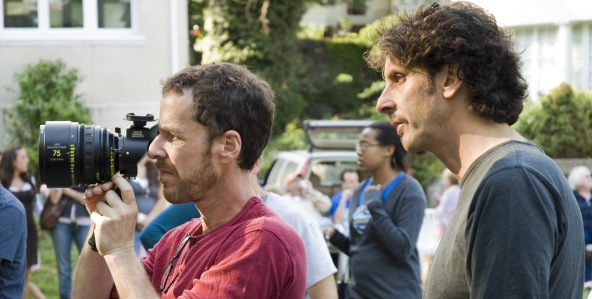
Then, Martyn takes us through the films of Joel and Ethan Coen, the masters who gave us everything from Raising Arizona to The Big Lebowski, Barton Fink to No Country For Old Men. What is it about the films of this beloved pair that is so unique and so appealing?

If you're keen on further reading, their seminal Fargo has just turned 20. And the argument over the crucial Mike Yanagita scene continues today. But what did it all mean?

Also, Lee posits the theory that the better a Coen Bros trailer is, the less successful - or at least, the less regarded - the film itself is. Here are the trailers for some of their less beloved films so you can judge for yourself:

Outro music: score from Fargo (1996), composed by Carter Burwell

The new episode of Hell Is For Hyphenates, featuring Martyn Pedler talking the Coen Brothers, can be listened to via Stitcher Smart Radio, subscribed to on iTunes, or downloaded directly from our website.

Hell Is For Hyphenates – March 2016

Writer Martyn Pedler joins us this month as we look at some of the key films of March 2016, including Charlie Kaufman and Duke Johnson’s stop motion animated drama Anomalisa, Patricio Guzmán’s documentary The Pearl Button, and Zack Snyder’s contention franchise-builder Batman v. Superman: Dawn of Justice. Martyn, Sophie and Lee then look at the push to stream new release films into the home, and whether we’ll soon be able to legally watch new releases from the comfort of our living room. Then Martyn takes us through the filmography of the unique and beloved American indie filmmakers, Joel and Ethan Coen.

The Coen Brothers Cheat Sheet

Coen Bros Direct

Want to become an instant expert in our filmmaker of the month without committing yourself to an entire filmography? Then you need the Hell Is For Hyphenates Cheat Sheet: we program you a double that will not only make for a great evening's viewing, but bring you suitably up-to-speed before our next episode lands…

CB Films

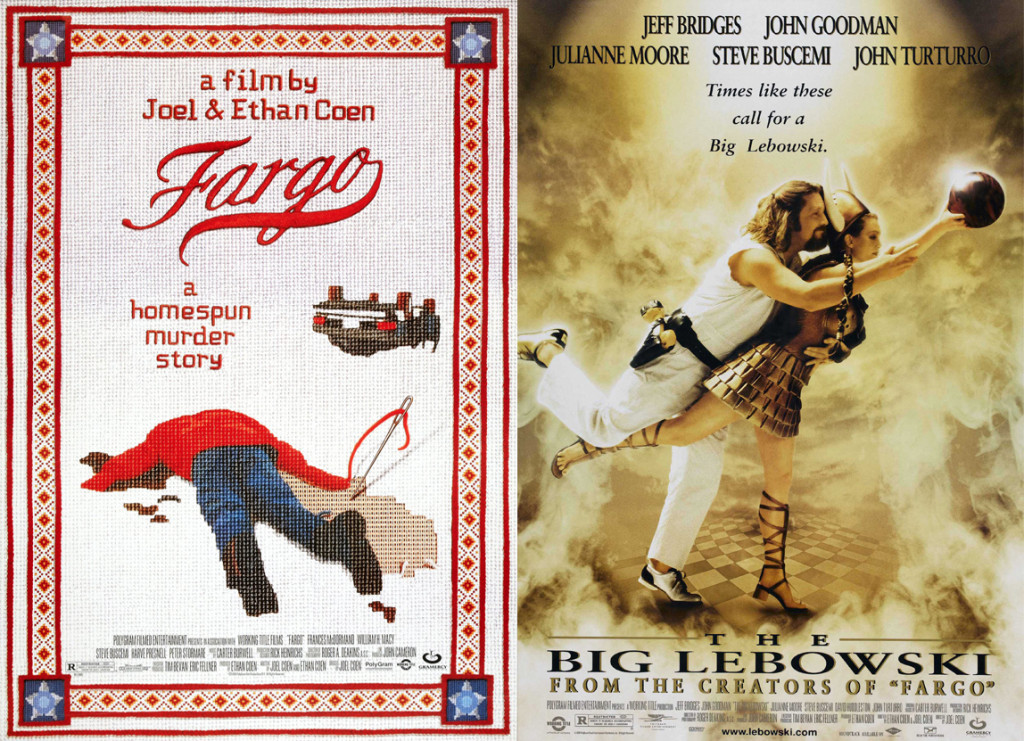
FARGO (1996) and THE BIG LEBOWSKI (1998)

Usually we try to err on the side of films that come from the chronological extremes of a career, but there's something about the one-two hit of these works that feel as if they encapsulates what the Coens are all about. 1996's Fargo was a huge hit, its strange mix of comedy, violence and drama the perfect example of their interest in the dark and ugly side of polite society. And their follow-up? 1998's The Big Lebowski is pure Coens: an ageing hippy finds himself in the middle of a gumshoe detective drama, one that he has no interest in or ability to navigate. This is arguably their most beloved film, a deeply funny film that pays tribute to a genre by subverting it.

Substitutions: If you can't get or have already seen Fargo, you must watch 1990's Miller's Crossing, their extraordinary Italian mafia vs Irish mob thriller. If you can't get or have already seen The Big Lebowski, then tap in 2000's O Brother Where Art Thou, the 1930s deep south retelling of Homer's Odyssey.

The Hidden Gem: How do you find a hidden gem in a filmography such as this? Probably the closest is 2009's A Serious Man, their strangest and most niche film about a 1960s Jewish physics professor whose life is falling apart. It's genius.

The next episode of Hell Is For Hyphenates, featuring Martyn Pedler talking the films of the Coen Brothers, will be released on the morning of March 31 (AEST).

Our Next Hyphenate Martyn Pedler

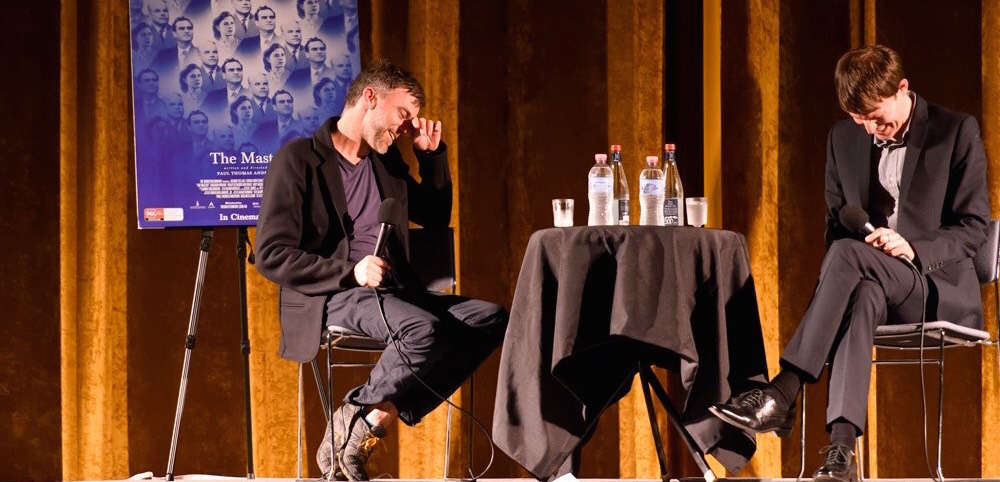
Martyn Pedler (left) chats to Paul Thomas Anderson on stage at Melbourne’s Astor Theatre in 2012

We've been courting Martyn Pedler to come on the show for a long time, employing all manner of tactics from flowers and chocolates to Wile E Coyote-style holes in the ground that drop into a recording booth to sneaking recording dates into iTunes terms and conditions.

Okay, Martyn was actually happy to do the show. But even though we invited him a long time ago, we all decided to wait a while for a reason that we'll explain below. But first, some Martyn Pedler bio.

Martyn has had a fascinating career as a writer, including comedy on Australian TV, a mostly-completed PhD on superhero stories, and the amazing Tumblr series And the Man Next To You, an astonishing series of tragic backstories for every character who dies in Under Siege. He's worked for years as a film critic, writing for Triple J Magazine, Time Out Melbourne and others. He is also the screenwriter behind the brilliant indie arthouse feature EXIT, which premiered at Montreal's Fantasia Festival. Seriously, go watch it now. It's amazing.

So which filmmaker has Martyn chosen to talk about on the show?

Actually, it's filmmakes plural: Martyn's chosen the Coen Brothers!

Directed by Joel and Ethan CoenYes, we haven't actually covered Joel and Ethan Coen on the show yet, so we're pretty jazzed to be getting to them. And we decided it would be fun to hold off until the release of Hail, Caesar!, because how could we resist?
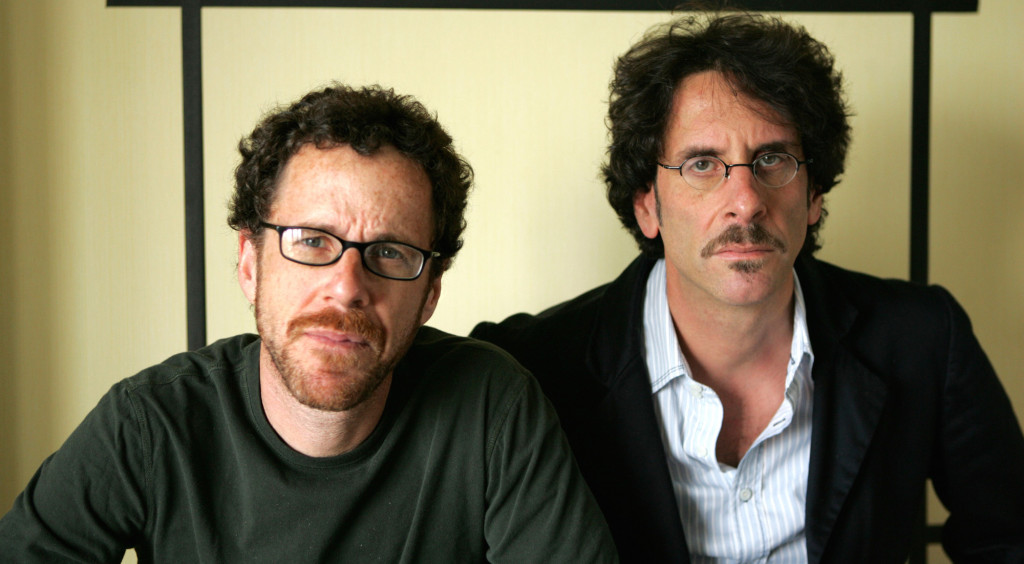

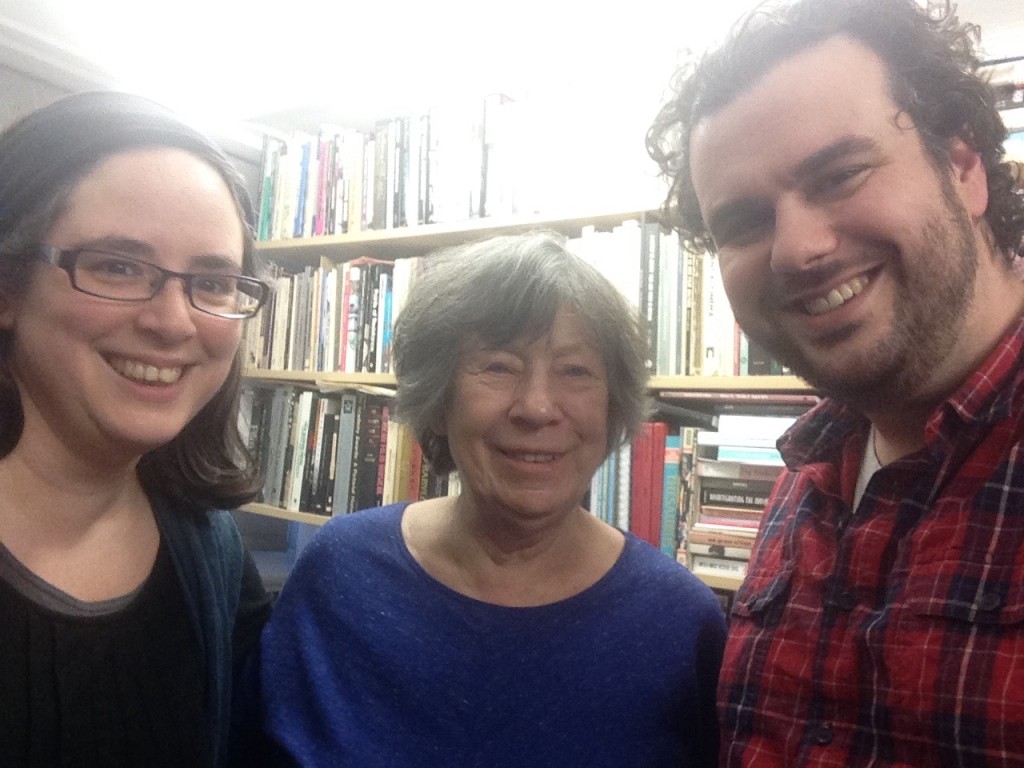
The Coens need little introduction, so we will keep it little: films like Blood Simple (1984), Raising Arizona (1987), Miller's Crossing (1990), Barton Fink (1991), The Hudsucker Proxy (1994), Fargo (1996), The Big Lebowski (1998), O Brother, Where Art Thou? (2000)… okay, we were planning to just mention their classics, and here we are just listing all of their films. (And, yes, we cunningly stopped before the early 2000s. But there's time for that later.)

So what is it about the Coens that so appeals to Martyn? We'll all find out when the episode is released on March 31.

Our next filmmakers of the month, Joel & Ethan Coen

Mulvey On Ophüls

We're used to talking about legends on the show, but it's pretty cool to have a legend as our guest. Laura Mulvey is one of film theory's biggest names, probably best known for coining the phrase “the male gaze” in her highly influential 1973 essay “Visual Pleasure and Narrative Cinema”. Last week, we gathered in Laura's office at Birbeck, University of London, to talk some film.

Sophie and Lee begin by talking about some key new releases, including Michael Bay's 13 Hours: The Secret Soldiers of Benghazi, Luca Guadagnino's A Bigger Splash, and Grimur Hákonarson's Rams. Laura, who hasn't seen any of these, then discusses the fact that she generally watches older films over newer films, and we look at the concept of new release fatigue. Is it just us, or are technology and changing viewing habits having an effect?

Then Laura takes us into the biography, career and filmography of the amazing German director Max Ophüls.

If this gets you keyed up to find out more about Ophüls - and it should - then you'll want to check out Max Ophuls in the Hollywood Studios by Lutz Bacher, which Laura refers to during the show.

Outro music: score from The Earrings of Madame De… (1953), composed by Oscar Straus and Georges Van Parys

Sophie Laura Lee

Hell Is For Hyphenates – February 2016

Filmmaker, academic and film theorist Laura Mulvey joins the Hyphenates as they look over some of the key new releases of February 2016, including 13 HOURS: THE SECRET SOLDIERS OF BENGHAZI, A BIGGER SPLASH and RAMS. Laura, Sophie and Lee then look at why they are feeling a fatigue with new releases, and how changing technology may play a part. Finally, Laura takes us through the biography, career and films of the great German director Max Ophüls.

The Max Ophüls Cheat Sheet

Max Ophüls Directing

Want to become an instant expert in our filmmaker of the month without committing yourself to an entire filmography? Then you need the Hell Is For Hyphenates Cheat Sheet: we program you a double that will not only make for a great evening's viewing, but bring you suitably up-to-speed before our next episode lands…

MO Films

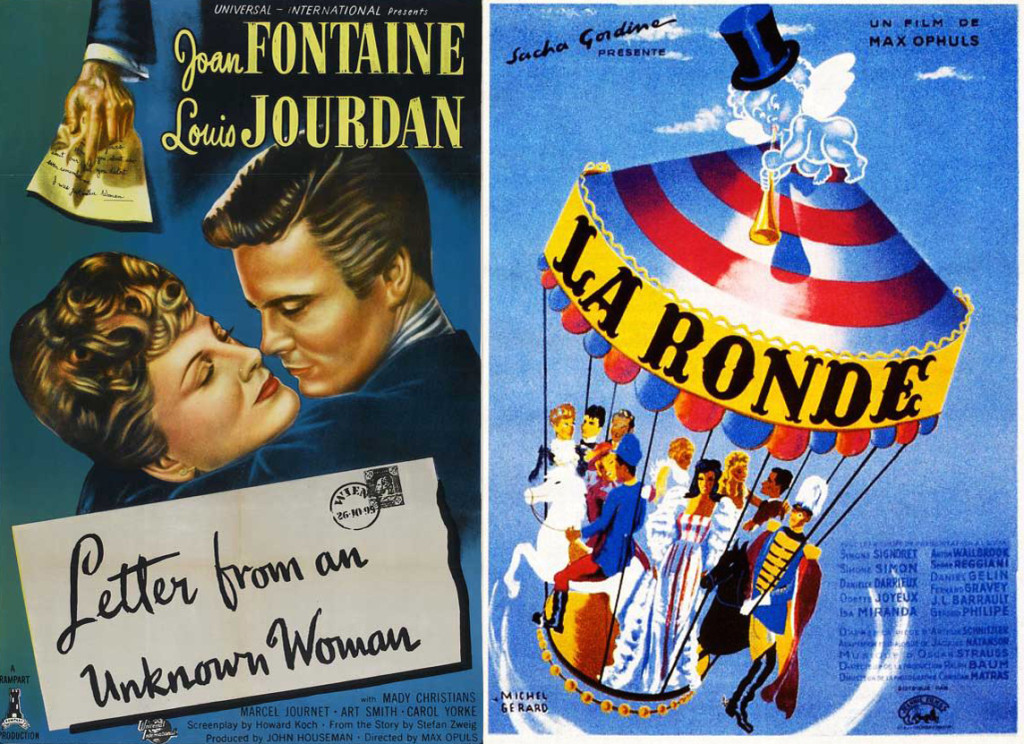
Letter from an Unknown Woman (1948) and La Ronde (1950)

Max Ophüls never stopped moving. But he's been called a “Viennese” filmmaker, for the sophisticated sensibility, sensuality and psychology exemplified by these two exquisite films set in the city in 1900 (although shot in the US and France). Stanley Kubrick paid tribute to his filmmaking hero with Eyes Wide Shut, his contemporary ‘take' on Arthur Schnitzler's novella Traumnovelle, and Ophüls' adaption of Schnitzler’s play Reigen is equally ingenious: a merry-go-round musical of interlocking love stories light as a feather and deep as a dream. Letter… replays La Ronde's comedy as tragedy through the contrasting perspectives of its dashing composer protagonist (Louis Jourdan) and the lovelorn female narrator (Joan Fontaine) whose love he longs for and carelessly lost. Sofa, snacks, swoon.

Substitutions: Upper-class ultra-romantic drama Madame de… (1953) might be the closest cinema ever got to the great nineteenth-century novels, but in the purest of film form (how does the camera navigate the tiny jewellers' shop?), while love/hate career closer Lola Montès (1955) (look for the 2008 restoration) is a theatrical fever dream, the century-sweeping story of the titular dancer/muse/lover, and tone-poem to Eastmancolor.

The Hidden Gem: For an early and inventive working of classic Ophüls style and themes (and staircases), choose La signora di tutti (1934). It made Isa Miranda a star - even as it told the story of the fall of glamorous, haunted film star Gaby Doriot. It's the only film Ophüls made in Italy, and as gloriously operatic as you'd imagine.

The next episode of Hell Is For Hyphenates, featuring Laura Mulvey talking Max Ophüls, will be released on February 29, 2016.

Our Next Hyphenate Laura Mulvey

Laura Mulvey
Theorist, professor and February 2016 Hyphenate Laura Mulvey

If you've ever used the term “the male gaze”, then you have our next guest to thank.

Laura Mulvey coined the term in her 1975 essay “Visual Pleasure and Narrative Cinema”, published in the film journal Screen, and the phrase has become firmly embedded in the collective psyche.

This isn't her only contribution to pop culture, but it's a hell of an opening.

She is professor of film and media studies at Birkbeck, University of London, and has penned countless essays and articles, as well as books such as Douglas Sirk (1972), Citizen Kane (1992) and Death 24x a Second: Stillness and the Moving Image (2006). She is also a filmmaker, co-directing with Peter Wollen films such as Penthesilea: Queen of the Amazons (1974), Riddles of the Sphynx (1977), AMY! (1980), Crystal Gazing (1982), Frida Kahlo and Tina Modotti (1982) and The Bad Sister (1983), and co-directing with Mark Lewis Disgraced Monuments (1991) and 23rd August 2008 (2013). For those in London, there will be a retrospective of her work at the Whitechapel Gallery this Spring.

But the really exciting part of her career? Becoming the very next guest on Hell Is For Hyphenates!

So which filmmaker has Laura chosen to discuss on the show?

None other than German director Max Ophüls!

Un film de Max Ophuls

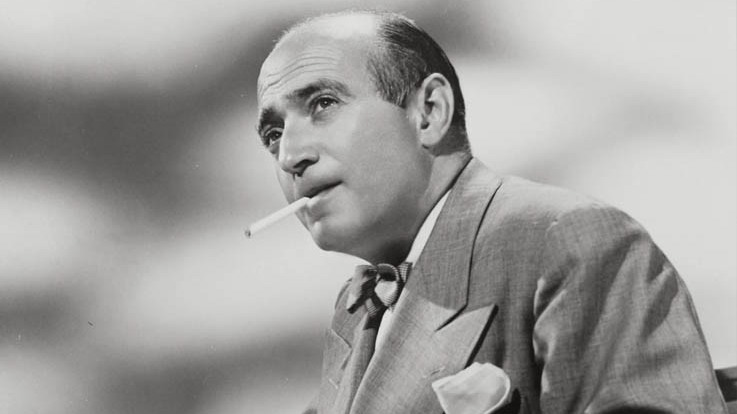
Ophüls began his career in Germany, before fleeing the country due to the rise of the Nazis. He directed films in Germany, France and Hollywood, and is best known for the latter phase of his career, where he made works such as Letter From an Unknown Woman (1948), The Earrings of Madame de… (1953) and Lola Montès (1955).

His films influenced everyone from Preston Sturges to Stanley Kubrick and Paul Thomas Anderson, and even inspired James Mason to write a poem about his love of tracking shots:

A shot that does not call for tracks

Is agony for poor old Max,

Who, separated from his dolly,

Is wrapped in deepest melancholy.

Once, when they took away his crane,

I thought he’d never smile again.

So what is it about the films of Max Ophüls that influenced Kubrick, inspired James Mason to poetry, and - most importantly - fascinates Laura Mulvey?

Check back with Hell Is For Hyphenates on February 29 to find out!

Max Ophuls
Our next filmmaker of the month, Max Ophüls

Franklin On Carpenter


“I like to think that if all the filmmakers of that American New Wave were a giant school class, and Coppola was the captain of the football team, and Spielberg was the good lookin' rebel in the leather jacket hanging out with the bikers, and the drama majors are Altman and Cassavetes… and then you had Carpenter who is like the Ally Sheedy of this Breakfast Club, he's the outsider who's tucked away, probably getting a blow job behind the shed, but ends up coming up with some of the craziest, weirdest things.”

The other day, we were visited by a man who wanted to tell us the good news about a dude named JC. This JC had long hair, a legion of devoted followers, and he managed to change the world. And he was just a humble Carpenter, too!

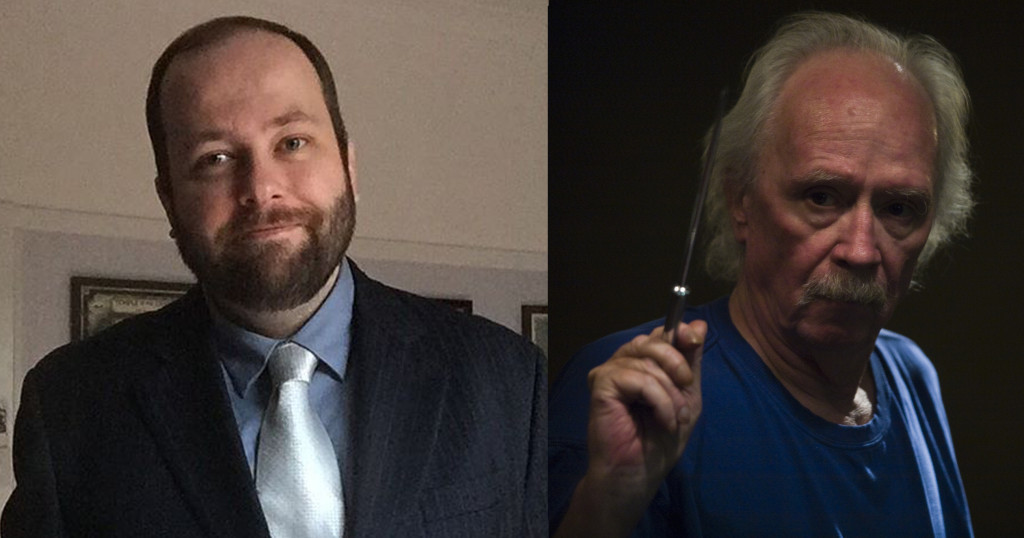
Dark Horizons editor Garth Franklin was our guest this month, and he quickly decided on the great John Carpenter as his filmmaker of the month, a choice that definitely delighted us here at Hi4H Central.

Watching all of a filmmaker's works in one hit can be revelatory. You can look at Halloween or Big Trouble In Little China or Starman and know they're all John Carpenter films, but until you see them all in one go, it's difficult to fathom just how adept he was at every genre he turned his hand to. It's also fascinating to see exactly what interests Carpenter, and how these themes echo across all of his works.

That's what we dig into in this month's episode. First, as always, we also look at some key new release films, including Quentin Tarantino's The Hateful Eight, Lenny Abrahamson's Room, and Ryan Coogler's Creed.

We also take a look at something that's been on our minds in the month where we lost both David Bowie and Alan Rickman: how we define the legacies of beloved actors when we primarily know them through their imitation, rather than themselves?

Outro music: score from Halloween (1978), composed by John Carpenter

It's a jam-packed episode, and a hell of a way to kick of 2016. Stream or download from our website, listen via Stitcher Smart Radio, or subscribe on iTunes!

Hell Is For Hyphenates – January 2016

Dark Horizons creator and editor Garth Franklin joins the show, as we look at some of the key films of this month, including THE HATEFUL EIGHT, ROOM and CREED. In the wake of the deaths of David Bowie and Alan Rickman, they then examine how we mourn beloved film icons, and how their legacies interact with their defining performances. Then, Garth takes us through the career and filmography of one of the horror cinema’s most important directors, John Carpenter.