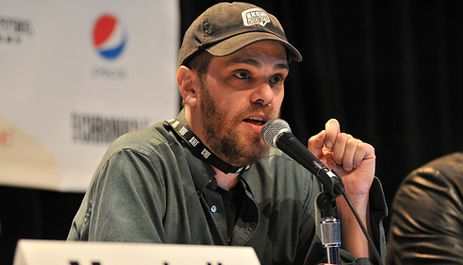
Film journalist, producer, and Hi4H April 2017 guest host Scott Weinberg
If you’re into film and you're on Twitter, you definitely know who Scott Weinberg is. But for those who are yet to make the leap to the microblogging social media platform, Scott has been a film journalist for almost two decades, writing on cinema for Cinematical, FEARnet, Nerdist, Thrillist, Playboy and others. He’s one of film criticism’s most passionate voices, and recently launched the popular 1980s cinema-themed podcast 80s All Over alongside Hi4H alum Drew McWeeny.
He's also become hands-on behind the camera, producing last year's horror film Found Footage 3D. But all of that pales in comparison his next role: Hell Is For Hyphenates guest host!
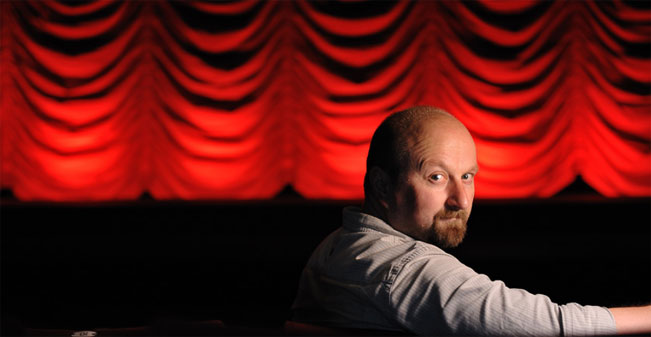
Scott is best known for his love of horror cinema, so we were keen to hear which filmmaker he would want to talk about. So who did he go with? None other than British horror director Neil Marshall!
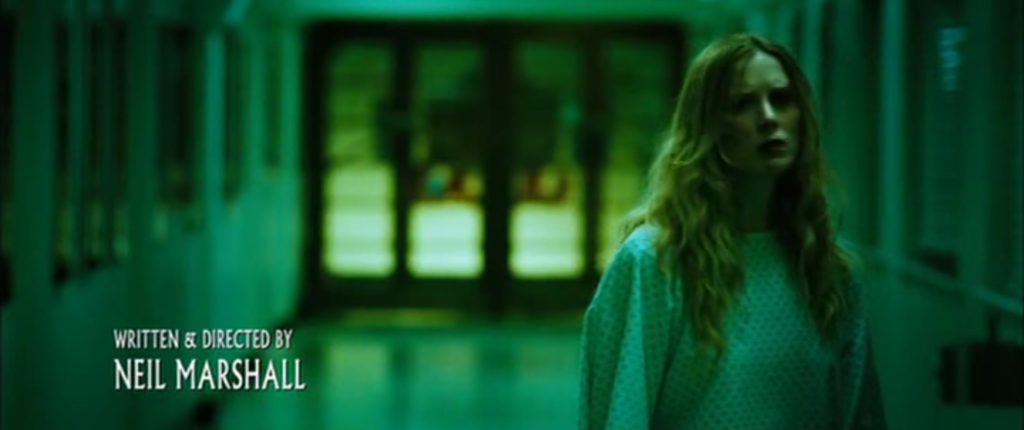
Marshall was praised for his gritty debut feature, the 2002 werewolf horror Dog Soldiers. His 2005 spelunking follow-up The Descent immediately achieved cult status, and with two iconic horrors under his belt, Marshall quickly became one to watch.
After a few more features, Marshall turned to television, working on Black Sails, Constantine, Hannibal and Westworld. He has also directed for Game of Thrones, with his debut episode Blackwater considered one of the best-directed episodes of the entire series.
So what is it about Marshall's films that Scott loves so much? Check back in with us on April 30 when we find out!
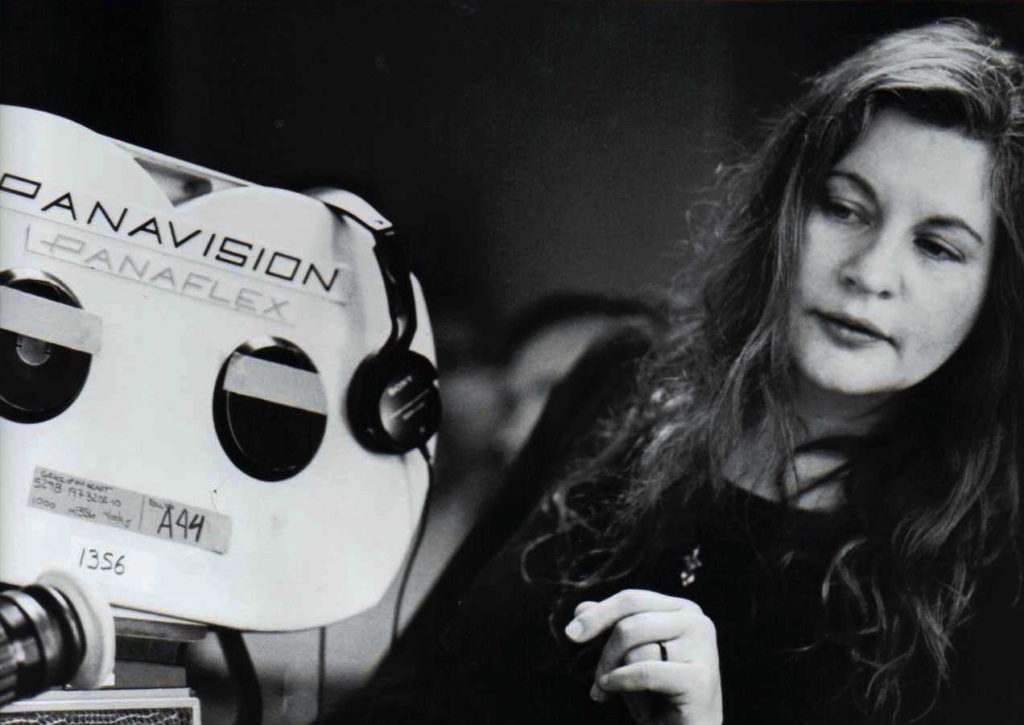
Allison Anders is a name that doesn't get mentioned nearly as much as it should. And thanks to Jennifer Reeder, this month we're pointing out why this is a mistake that needs to be corrected. From Gas Food Lodging to Grace of My Heart and Things Beyond the Sun, Anders was one of the defining voices of 1990s American indie cinema. So what happened? We take a decent stab at figuring it out, as we celebrate the remarkable films that Anders has made and continues to make.
Blink and you’ll miss her: director Nicole Holofcener cameos as a prison guard in one shot of Mi Vida Loca (1993)
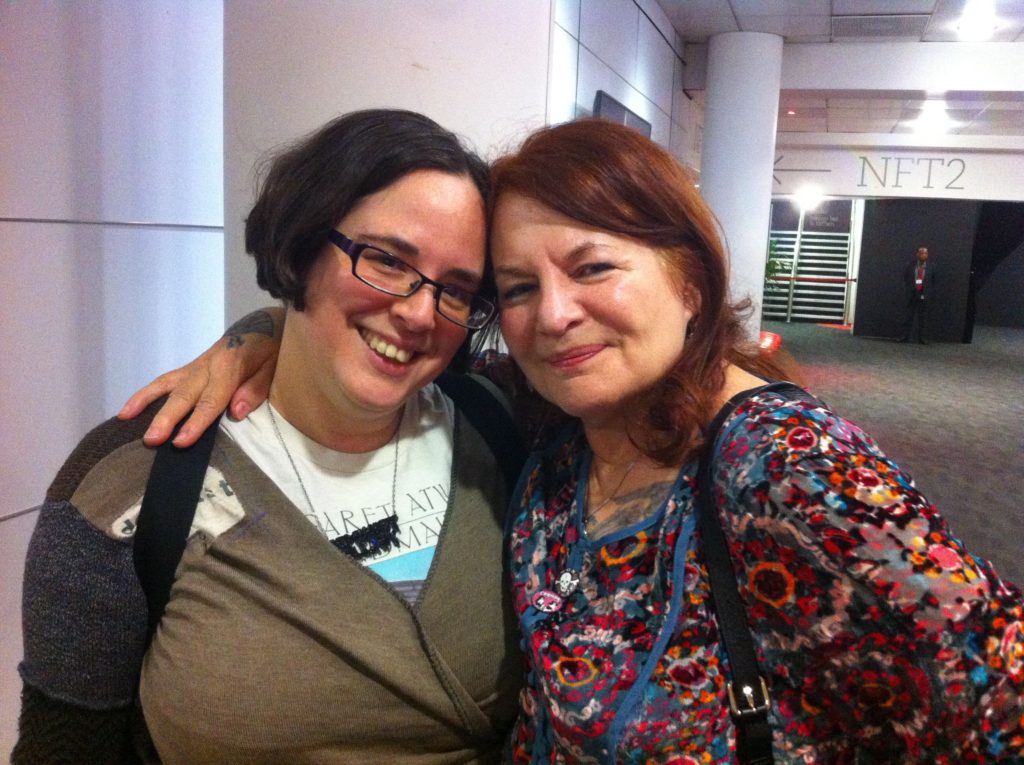
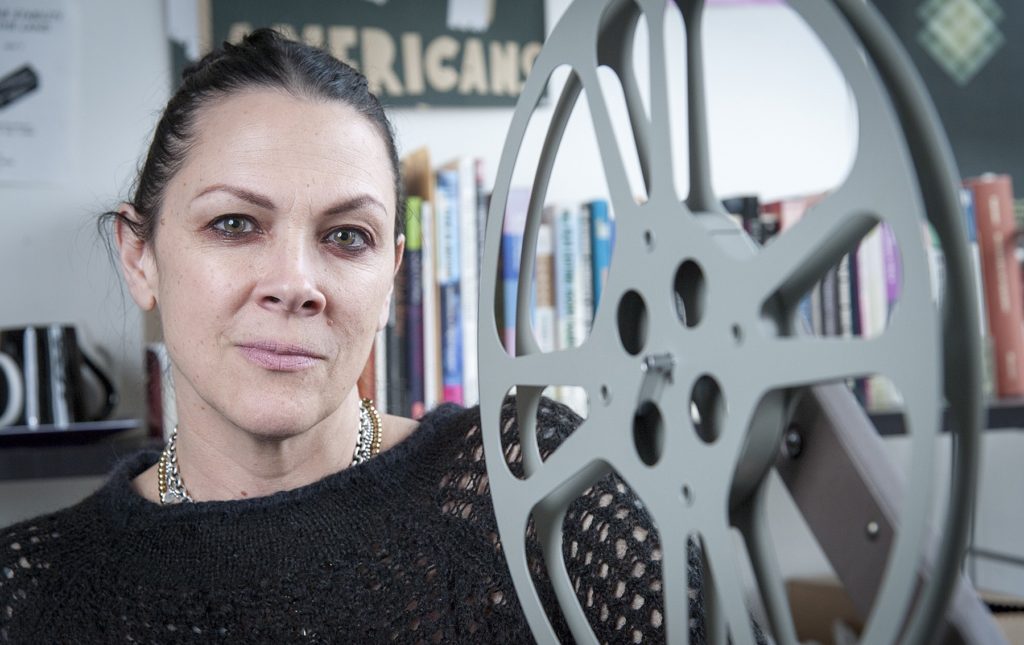
Jennifer was in London for the BFI Flare Festival, and by an amazing coincidence, so was Allison Anders! Jennifer’s film Signature Move was Flare’s Closing Night Gala film, and Allison’s seminal Gas Food Lodging was celebrating its 25th anniversary with a restored 2K digital print. Before you get excited, we don't actually have Allison on this episode, but we are working to get her on a future show to find out which filmmaker she herself admires. Nevertheless, Sophie managed to track her down and snap a photo with her, which you can see below!
Before we talk the films of Allison Anders, Sophie and Lee tackle some new releases, looking at a couple of very different films with an unexpected thematic link: James Mangold's Wolverine swansong Logan, and Sara Taksler's Bassem Youssef documentary Tickling Giants.
Pre-fame cameos: (l-r) Jason Lee, Spike Jonze and Tiffany Anders doing a deal in Mi Vida Loca (1993)
Then Sophie joins Jennifer in her hotel room to talk all things Anders, and find out why she was such an influence on a young Jennifer Reeder. Sophie then checks back with Lee for some final thoughts on AA’s films. As with all of our episodes, we do our best to appeal to both Anders fans as well as those with no knowledge of her films. Like Ted the Bellhop, we do our best to cater to everyone.
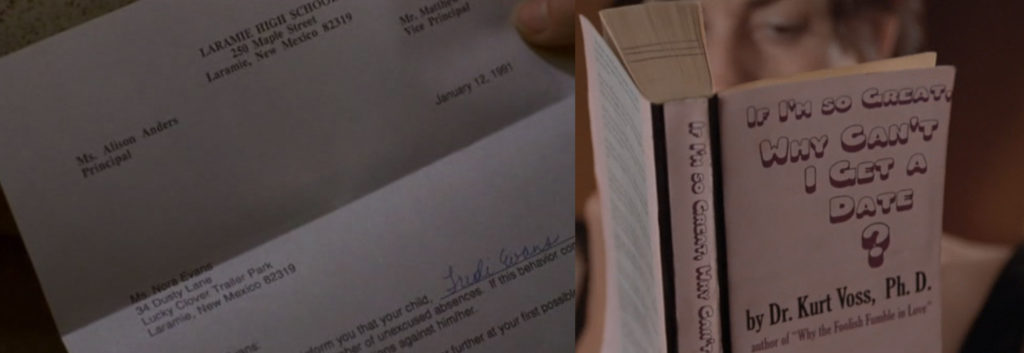
A couple of familiar names appear on-screen in Gas Food Lodging (1992) (left) and Sugar Town (1999) (right)
Further reading:
That moment in the Man of Steel trailer that Lee talks about obsessing over can be seen here about 22 seconds in
Two pieces that explore Bassem Youssef's move to the US, including this interview on NPR's Fresh Air and this one with Rolling Stone
Sophie references the Amy Schumer Show sketch “The Last Fuckable Day†(which was, coincidentally, directed by Nicole Holocener)
Lee mentions his repeated viewings of the Four Rooms trailer, which you can take a look at here, if you’re curious
Since Nicole Holofcener's come up a number of times this month, we should point out you can listen back to our Holocener episode with our guest, actress Pollyanna McIntosh
With this episode, we're three quarters of the way through covering anthology film Four Rooms, which Allison Anders co-directed by Quentin Tarantino, Robert Rodriguez and Alexandre Rockwell. While we wait for a guest to pick Rockwell, you can listen back to our Tarantino episode (also our third anniversary show) with director Brian Trenchard-Smith, and our Rodriguez episode with comedian Jon Bennett
Sophie mentions the epic Greta Garbo record collection that Allison Anders owns, and you can read Allison's blog about it right here
Outro music: “God Give Me Strengthâ€, written by Burt Bacharach & Elvis Costello and performed by Kristen Vigard, from Grace of My Heart (1996)
Jennifer and Sophie get purple at the Flare Festival (photo credit: Carol Morley)Sophie runs into the subject of this episode, the one and only Allison Anders, at the BFI (photo credit: Anna Bogutskaya)
The latest episode of Hell Is For Hyphenates, featuring Jennifer Reeder talking the films of Allison Anders, can be heard on Stitcher Smart Radio, subscribed to on iTunes, or downloaded/streamed via our website.
Sophie and Lee kick off this month by looking at a pair of very different new release films: James Mangold’s Wolverine send-off Logan, and Sara Taksler’s documentary about Egypt’s legendary satirist Bassem Youssef, Tickling Giants. Then Sophie welcomes this month’s guest, filmmaker Jennifer Reeder, joining her to discuss her filmmaker-of-the-month: US indie auteur Allison Anders. After discussing the influence Anders had on Reeder, Sophie checks back in with Lee and wrap up with their own look over the films of Allison Anders, exploring the influence she had when she emerged in the 1980s and made her name in the 1990s.
Want to become an instant expert in our filmmaker of the month without committing yourself to an entire filmography? Then you need the Hell Is For Hyphenates Cheat Sheet: we program you a double that will not only make for a great evening's viewing, but bring you suitably up-to-speed before our next episode lands…
GAS FOOD LODGING (1992) and GRACE OF MY HEART (1996)
Happy 25th birthday Gas, Food, Lodging, the Dinosaur Jr-soundtracked ode to the beautiful landscapes of New Mexico and the intense girls who inhabit them. Anders' first solo-directed feature - like her first Border Radio (1987, with Kurt Voss and Dean Lent) - hovers in the borderlands, where Shade (Fairuza Balk) falls (didn't we all?) for her (quite evidently queer) best friend Darius (Donovan Leitch) before realizing that it's Javier (Jacob Vargas) who loves her. Meanwhile her sister Trudi (Ione Skye, Leitch's older sister in real life) has fallen for a geologist, with grave consequences. Their mother Nora (Brooke Adams) is trying to hold it together and find new love. One trailer, three tough-as-velvet women, and a soundtrack that knew what the ’90s was about before the ’90s even happened. Music is Anders' particular genius, with Border Radio the first in a trilogy of contemporary SoCal musician films - but it's 1960s and ’70s-set Grace of My Heart that most captured ours, telling tales of the Brill Building with characters who are almost just not quite (but enough to thrill) the stars of the era. Ileana Douglas has the starring role she always deserved as debutante-turned-songwriter Denise Waverly who finds her voice with the help/hindrance of variously dependent men (most loyal being producer Joel Milner, in an all-out funky turn from John Turturro) and equally variously resilient, funny women (including a surprisingly excellent turn from Patsy Kensit). With a soundtrack that mixes covers of obscure songs by big names from the era (Joni Mitchell's ‘Man from Mars' makes a particularly striking appearance) with original songs, Grace of My Heart is one for fans of The Get-Down or Vinyl - but with way more girl power.
The Hidden Gem:Things Behind the Sun (2001) brings together Mi vida loca's rawness with Anders' inside knowledge of the music biz, this is an astoundingly courageous (and semi-autobiographical, for Anders) film that should have made Kim Dickens a huge star. She gives absolutely everything to her role as Sherry, a rock singer breaking into the college radio charts with a powerful song about having been raped, which catches the ear of music journalist Owen (Gabriel Mann) and brings up memories for him, too. It's a slow burn (aided by a tour de force performance from Don Cheadle as Sherry's manager and lover) and a tough watch, but - much like the Nick Drake title song - it will haunt you forever.
The next episode of Hell Is For Hyphenates, featuring Jennifer Reeder talking Allison Anders, will be released on 31 March 2017.
Artist, filmmaker, and Hi4H March 2017 guest host Jennifer Reeder
We’re delighted to announce our next guest, Jennifer Reeder: an American artist, filmmaker and screenwriter. Her 2015 film A Million Miles Away (available to watch here for free!) was nominated for the Grand Jury Prize at the Sundance Film Festival, and she has received nominations or wins at the Berlin International Film Festival, the AFI Fest, the Oberhausen International Short Film Festival, the Rotterdam International Film Festival, and many others.
Jennifer first attracted attention for her performance and video work as “White Trash Girlâ€, a pseudonym and character through which she explored lower-income white culture in the United States. She is on her way to London, where her latest film Signature Move will be the closing night film at BFI Flare 2017.
But more important than all that is the fact that she is about to be a Hell Is For Hyphenates guest host when she joins us for our next episode!
So which filmmaker has Jennifer chosen to discuss on the show?
None other that indie director Allison Anders.
Anders first came to attention in1987, when she co-directed the feature Border Radio with UCLA classmates Kurt Voss and Dean Lent. It was 1992's Gas Food Lodging that truly put her on the map, her first solo feature winning her Best New Director from the New York Film Critics Circle and the National Society of Film Critics.
Anders was one of the figures of 1990s independent American cinema, going on to direct Mi Vida Loca (1993) and Grace of My Heart (1996). She continued her tradition of collaborative filmmaking with 1995's notorious Four Rooms, which she directed alongside Quentin Tarantino, Robert Rodriguez and Alexandre Rockwell.
She has recently been directing TV series and telemovies, working on the likes of Sex and the City, The L Word, Orange in the New Black, Murder in the First and Riverdale. Most recently, Anders directed the 2013 June Carter Cash biopic Ring of Fire and the 2017 remake of Beaches.
So what is it about the films of Allison Anders that specifically appeals to Jennifer Reeder? Join us on 31 March when we find out!
Desperate times call for desperate measures. And the Hell Is For Hyphenates version of desperate measures is to organise an episode in slightly the wrong order. Anarchists, we.
As we said in the episode announcement, we felt it was incredibly important to this month focus on Iranian filmmaker Asghar Farhadi. With the USA imposing a draconian travel ban on select Muslim countries, Farhadi has chosen to protest the policy by staying at home instead of attending this year's Oscars ceremony. This despite him receiving a Best Foreign Language film nomination for The Salesman.
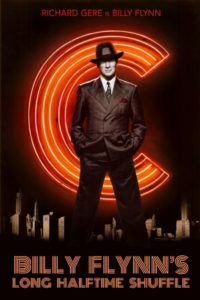
The real actual Japanese poster for Chicago, and definitely not something we photoshopped in like five minutes.
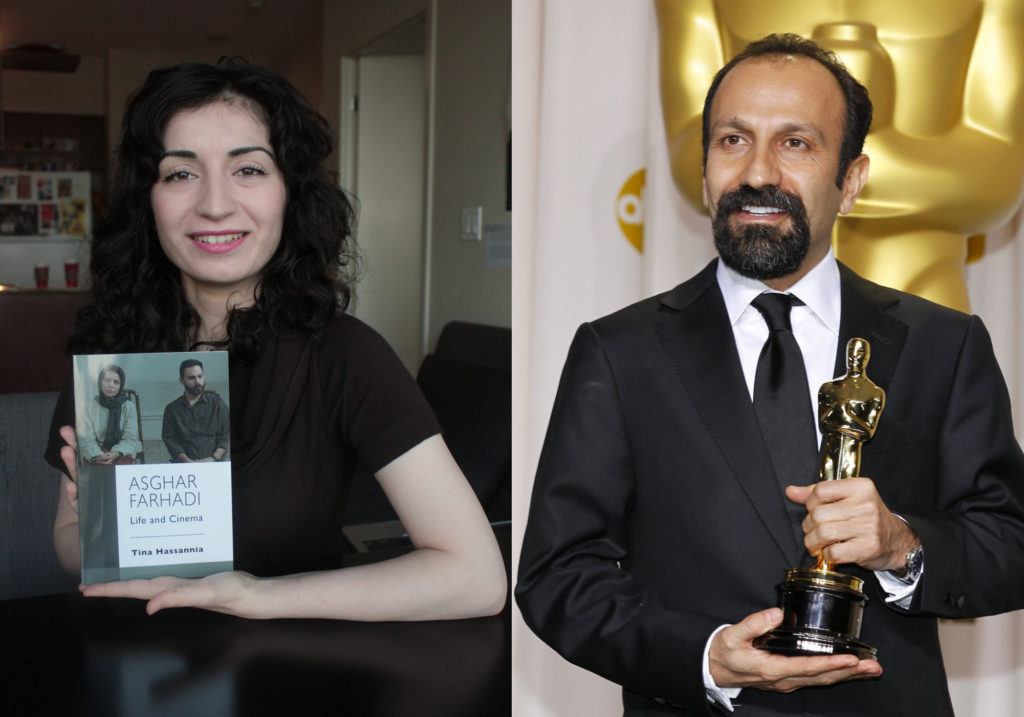
We enlisted the help of Tehran-born, Toronto-based film critic and author, Tina Hassannia, an expert in Farhadi's films and author of Asghar Farhadi: Life and Cinema. The insight Tina brings to this episode as a critic, as someone who has spoken directly with the filmmaker, and as someone familiar with the culture depicted in Farhadi's films is unique and fascinating. Long story short, this is a great episode.
Before we get to Farhadi, Sophie and Lee cast their eyes over three of this month's films, including Ang Lee's adaptation Billy Lynn's Long Halftime Walk, which was released in the USA and Australia last year, but has only this month made it to British shores.
They then look at the ups and downs, pros and cons of crafting a sequel to an iconic work, as Danny Boyle finally makes good on his decades-old promise to reunite Renton, Begby, Sick Boy and Spud in the unusually-titled T2: Trainspotting.
Then, social and scientific progressiveness come together as they always should with the engaging and crowd-pleasing biopic Hidden Figures, based on the book by Margot Lee Shetterly and directed by Theodore Melfi.
Confusion abounds.
After the reviews are done, Tina joins us to talk about what role awards shows have in activism. Following Meryl Streep's rousing Golden Globes speech and David Harbour's viral Screen Actors Guild call to arms, do award winners have an obligation to use the spotlight to get political? Or should the glitz and glam of red carpets be done away with completely during times of suffering?
We then dig into the films of Farhadi, looking at Dancing in the Dust (2003), Beautiful City (2004), Fireworks Wednesday (2006), About Elly (2009), A Separation (2011), The Past (2013) and The Salesman (2016). We examine the social and political context of his work in a discussion that will be interesting even if you've never seen any of his films.
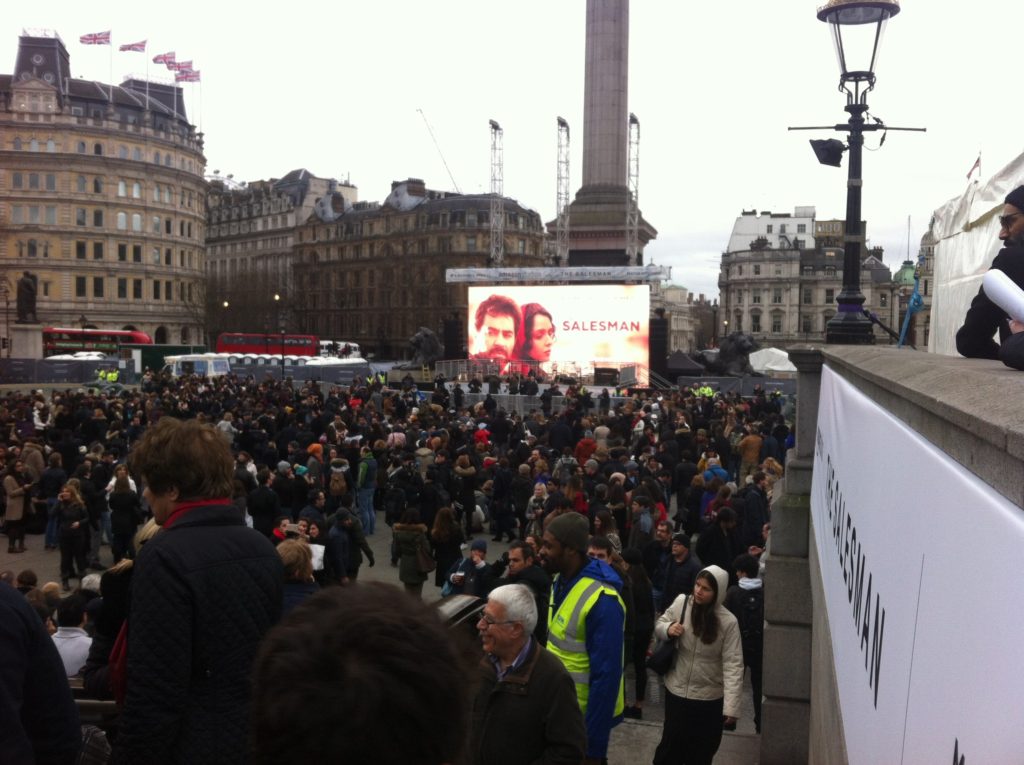
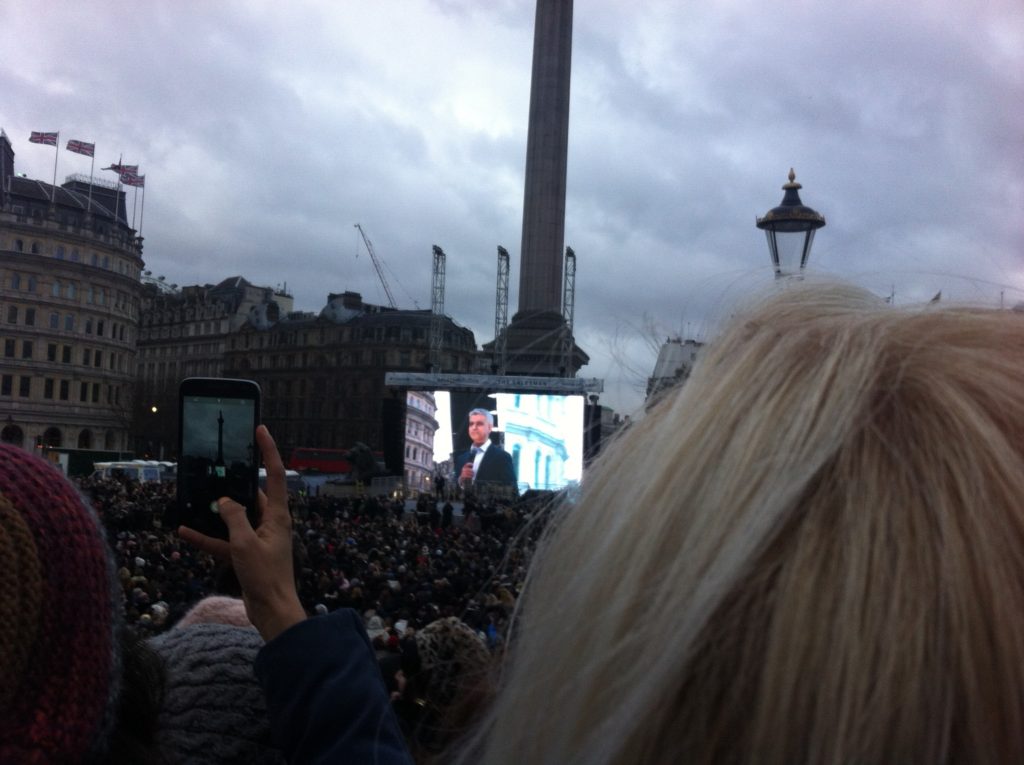
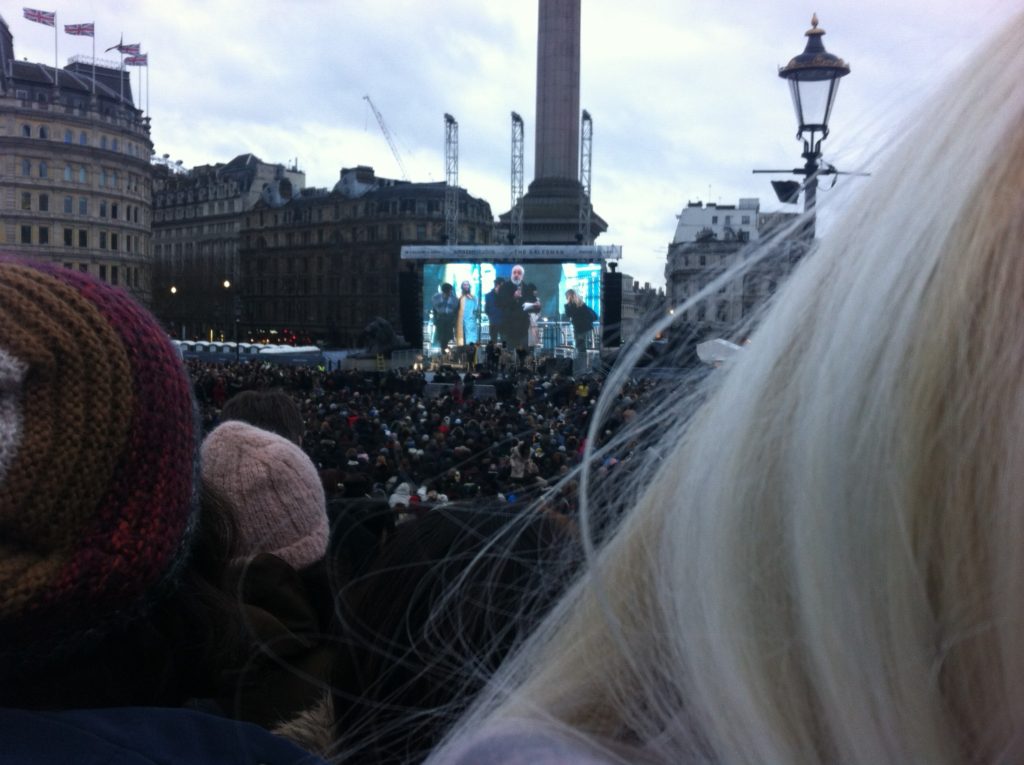
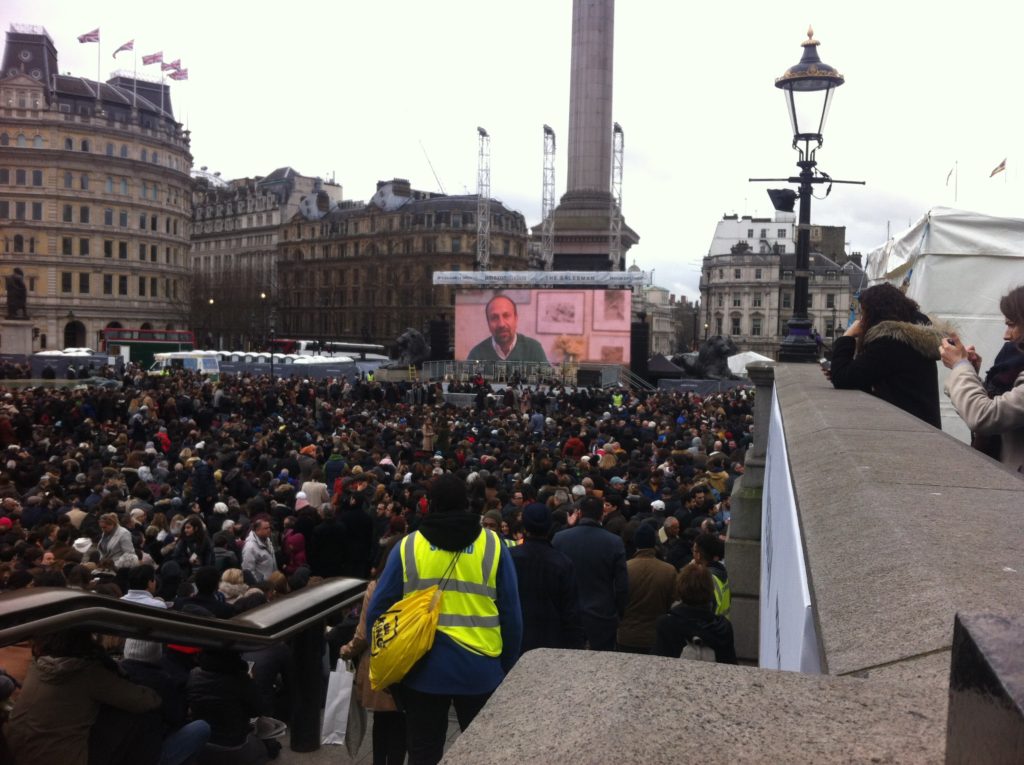
But we're not done yet! In a special bonus segment, Sophie heads to Trafalgar Square, where the City of London hosted a special screening of The Salesman in an open air cinema. The screening, which took place about 24 hours before our episode was released, saw an estimated 2 000 people in attendance. We hear select speeches from TV presenter and journalist Mariella Frostrup, model and actress Lily Cole, London Mayor Sadiq Khan, filmmaker Mike Leigh, and in a specially-recorded video message, Asghar Farhadi himself.
Further reading:
If you're wondering what our introductions referred to, click through for details on the Bowling Green massacre and the Swedish “major incidentâ€. Our thoughts are with the victims of these not-made-up tragedies.
We kick off this month's reviews with a look at Billy Lynn's Long Halftime Walk (which has just received a release in the UK), directed by Ang Lee. For more Ang Lee talk, listen back to our Ang Lee episode with guest Julia Zemiro. We take a look at Danny Boyle's T2: Trainspotting. To hear our thoughts on the first Trainspotting, as well as all the other Danny Boyle films, listen back to our Danny Boyle episode with guest Sarah Ward.
Sophie refers to articles contrasting Danny Boyle and Antonia Bird (listen back to our Antonia Bird episode with guest Kate Hardie). The articles, which have the same opening paragraph, appeared in Bomb Magazine, and you can read the Antonia Bird piece here and the Danny Boyle one here.
The book that Hidden Figures is adapted from is called Hidden Figures: The Story of the African Women Who Helped Win the Space Race and is by Margot Lee Shetterly. It can be found in book stores and all the familiar online places.
Sophie refers to the Fine Young Cannibals returning their awards in protest after the Brit Awards screened a video message from Margaret Thatcher. We couldn't find a video of the 1990 moment, but it is referenced here in The Guardian.
We spend much of the middle segment offering protest speech advice to anyone attending the Oscars. Lee has an incredibly helpful video guide on Academy Award etiquette that aired almost exactly ten years ago, which features a segment on the dos and don'ts of Oscar protest speeches.
Asghar Farhadi previously won an Oscar for A Separation at the 2012 ceremony, Iran's first ever win for Best Foreign Language film. Watch his moving speech here.
The Oscar speeches weren’t quite as political as we were anticipating, but that doesn’t mean the evening wasn’t devoid of strong opinions and activism. Here’s Time Magazine‘s roundup of the evening’s political moments.
Here's a great piece by BFI Head of Festivals and London Film Festival director Clare Stewart about the importance and impact of Asghar Farhadi's films.
As you now know (but we didn't yet at time of recording), Asghar Farhadi's The Salesman won Best Foreign Language Film at the Oscars. He was, as we know, not there to accept the award, but had Iranian-American businesswoman Anousheh Ansari—the first Iranian to go into space—read out a statement on his behalf, which can be both viewed and read here.
If you want to see the video of Asghar Farhadi’s message to the audience in Trafalgar Square, Curzon Artificial Eye has posted the video here.
Sophie described the evening, the speeches and the mood of the crowd in an article for Sight and Sound, available here on the BFI website.
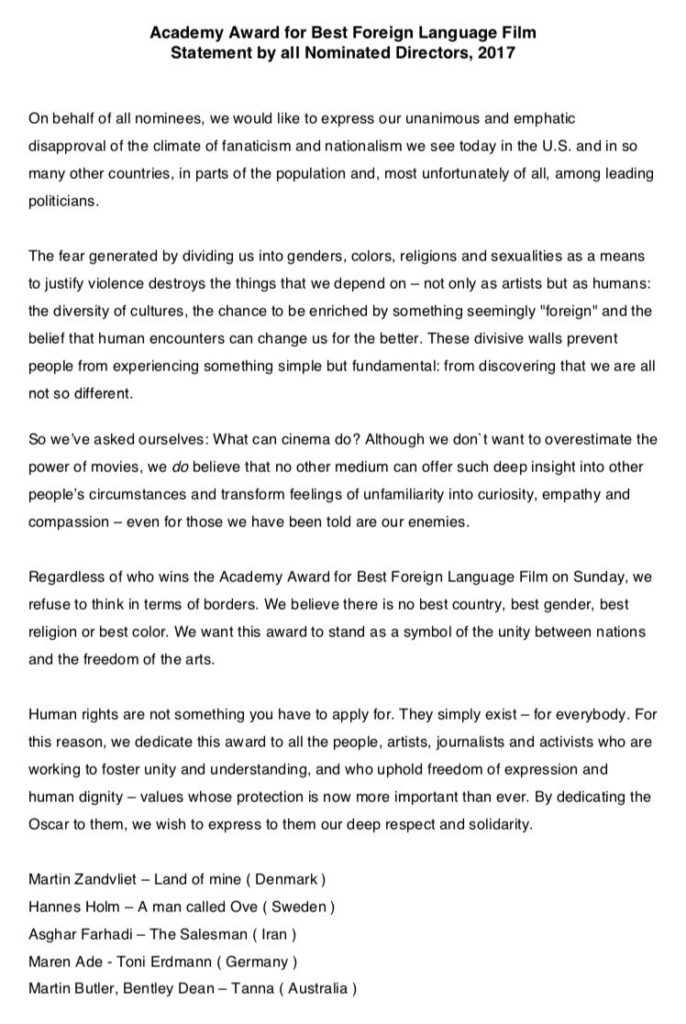
Finally, the directors of the five films nominated for Best Foreign Language Film—Martin Zandvliet (Land of Mine), Hannes Holm (A Man Called Ove), Asghar Farhadi (The Salesman), Maren Ade (Toni Erdmann), Martin Butler & Bentley Dean (Tanna)—released an extraordinary joint statement regarding the culture of fear in the USA:
Outro music: score from About Elly (2009), composed by Andrea Bauer
The latest episode of Hell Is For Hyphenates, featuring Tina Hassannia talking the films of Asghar Farhadi, can be heard on Stitcher Smart Radio, subscribed to on iTunes, or downloaded/streamed via our website.
Thousands gather in Trafalgar Square for the screening of Asghar Farhadi’s The Salesman.“Whether you’re from Iran or Iraq, Streatham or Shoreditch, Lebanon or London, you are welcome.” London mayor Sadiq Khan.Filmmaker Mike Leigh sings the praises of his friend and colleague Asghar Farhadi.Asghar Farhadi speaks to the London crowd in a specially-recorded video message.
We are joined this episode by film critic and author Tina Hassannia, as we look back at some of the key films of this month, including Ang Lee’s Billy Flynn’s Long Halftime Walk, Danny Boyle’s T2: Trainspotting, and Theodore Melfi’s Hidden Figures. Then, on the eve of an Academy Award ceremony that nominated Iranian filmmaker Asghar Farhadi has refused to attend in protest of the recent US travel ban, we ask what form awards shows should take during times of social anxiety and oppressive policy. We then look at the films and career of Asghar Farhadi, the award-winning Iranian filmmaker responsible for acclaimed works such as About Elly, A Separation, The Past and The Salesman. Finally, in a special bonus segment, Sophie attends the protest screening of The Salesman in Leicester Square, and provides us with audio of the speeches from journalist and TV presenter Mariella Frostrup, model and actress Lily Cole, Mayor of London Sadiq Khan, filmmaker Mike Leigh, and via pre-recorded video, Asghar Farhadi himself.
Want to become an instant expert in our filmmaker of the month without committing yourself to an entire filmography? Then you need the Hell Is For Hyphenates Cheat Sheet: we program you a double that will not only make for a great evening's viewing, but bring you suitably up-to-speed before our next episode lands…
Substitutions: If you can't get or have already seen About Elly or A Separation, you must watch the film his two subsequent films: The Past (2013), which replays some of the themes of divorce, betrayal and children bearing the brunt of adult struggles seen in A Separation, but with the added knife-twist of cross-cultural relationships and immigration, as Farhadi shoots in France. And then there's The Salesman (2016) is a drama about drama, going back to the filmmaker's roots in studying theatre. It follows a couple whose relationship frays during their participation in a production of Death of a Salesman, as they confront the scandalous past of their apartment's previous tenant. What's past is, as ever in Farhadi's films, all too poignantly and unsettlingly present.
The Hidden Gem: Set on Iranian New Year's Eve, Fireworks Wednesday (2006) is punctuated by small explosions, literal and metaphorical, as Alidoosti's character Rouhi, a bride-to-be, gets sent by her employment agency to clean for a warring married couple: Mojdeh is convinced Morteza is having an affair; Morteza thinks Mojdeh is crazy. Rouhi spends a long day caught between them, their son Amir Ali, their beautician neighbour Simin, and the febrile celebratory atmosphere outside.
The next episode of Hell Is For Hyphenates, featuring Tina Hassannia talking Asghar Farhadi, will be released on 28 February 2017.
Author, film critic and Hi4H February 2017 guest host Tina Hassannia
We're breaking convention to do things a little backwards this month. Let us explain.
Before we had confirmed a guest or filmmaker for this month, it was announced that director Asghar Farhadi would be unable to enter the United States to attend the Oscars ceremony - he is once again nominated, by the way - thanks to sudden, draconian, poorly-implemented immigration policy. Farhadi's plight is not the most heartbreaking story to emerge in the past month, but it is emblematic of how ridiculous this action has been. It became clear that this is something we would have to address on the show, probably during the middle segment.
Then we realised there would probably never be a more appropriate time for us to discuss the films of Asghar Farhadi, so we decided to do something we'd never done before: we choose the filmmaker first.
This month, Hell Is For Hyphenates will be all about the incredible films of Iranian director Asghar Farhadi.
With our filmmaker-of-the-month selected, we then set about searching for the perfect person to help us discuss him, and there was really only one choice: Toronto-based film critic Tina Hassannia.
Tina wrote the book on Farhadi, quite literally: Asghar Farhadi: Life and Cinema was released by The Critical Press in 2014, and is available from the Critical Press website, Amazon, Barnes and Noble, and Indigo. In the book, Tina traces Farhadi's origins as an emerging filmmaker in Iran, from his directorial debut Dancing in the Dust through to 2013's acclaimed The Past. The book also features an in-depth interview with Farhadi, and is undoubtedly the definitive work on this influential filmmaker.
We were delighted that Tina immediately agreed to join us on the show, and cannot wait to discuss Dancing in the Dust (2003), Beautiful City (2004), Fireworks Wednesday (2006), About Elly (2009), A Separation (2011), The Past (2013), The Salesman (2016), as well as Farhadi's career and history with her.
This episode will also feature something else we've never done before, but to find out what that is, you'll have to listen to the show when it's released on 28 February!
We really didn't plan it this way, but it did work out pretty well. After all, could there by a more appropriate month for us to discuss the films of one of the most political directors in the canon? Sometimes you're blessed with synchronicity.
Apart from the charged politics, this is unlike any episode of Hell Is For Hyphenates you've heard before. Especially if you've never heard any. But double-especially if you've heard some.
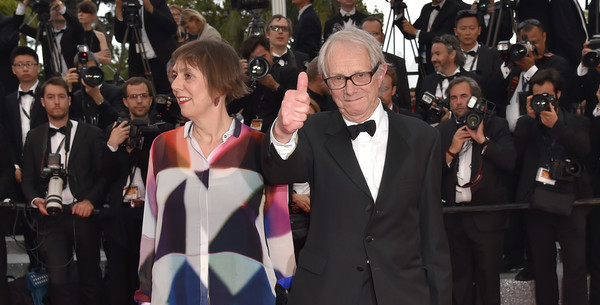
As we said in the episode announcement, this isn't the first time we've had a guest on who has been personally acquainted with the filmmaker they've chosen, but it is the first time the guest has been heavily involved with a good half of the films we're discussing. Rebecca has produced the majority of Ken Loach's films since 1990, including two Palme d'Or winners: 2006's The Wind That Shakes the Barley and 2016's I, Daniel Blake. As a result, she brings unique, fascinating and frequently funny insights into what happened behind the scenes.
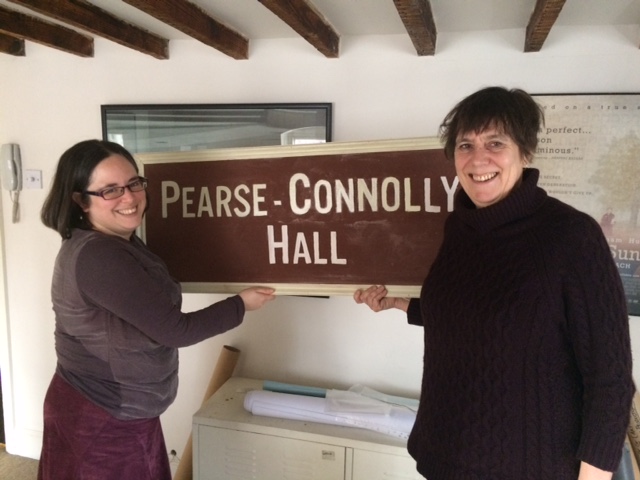
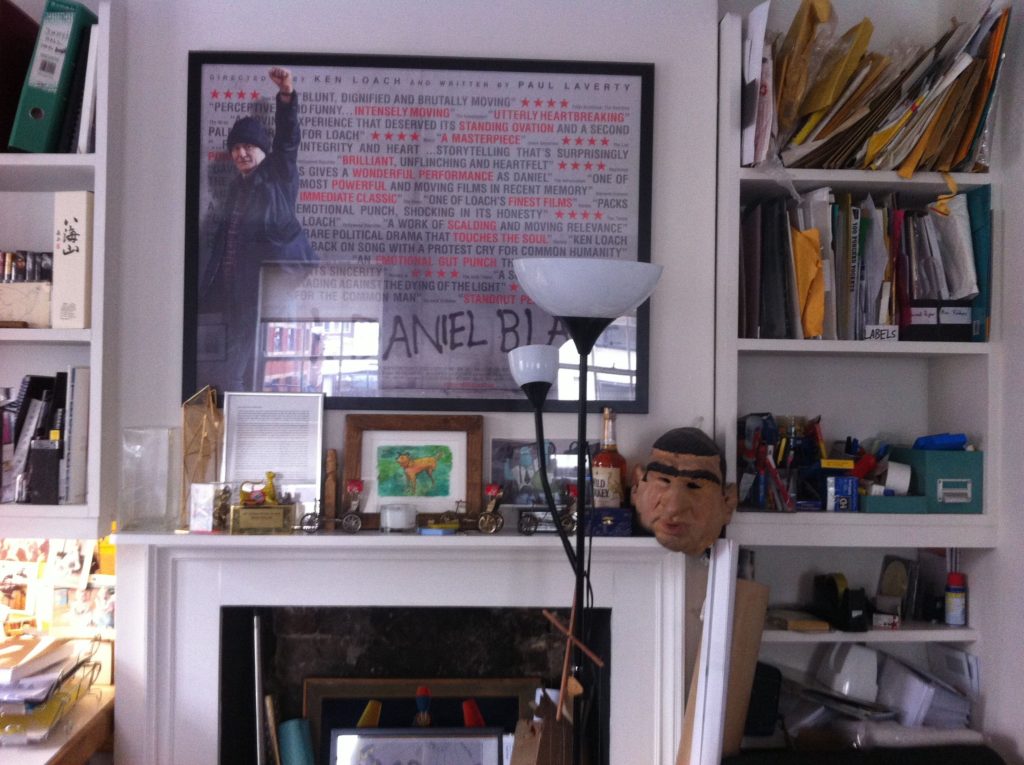
Lee Skyped in from Melbourne, but Sophie journeyed to Sixteen Films - Rebecca and Ken's production company - in Soho, London to record the episode. That's about as belly-of-the-beast as you can possibly get, surrounded by props from Loach's films as you chat about them.
Before Rebecca joins us to talk Loach, Sophie and Lee chat about three of the key films of January 2017 (splitting the difference between the inconsistent release dates of the UK and Australia), looking at Pablo Lorrain's Jacqueline Bouvier Kennedy biopic Jackie, Martin Scorsese's passion project Silence, and Kirsten Johnson's groundbreaking memoir Cameraperson.
It's politics galore this month, but we also squeeze some films in there too, in our first episode of 2017!
Further reading and notes:
Yeah, we were a little confused during recording, but for the record, Silence takes place in the 17th We were definitely right about it featuring Catholics though.
We discuss the effect Cathy Come Home had on the public consciousness of homelessness, and you can learn more in this ten minute BBC audio documentary, and discover how little things have changed in the fifty years since its broadcast in this article from The Guardian.
Rebecca tells us that I, Daniel Blake has made more than one appearance in UK parliament: here's Jeremy Corbyn telling Theresa May that she should watch it during the Prime Minister's Question Time, and here's SNP MP Mhairi Black doing the same in the House of Commons.
One thing we didn't get a chance to mention on the show was that in all those lists of directors who remade their own films, you know who never gets mentioned? No prizes if you guessed Ken Loach. After all, we only noticed that he'd remade his TV play In Two Minds (1967) as Family Life (1971) during the process of watching everything he'd ever made. Time to add him to these perennial trivia articles, internet list makers!
Did Steven Soderbergh make a sequel to a Ken Loach film? Not really. But when he made The Limey (1999) with Terence Stamp, he used footage from Ken Loach's first theatrical feature Poor Cow (1967), featuring a much younger Terence Stamp, in fragmented flashback sequences. Soderbergh talked briefly about incorporating the footage in an interview with Jason Anderson and in another interview with Elif Cercel.
Outro music: “Coloursâ€, written by Donovan and performed by Terence Stamp, from Poor Cow (1967)
The latest episode of Hell Is For Hyphenates, featuring Rebecca O'Brien talking the films of Ken Loach, can be heard on Stitcher Smart Radio, subscribed to on iTunes, or downloaded/streamed via our website.
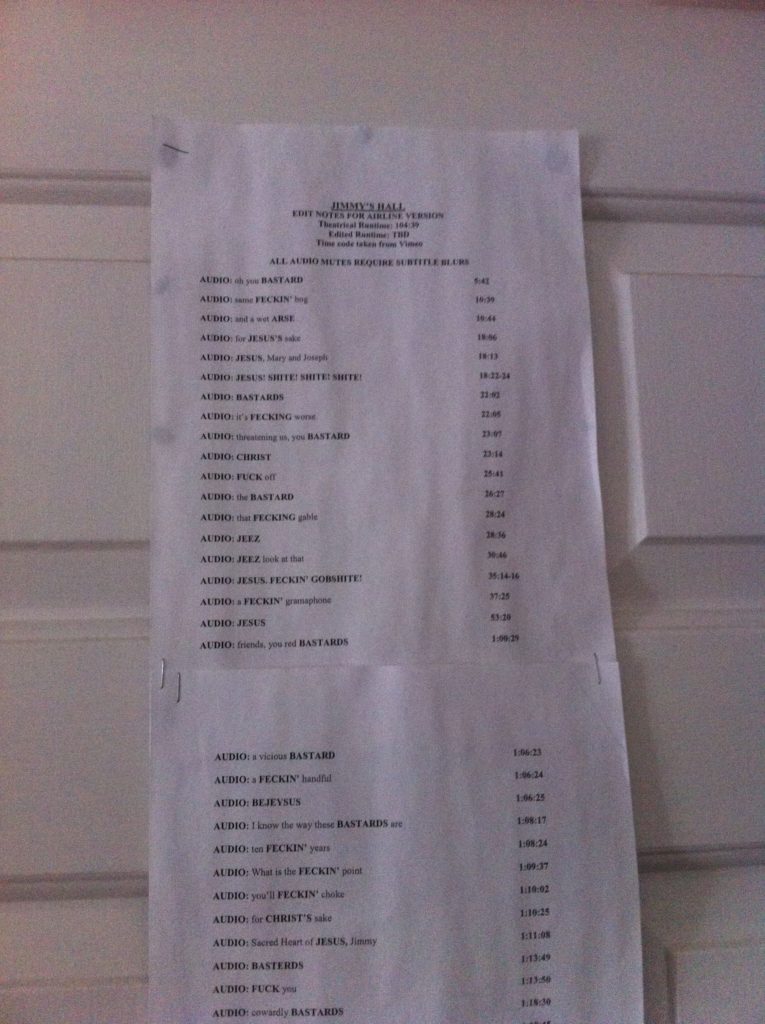
Here are some pictures of Sophie's visit to Sixteen Films:
Sophie and Rebecca with the sign from Jimmy’s Hall (2014)The poster for I, Daniel Blake (2016) and some cool miscellanyPosted for the amusement of visitors, the list of swear words that had to be removed for the airport edit of Jimmy’s Hall (2014)