Author Archives: The Hyphenates

The Nicolas Roeg Cheat Sheet

nicolas-roeg-directs

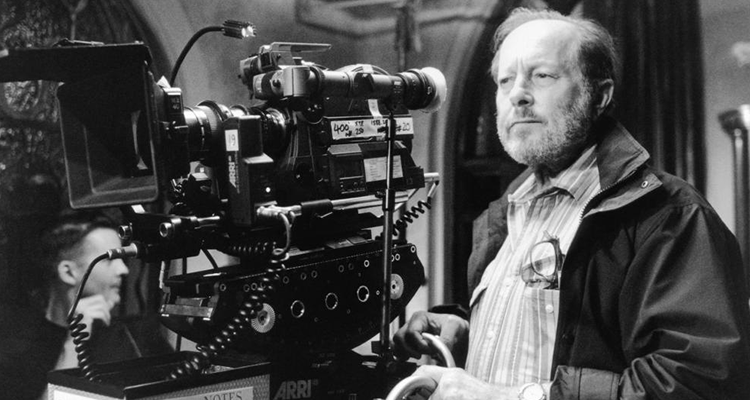
Want to become an instant expert in our filmmaker of the month without committing yourself to an entire filmography? Then you need the Hell Is For Hyphenates Cheat Sheet: we program you a double that will not only make for a great evening's viewing, but bring you suitably up-to-speed before our next episode lands…
nic-roeg-films

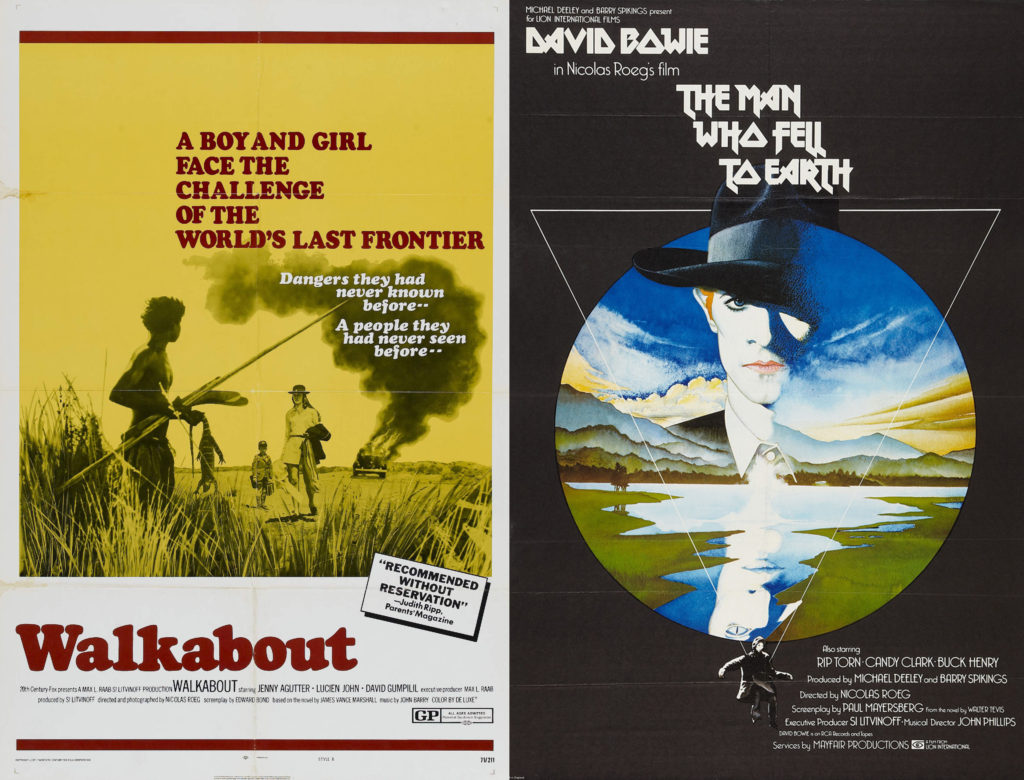
WALKABOUT (1971) and THE MAN WHO FELL TO EARTH (1976)

You could probably write an essay on how Nicolas Roeg's films depict Australia and Australians, from the two census takers in 1986's Castaway to Bryan Brown as an existentialist masseuse in 1995's Full Body Massage. But looming over these works it the masterpiece of cinema that is Walkabout. Two posh English schoolchildren (Jenny Agutter and Luc Roeg) are abandoned in the Australian outback by their father, and are struggle to survive when they are found by a young Aboriginal man on walkabout (the legendary David Gulpilil in his first role). Australia is brutal and beautiful, and Roeg's film is nothing short of a captivating masterpiece that, like Ted Kotcheff's Wake In Fright the same year, suggests that Australia is never more fascinating than when viewed through the lens of a foreigner. Once you've seen that, check out The Man Who Fell To Earth. This strange, experimental film about an alien (David Bowie) who comes to Earth in search of water for his dying planet is experimental and strange in all the ways your expecting, and at least twelve that you're not. The film is a staple of pop culture, but remains curiously divisive: it is perhaps too esoteric in parts, and even now many cinephiles fail to connect to it. But to understand Roeg and his style, it's essential viewing, and the perfect film to watch either alone or with the weirder of your friends.

Substitutions: If you can't get or have already seen Walkabout, try 1973's Don’t Look Now. Although the Venice-set thriller with Donald Sutherland and Julie Christie may not seem of a kind with Walkabout, its disjointed, unsettling style establishes it as being the work of a filmmaker consumed with fear of an almost-mystical displacement that comes with unfamiliar places. If you can't get or have already seen The Man Who Fell To Earth, check out that other experimental Roeg film featuring a legendary pop star from the 1970s: Performance. Mick Jagger stars in this reality-bending film about East London gangsters, rock stars and identity.

The Hidden Gem: Want to try something from off the beaten path? A Nicolas Roeg film that is rarely discussed? You'll want to check out 1985's Insignificance. The adaptation of the stage play by Terry Johnson speculates on what might have happened if Albert Einstein, Marilyn Monroe, Joe DiMaggio and Senator Joseph McCarthy had encountered each other one evening in a hotel. They're never named as such - they're The Professor, The Actress, The Ballplayer and The Senator - but there's no mistaking them. It seems to have slipped into obscurity, but it's a film that stretches far beyond its obvious “icons meet” setup into something far more profound and interesting.

The next episode of Hell Is For Hyphenates, featuring Jocelyn Moorhouse talking Nicolas Roeg, will be released on 30 November 2016.

Our Next Hyphenate: Jocelyn Moorhouse

jocelyn-moorhouse
Director, producer and November 2016 Hyphenate Jocelyn Moorhouse

One of the highlights of 2015 was that moment when The Dressmaker came out and everybody remembered how great Jocelyn Moorhouse is. It had been eighteen years since her last feature film (1997's King Lear adaptation A Thousand Acres with Michelle Pfeiffer, Jessica Lange and Jennifer Jason Leigh), and those of us who never fail to include her superb debut film (1991's Proof with Hugo Weaving, Geneviève Picot and Russell Crowe) in our endlessly-reworked Best Australian Films Of All Time lists had been waiting with bated breath for her next movie.

There was only one thing that audiences have been clamouring for even more than a new Jocelyn Moorhouse film, and that was a Jocelyn Moorhouse guest appearance on Hell Is For Hyphenates.

This month, your prayers will finally be answered as Jocelyn joins us for our November 2016 episode. But which filmmaker has she chosen to discuss with us?

None other than English director Nicolas Roeg!

directed-by-nicolas-roeg

After serving as director of photography on films as diverse as Rogert Corman's The Masque of the Red Death (1964), François Truffaut's Fahrenheit 451 (1966) and Richard Lester's A Funny Thing Happened on the Way to the Forum (1966), Nicolas Roeg turned his hand to directing.

His first five films have been burned into pop culture: the Mick Jagger drama Performance (1970), the Australian-set Walkabout (1971), the notorious thriller Don't Look Now (1973), the David Bowie sci-fi The Man Who Fell To Earth (1976), and Art Garfunkel mystery Bad Timing (1980).

From that point on, his filmography becomes less familiar. With a few exceptions - the Roald Dahl adaptation The Witches (1990), or the non-Vietnam War Joseph Conrad adaptation Heart of Darkness (1993) - the subsequent films failed to pierce public consciousness as keenly as his earlier works.

So why the sudden shift? Did Roeg's style change, or was it the audience’s perception? And what is it about his films that won over and influenced Jocelyn?

Discover the answers when we talk the films of Nicolas Roeg on November 30!

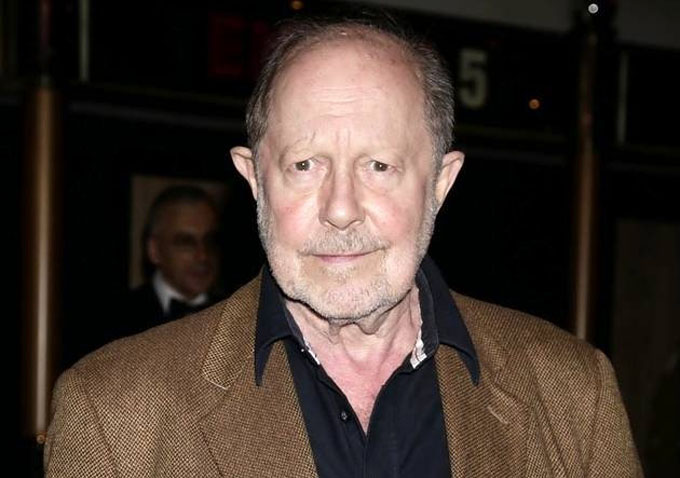
nicolas-roeg
Our next filmmaker of the month, Nicolas Roeg

Muldoon On Kubrick

muldoon-on-kubrick

“They work with Stanley and go through hells that nothing in their careers could have prepared them for, they think they must have been mad to get involved, they think that they'd die before they would ever work with him again, that fixated maniac; and when it's all behind them and the profound fatigue of so much intensity has worn off, they'd do anything in the world to work for him again. For the rest of their professional lives they long to work with someone who cared the way Stanley did, someone they could learn from. They look for someone to respect the way they’d come to respect him, but they can never find anybody … I've heard this story so many times.” - Michael Herr, screenwriter of Full Metal Jacket

There's something extra fascinating about having an actor as a guest on the show, as it's very easy to infer that their choice of filmmaker is someone they would love to have worked with. Despite the stories of endless takes and production schedules that stretch into years, would Rhys Muldoon have still wanted to work with cinema's acknowledged master? You'll have to listen to find out.

Stanley Kubrick is the Hell Is For Hyphenates white whale (we have about seventy white whales, btw) and it was exciting to finally cover his groundbreaking, influential works. And only a month after we talked Hitchcock, it's making 2016 a concentration of cinema's great architects.

But before Rhys joins us, we look at a selection of the past month's new releases, including the superpowered kids of Miss Peregrine's Home For Peculiar Children, the 1930s Hollywood of Café Society and the strangely communicative aliens of Arrival.

If that doesn't satisfy you, please enjoy this further reading:

  • The goofy Full Metal Jacket audition tape made by actor Brian Atene as mentioned in this month's episode can be viewed in its toe-curling glory here.
  • The Kubrick Site is a non-profit and comprehensive archive devoted to the works of Stanley Kubrick.
  • There were not many interviews with Kubrick, but this from 1987 conducted by Rolling Stone is worth a read.
  • Few filmmakers have been as heavily-mythologised as Kubrick, and this fantastic article from Taste of Cinema examines the ten greatest in seductive detail.
  • This must-read piece from the BFI and Sight and Sound looks at Stanley Kubrick as cinephile, and includes the only known list Kubrick ever made of his ten favourite films. The list was written back in 1963, and there's some informed guesswork as to how it may have changed in the following decades. Feel free to speculate, as we have been, which filmmaker Stanley might have chosen to talk about had we ever enticed him to appear on Hyphenates.
  • Sophie made the journey to the actual Overlook Hotel from The Shining, and says it’s one fo the coolest places she’s ever been to. Check out this article from Fact Mag about the upcoming horror-themed Overlook Film Festival.
  • Finally, if you've never seen Lee's TV show The Bazura Project, then congratulations on missing his questionable impressions of James Mason in Lolita, Malcolm McDowell in A Clockwork Orange, Jack Nicholson in The Shining, and Vincent D'Onofrio in Full Metal Jacket.

Outro music: “We’ll Meet Again”, written by Ross Parker and Hugh Charles, and performed by Vera Lynn, from Dr Strangelove, or How I Learned To Stop Worrying and Love the Bomb (1964)

The latest episode of Hell Is For Hyphenates, featuring Rhys Muldoon talking Stanley Kubrick, can be subscribed to on iTunes, listened to on Stitcher Smart Radio, or downloaded/streamed directly from our website.

Hell Is For Hyphenates – October 2016

Actor, author and musician Rhys Muldoon is our guest this month, as we look back at some of the key films of October 2016, including Tim Burton’s Miss Peregrine’s Home For Peculiar Children, Woody Allen’s Café Society, and Denis Villeneuve’s Arrival. Then Rhys takes us through the films, career and influence of cinema’s most enigmatic and revered figure, Stanley Kubrick.

The Stanley Kubrick Cheat Sheet

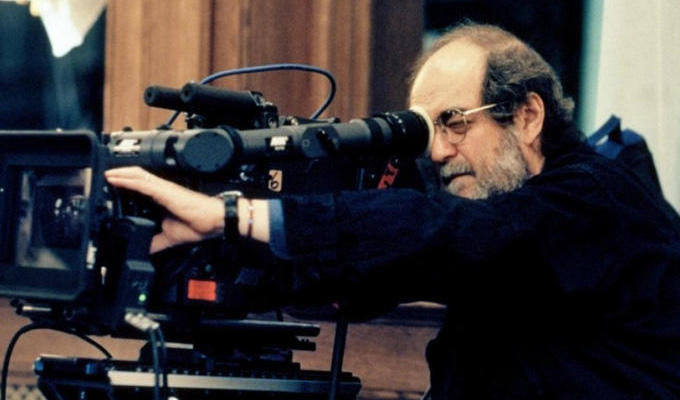
kubrick-directs

Want to become an instant expert in our filmmaker of the month without committing yourself to an entire filmography? Then you need the Hell Is For Hyphenates Cheat Sheet: we program you a double that will not only make for a great evening's viewing, but bring you suitably up-to-speed before our next episode lands…

stanley-kubrick-cheat-sheet

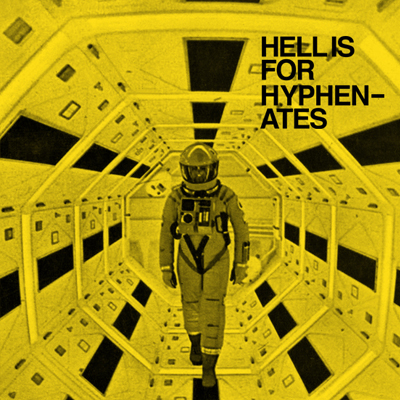
DR STRANGELOVE (1964) and 2001: A SPACE ODYSSEY (1968)

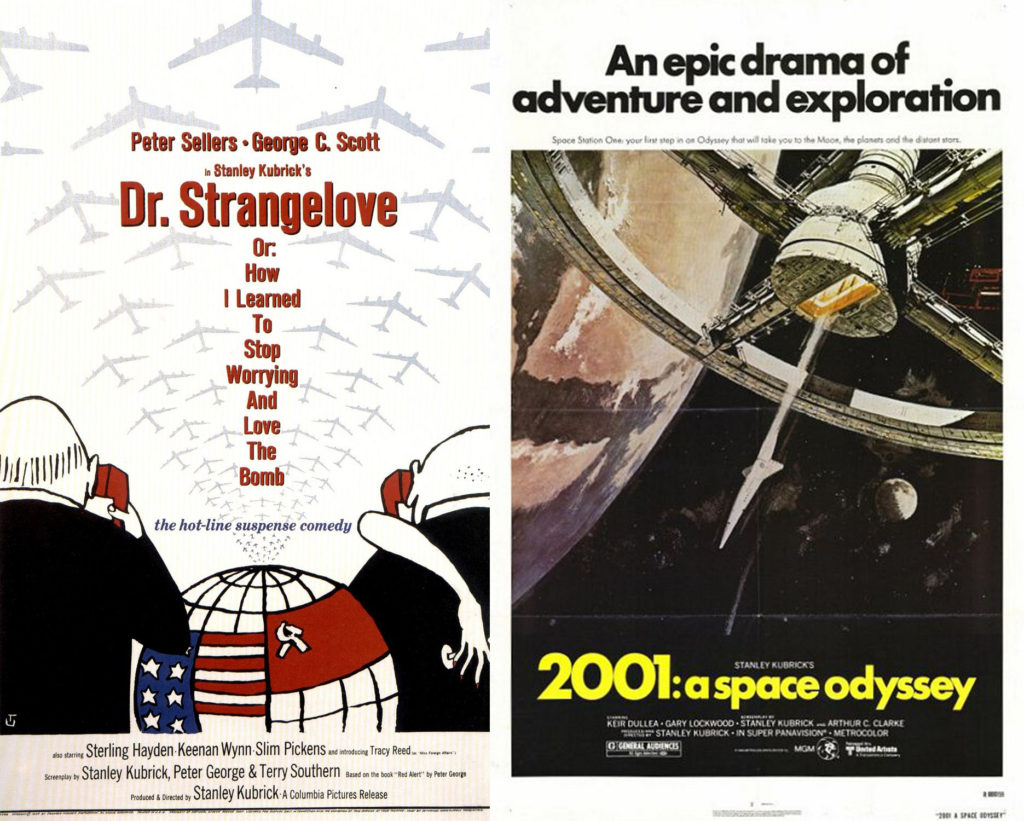
Which two films sum up Stanley Kubrick's career? Can two films possibly do such a thing? They cannot, which speaks to the eclectic genius that Kubrick embodied. But with these two choices, we're confident you'll get a good idea of the different shades of Stanley: his humour and his control, his insight and his imagination. Dr Strangelove or: How I Learned To Stop Worrying and Love the Bomb is the ultimate cold war satire, an achingly funny film about the USA and Russia on the brink of nuclear war. Peter Sellers stars as US President Merkin Muffley, Group Captain Lionel Mandrake, and the titular Dr Strangelove, in this profoundly quotable and keenly rewatchable comedy. Once you've watched that, you'll need to go and find a rep cinema. An actual rep cinema that's playing 2001: A Space Odyssey in 70mm, or maybe 35mm, or in a stretch 4K digital. If there was ever a film that should only ever under any circumstance be seen big, it's this one. (Okay, maybe Lawrence of Arabia.) But - grudgingly - perhaps in the era of high-definition television and Blu-ray players and surround sound, we can just about countenance the idea of you watching arguably the most profound cinematic experiences of all time in the comfort of your own home. But only if you turn the lights off and put your phone in the other room, because you're in church.

Substitutions: If you can't get or have already seen Dr Strangelove, seek out 1962's Lolita. It's not exactly a clean substitute, but it's an equally great insight into human psychology (albeit from an entirely different angle), and hey, Peter Sellers. If you can't get or have already seen 2001: A Space Odyssey, seek out 1980's The Shining. Look, there's obviously no corroboration here. What, are we going to point you to Kubrick's other science fiction film that forever redefined cinema? But, like every possible combination of Kubrick films, you can't really fault this double.

The Hidden Gem: Kubrick's earlier films aren't as widely discussed as his later work, which means his debut feature Fear and Desire (1953) rarely gets a look-in. And that's a shame, because his film about four soldiers trapped behind enemy lines is an intense and complex work. It's rawer than his more controlled movies, but you can see the seeds of his style being sown in this tight 62 minute introduction.

The next episode of Hell Is For Hyphenates, featuring Rhys Muldoon talking Stanley Kubrick, will be released on 31 October 2016.

Our Next Hyphenate: Rhys Muldoon

rhys-muldoon
Actor, author and October 2016 Hyphenate Rhys Muldoon

Rhys Muldoon is the very definition of a multi-hyphenate.

As an actor, he's appeared in films such as Danny Deckchair (2003), The Crop (2004), The Extra (2005), Valentine's Day (2007) and Bitter & Twisted (2008), in television shows such as Bastard Boys, House Husbands, Blackjack, Grass Roots and Play School, and on stage in Don's Party, Amadeus, Romeo + Juliet, Stuff Happens, and Steven Soderbergh's production of Tot Mom.

He has released two albums of children's music, both of which were nominated for ARIA Awards: I'm Not Singing (2012) and Perfect is the Enemy of Good (2015). He also co-wrote the children's book Jasper & Abby and the Great Australia Day Kerfuffle with then-Prime Minister Kevin Rudd.

Now, one line on the CV is about to eclipse all the others: Hell Is For Hyphenates guest host!

We are delighted Rhys will be joining us in this month's episode, and very excited at his choice of filmmaker…

Stanley Kubrick!
directed-by-stanley-kubrick

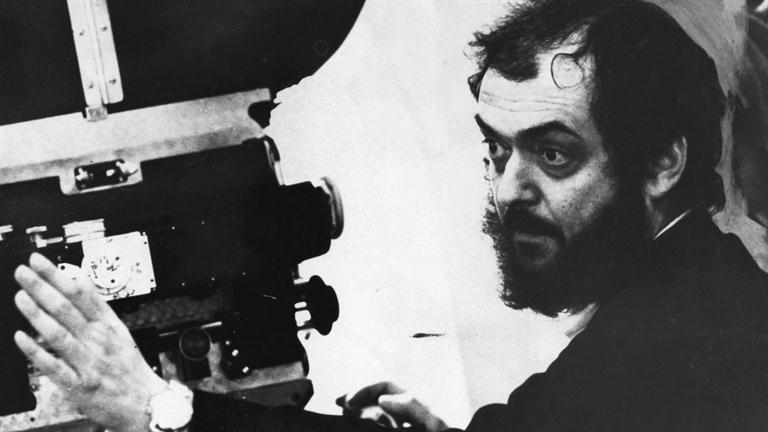
Kubrick, the filmmaker still spoken of in hushed, reverent tones by cinephiles and filmmakers alike, hardly needs an introduction. Which is usually the thing you say before you introduce them anyway.

The obsessive and detailed Kubrick only made 13 films, but few would argue against the idea that his works changed cinema forever: Fear and Desire (1953), Killer's Kiss (1955), The Killing (1956), Paths of Glory (1957), Spartacus (1960), Lolita (1962), Dr Strangelove or How I Learned To Stop Worrying and Love the Bomb (1964), 2001: A Space Odyssey (1968), A Clockwork Orange (1971), Barry Lyndon (1975), The Shining (1980), Full Metal Jacket (1987), Eyes Wide Shut (1999).

We're just gonna leave that list there. Not much else needs to be said. Although we will be saying a lot more, so make sure you come back on the morning of October 31 as we chat Stanley Kubrick with Rhys Muldoon!

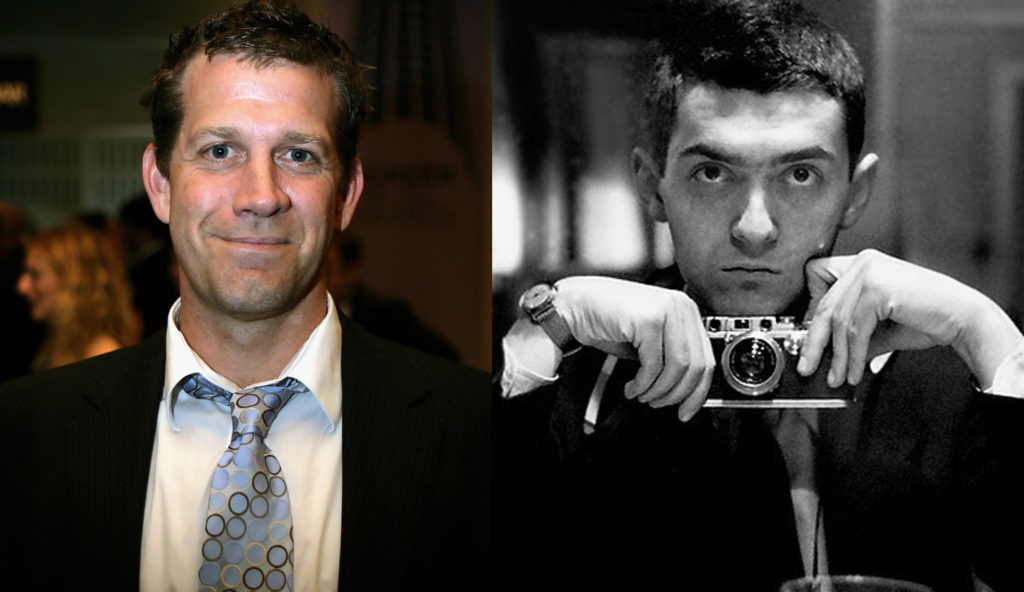
stanley-kubrick
Our next filmmaker of the month, Stanley Kubrick

Malone and Davies on Hitchcock

malone-and-davies-on-hitchcock

Good evening.

It's hard to believe that it took six-and-a-half years for us to finally reach Alfred Hitchcock, but such is the unpredictability of the Hell Is For Hyphenates formula. And once we reached him, we had to go big with not just one special guest, but two!

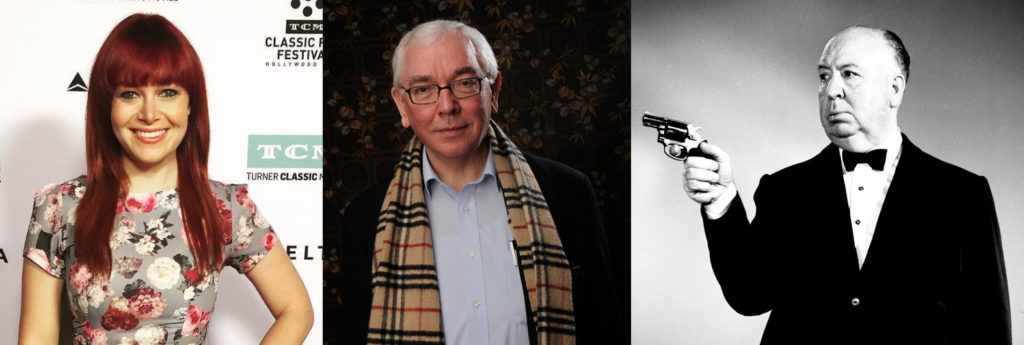
We'd begun talking with Alicia earlier in the year about joining us on the show, and she'd flagged that she would very much like to talk about the films of Alfred Hitchcock. Just like two strangers meeting on a train, or an advertising executive calling out to a page boy looking for a spy named George Kaplan, or a missing woman's rare tea label catching on the window outside your cabin, this turned out to be a very fortunate coincidence.

See, we managed to score an interview with legendary filmmaker Terence Davies, who had said that he'd be interested in talking with us about not all of Hitchcock's films, but three in particular. The timing could not have been better.

The chat with Davies was conducted when he was in Australia as a guest of the Melbourne International Film Festival. He was there for the premiere of his film Sunset Song, and MIFF generously allowed us some time to talk about something other than the film Davies was here to promote. Sunset Song has just this month been released into Australia cinemas, so if you're in the country, do make an effort to go and see it.

As fans of the 2010 Davies memoir-documentary Of Time and City, we were secretly hoping that he would as delightfully acerbic and ruthless as his narration of that film. We were only slightly disappointed that he turned out to be the nicest, most delightful man, and one we would have happily chatted to for several hours or days had his schedule permitted it. But we were honoured to be given the time that we did get, and we would like to thank him, MIFF, as well as publicists Asha Holmes and Frances Mariani.

vertigo
Here I was recorded, and there I was uploaded. It was only a moment for you; you took no notice.

But the Davies segment itself comes at the end of the show. The bulk of this month's episode actually marks our first ever tri-continental recording, with Sophie in London, Lee in Melbourne, and guest Alicia in Los Angeles. It made the scheduling a little challenging, but it was worth it. A technical issue caused us to delay the recording by 24 hours, at which point Alicia was forced to call in on her phone as she drove to record a video for the film website Fandango. Given how many Hitchcock films feature a protagonist on the run, this felt entirely appropriate. Had Hitchcock made films in the era of mobile phones and Skype, there's little doubt he would have employed this setup for some exciting thriller.

Before we get to Hitchcock, we compare notes on some of this month's releases, including Oliver Stone's Snowden, Antoine Fuqua's The Magnificent Seven, and Rachel Lang's Baden Baden.

The “further reading” section of these show notes could have been endless, given the infinite number of Hitchcock-related links available on the web, but here are some of our favourites:

  • Every single Hitchcock cameo ever is collected in this fan edit video, featuring everything from his first appearance in The Lodger to his ingenious inclusion in Lifeboat.
  • This jaw-dropping 3 minute time-lapse reconstruction of Rear Window reconstructs the entire building and courtyard, showing the events of the movie as they would have been seen in wide shot.
  • If you want to ruin Hitchcock's Rebecca for yourself, this sketch from British comedy duo Mitchell and Webb reimagines the film from the perspective of the first Mrs De Winter. It is absolutely spot-on.
  • In this episode, Alicia mentions her talk with Kim Novak, Eva Marie Saint and Tippi Hedren for Schmoes Know. You can check out her encounter with Hitchcock's icy blondes here.
  • In 2014, our host Paul Anthony Nelson decided the Hi4H workload wasn't nearly crippling enough, and undertook his own side project. From Pleasure To Plot was his year-long trek through Hitchcock's career: 52 films in 52 weeks. If you're wondering what Paul would have made of Hitchcock, you can go back to the blog and check out his individual entries and final summary.

Outro music: score from North By Northwest (1959), composed by Bernard Hermann, and the score from Psycho (1960), also composed by Bernard Hermann

The Alfred Hitchcock episode of Hell Is For Hyphenates, featuring special guests Alicia Malone and Terence Davies, can be heard by subscribing to our show on iTunes, listening in via Stitcher Smart Radio, or you can download it or stream it directly from our website here.

terence-and-lee
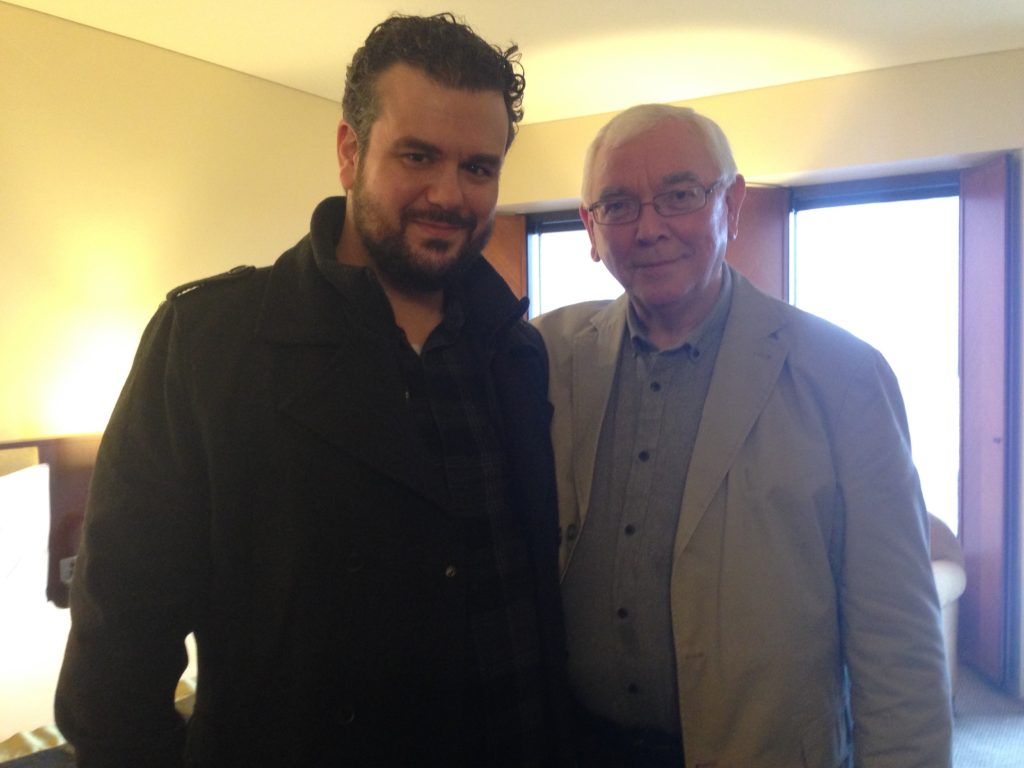
Lee with guest Terence Davies, taken on 29 July 2016 (photo credit: Frances Mariani)

Hell Is For Hyphenates – September 2016

Film reporter Alicia Malone joins us this month as we look back at some of the key films of September, including Oliver Stone’s Snowden, Antoine Fuqua’s The Magnificent Seven, and Rachel Lang’s Baden Baden. We then jump into the filmography and career of one of cinema’s most recognisable auteurs, Alfred Hitchcock, and talk about his classics, his lesser-known films, and how his work changed cinema forever. Then, in a special bonus segment, we are then joined by renowned English filmmaker Terence Davies, who discusses his three favourite Hitchcock films, and what effect they had on him.

The Alfred Hitchcock Cheat Sheet

hitchcockdirects

Want to become an instant expert in our filmmaker of the month without committing yourself to an entire filmography? Then you need the Hell Is For Hyphenates Cheat Sheet: we program you a double that will not only make for a great evening's viewing, but bring you suitably up-to-speed before our next episode lands…

hitchcockfilms

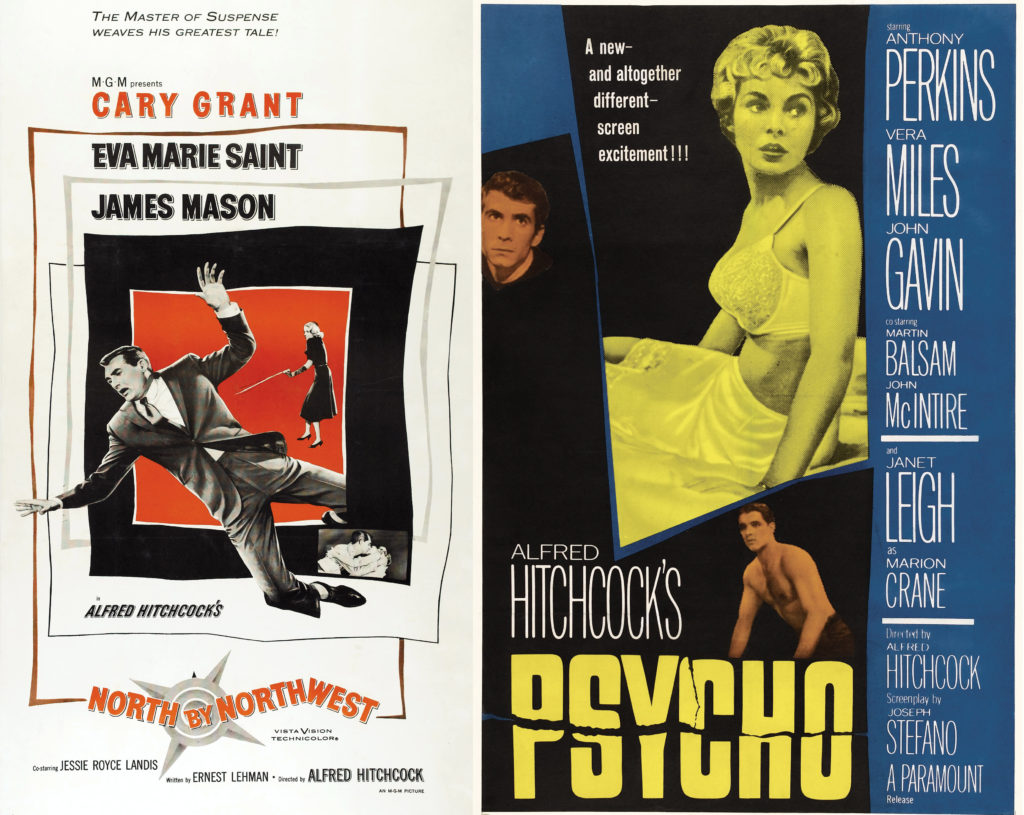
NORTH BY NORTHWEST (1959) and PSYCHO (1960)

How do you find two films that sum up a filmography like that of Alfred Hitchcock's? Do we pick a British film and an American film? One from his silent era and one from his Selznick era? There are endless permutations of Hitchcock to choose from, but if you're venturing into his works for the first time, these are the two films that should give you a fair sketch of the director everyone is familiar with. Our evening begins with North By Northwest, the mistaken identity everyman espionage comedy thriller starring Cary Grant, Eva Marie Saint and James Mason. With a perfect script by Ernest Lehman, stunning cinematography by Robert Burks, and a serious contender for the best Bernard Hermann score of all time, this is the perfect instance of Hitchcock having as much fun as he ever had. So many of his films feature ordinary people displaying bafflement as they're drawn into international intrigue, and North By Northwest sits proudly at the top of this sub-genre. Once North is over, scare yourself senseless with Psycho, the film that changed cinema forever in more ways than one. 56 years on it's still terrifying as hell, with its impact undiminished by decades of twists and turns being pop cultured to bloody death. If you're yet to see this masterpiece of horror, now is the time to check in to the Bates Motel.

Substitutions: If you can't get or have already seen North By Northwest, seek out 1954's Rear Window. It's an absolute nail-biter, so not quite the romp that North is, but as high-concept Technicolor Hitchcocks go, it's pretty unbeatable. If you can't get or have already seen Psycho, be sure to check out 1963's The Birds. Its bright, attractive palette is at glorious odds with the palpable dread of its When Nature Attacks thrills. How many other filmmakers could scare the hell out of you and also make you want to move immediately to Bodega Bay?

The Hidden Gem: One of Hitchcock's earliest films was also one of his best. 1927's The Lodger is a silent thriller that best presages the distinct style he would one day settle in to. It's entirely gripping, features technical flourishes that would look revolutionary if it was used today.

The next episode of Hell Is For Hyphenates, featuring Alicia Malone talking Alfred Hitchcock, will be released on 30 September 2016.

Our Next Hyphenate Alicia Malone

alicia-malone
Film reporter, TV presenter and September 2016 Hyphenate Alicia Malone

We are very excited to announce our next guest will be Alicia Malone, Australian film reporter, TV host, and lifelong lover of cinema. Our favourite part of her bio (nicked from her website) is this: “While at school she created a Film Club, electing herself President. Eventually the School Principal asked her not to get up in assembly to talk about movies anymore.” Hi4H is nothing if not designed for people with this exact origin story.

After numerous hosting duties in Australia, including covering the AFI Awards and Tropfest, Alicia packed her things and headed to Hollywood in search of fame and fortune, both of which she has found. She has covered Cannes, Sundance, Toronto and the Oscars, and interviewed just about every movie star you'd care to mention. You can generally find her film coverage at Fandango, Screen Junkies, HitFix, and dozens of other outlets. In 2015, she delivered a TED talk about the lack of girls in film, and why that needs to change.

And now - most importantly of all - she is joining Hell Is For Hyphenates. But which filmmaker will she be discussing?

None other than the master of suspense himself, Alfred Hitchcock!

directed-by-alfred-hitchcock

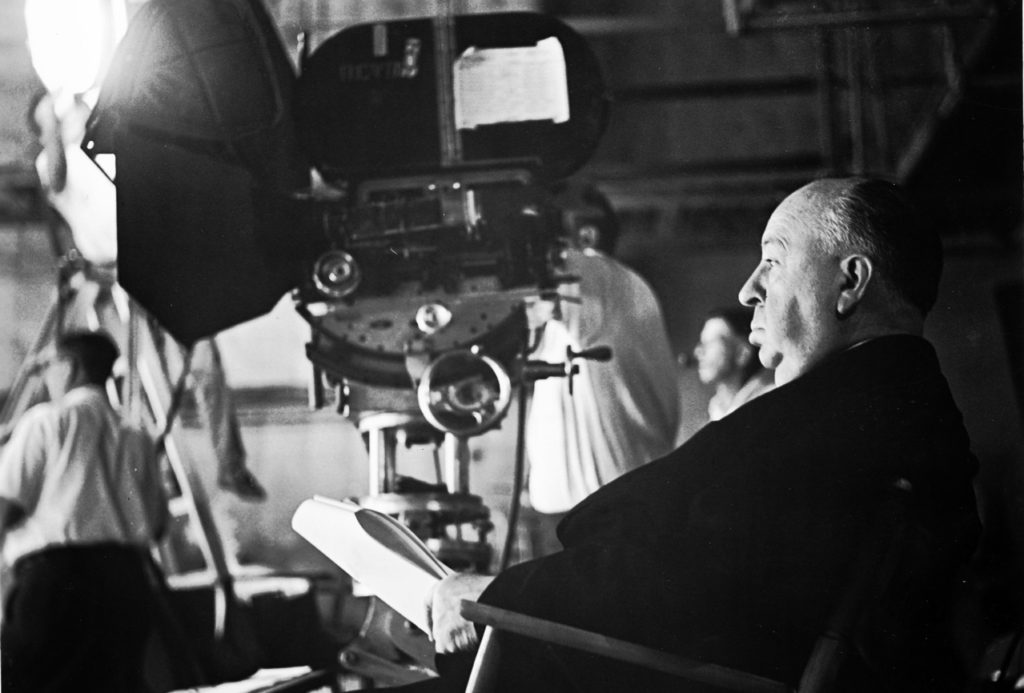
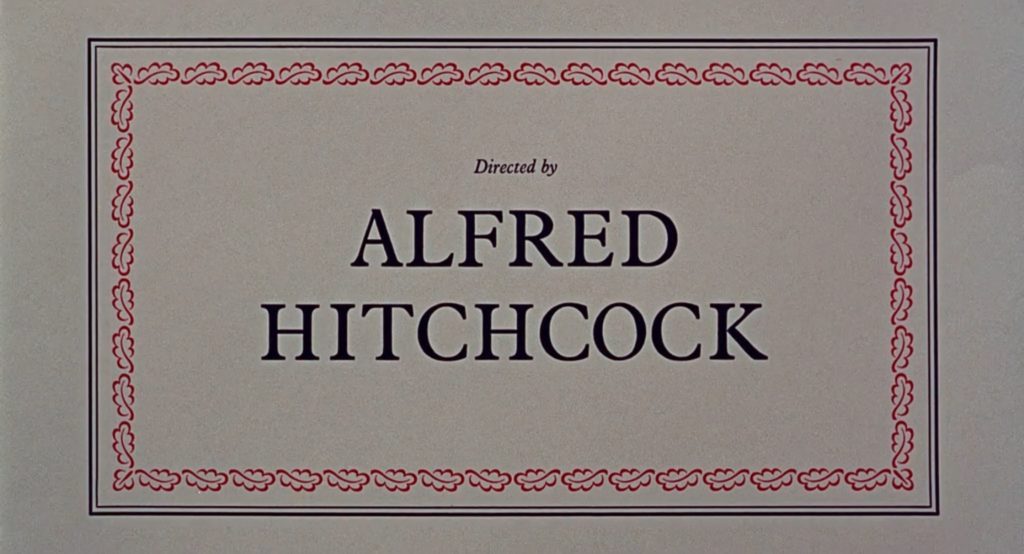
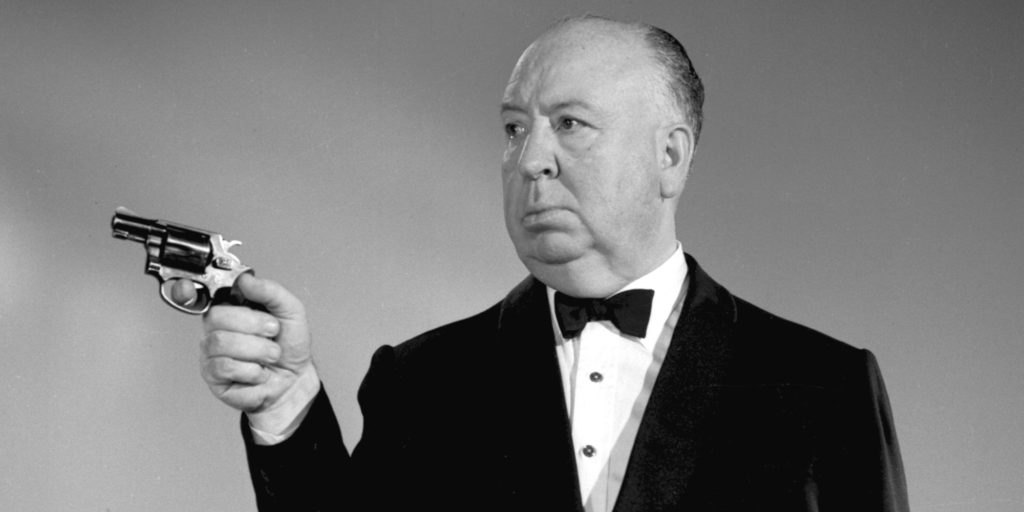
That's right. After six-and-a-half years of the show, we're now finally getting to one of the biggest names in filmmaking, and certainly one of the most influential. He hardly needs an introduction: Psycho, The Birds, North By Northwest, Rebecca, Rear Window and Vertigo are all part of our DNA. How many directors are instantly recognisable from a single-line silhouette drawing alone?

psycho-hitch-hi4h

There is also something else in this episode. Something we're not going to tell you about just yet. After all, an episode about Hitchcock deserves special treatment, and this edition of Hi4H will contain a fairly sizeable surprise. It seems only fitting that we should leave you in suspense until the last possible moment.

What will this surprise be? And what effect did the films of Alfred Hitchcock have on a young Alicia? Just what are the 39 steps?

Join us on September 30 when we find out!

Our next filmmaker of the month, Alfred Hitchcock