
Author Archives: The Hyphenates

Hii On McQueen

We can't remember how long ago we added Ming-Zhu Hii to our guest wishlist, but in the intervening years she's directed short films, landed prominent roles on half of Australia's comedy and drama TV shows, and appeared in films like Peter Rabbit and That's Not Me. Frankly, we're lucky we were able to book her.

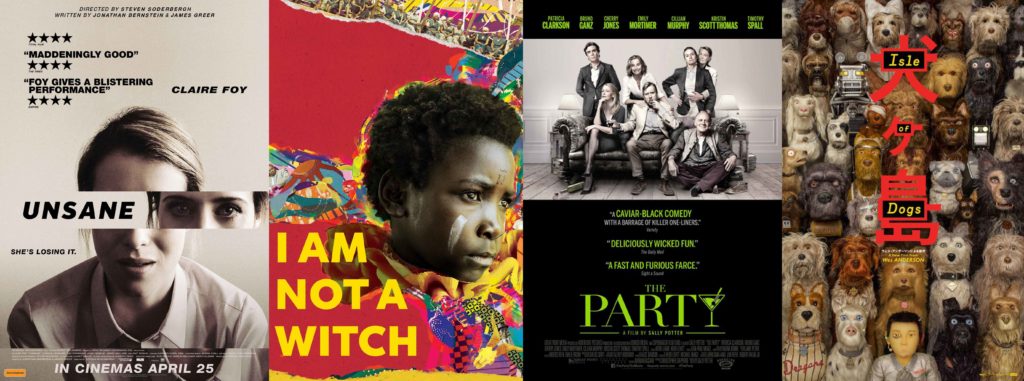
Ming-Zhu joins us for the whole damn show, including the reviews! This month, we look at Unsane, the thriller Steven Soderbergh shot on his damn iPhone, Rungano Nyoni's debut feature I Am Not a Witch, Sally Potter's single-location comedy-drama The Party, and Wes Anderson's stop motion animation Isle of Dogs. If you love high drama and lots of laughs, but can't decide which of these films will deliver, then this month's reviews will certainly provide you with what you need.
We then look at the Cannes Film Festival's announcement that Netflix films will no longer be permitted to screen in competition. Is Cannes shooting itself in the foot by ignoring the natural evolution of cinema? Or is it one of the last remaining defenders of the traditional theatrical experience?

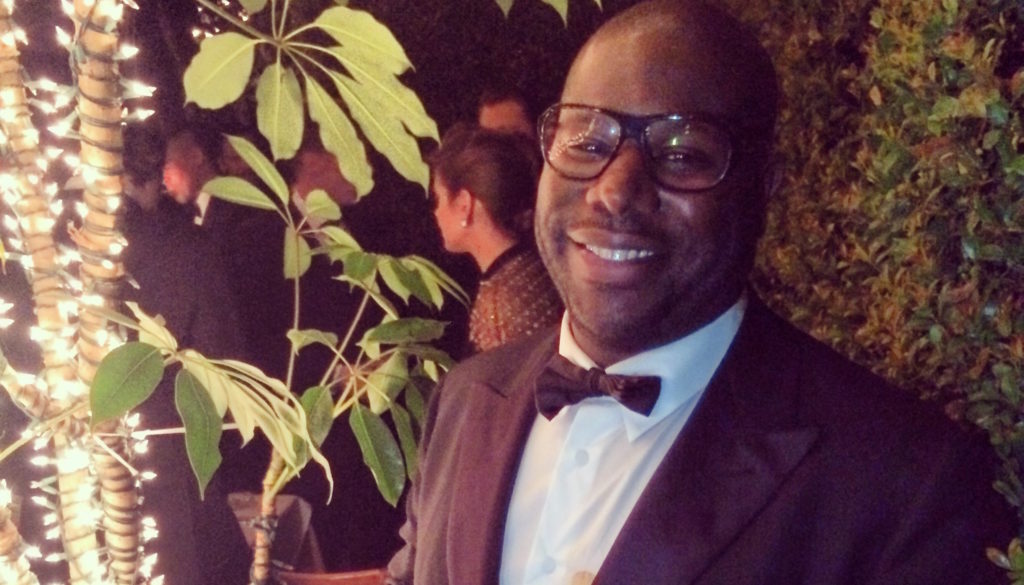
Finally, Ming-Zhu introduces us to the works of her filmmaker of the month, Steve McQueen! We all know McQueen's work as director of Hunger (2008), Shame (2011), and 12 Years a Slave (2013), but that is only part of the story. McQueen was an internationally-renowned artist long before he tackled features, and Ming-Zhu walks us through his fascinating history.

You may have noticed (or, mostly likely, not noticed even a little bit) that there was no cheat sheet for this show, and that was largely because no cheating is needed - you can quite reasonably watch all of McQueen's readily-available work over the course of a weekend and still have time to go to that thing. Or you could blow off the thing entirely and watch Shame twice. We know which one we'd do.

But in addition to Hunger, Shame, and 12 Years a Slave, there are some McQueen shorts available online: you can right this second watch his first film Bear (1993) here, Five Easy Pieces (1995) here, and Western Deep (2002) here. And if you like your TVCs, you can also watch his commercial Mr Burberry (2016) here.

Further reading:

Outro music: score from 12 Years a Slave, composed by Hans Zimmer

The latest episode of Hell Is For Hyphenates, featuring Ming-Zhu Hii talking the films of Steve McQueen, can be heard on Stitcher Smart Radio, subscribed to on iTunes, or downloaded/streamed directly from our website.

Hell Is For Hyphenates – April 2018

Ming-Zhu Hii joins us to talk the films of Steve McQueen!

Rochelle and Lee are joined by this month’s guest, actor and filmmaker Ming-Zhu Hii! Ming-Zhu joins us to chat about some of the key films from this month, including Steven Soderbergh’s feature-film-shot-on-an-iPhone Unsane (01:21), Rungano Nyoni’s dramatic debut I Am Not a Witch (07:40), Sally Potter’s one-act stageplay-esque The Party (14:47), and Wes Anderson’s stop motion animation Isle of Dogs (20:37).

They then look at the news that the Cannes Film Festival has banned Netflix films from playing in competition. Is Cannes turning its back on the changing nature of cinema, or helping to preserve its traditions? (27:10)

Then, Ming-Zhu takes us through the films of British filmmaker and artist Steve McQueen. McQueen is best known for his feature films Hunger (2008), Shame (2011), and 12 Years a Slave (2013), all of which received high critical praise, and the latter of which won the Oscar for Best Picture. But McQueen had a prolific career before he entered the world of feature films, winning the Turner Prize for his art, as well as making short films, video installations, TV commercials, music videos, and much more besides. Ming-Zhu talks about how she first discovered McQueen’s work, and what it means to her. (35:48)

Our Next Hyphenate Ming-Zhu Hii

Actor, filmmaker and Hi4H April 2018 guest host Ming-Zhu Hii

You've definitely seen the work of Ming-Zhu Hii.

Maybe you caught her in some of Australian television's best comedies, appearing with Kates McCartney and McLennan in Get Krack!n, or starring alongside Shaun Micallef in The Ex PM.

Or maybe you saw her in really any of our high-profile dramas, in Sisters, or Newton's Law, or Party Tricks, or Offspring.

You'll also have seen her in some recent (and current) films, as the director Corrie in That's Not Me, and as Sarabeth in the currently-in-cinemas Peter Rabbit.

But we're not at the end of the bio yet, because she's also a filmmaker in her own right, writing and directing the 2016 espionage short Close Observations of a Single Subject, as well as the forthcoming psychological thriller short Intrusion.

But forget all those credits, as well as the numerous other ones we ran out of room for, because Ming-Zhu is about to top them all with her next role: Hell Is For Hyphenates guest host!

But which filmmaker has she chosen to talk about?

None other than Steve McQueen!

If you recently listened to last month's episode, you'd be forgiven for thinking that the star of The Great Escape had a few directorial efforts up his sleeve.

But those of you who are one stage closer to galaxy brain will immediately know that we're talking about the director of the Best Picture Oscar-winning 12 Years a Slave (2014), as well as the phenomenal Hunger (2008) and Shame (2011).

But McQueen isn't just a feature director with a flawless three-for-three track record: he was directing for long before Hunger, as a prolific maker of short films, music videos, and video installation art pieces. Even if you're super familiar with his three feature films, we're pretty confident that there's a whole lot about him you don't know. We're certainly learning a lot as we prep for this episode.

But most importantly: what is it about McQueen's work that Ming-Zhu loves so much?

Check back in with us on April 30 when we find out!

Our next filmmaker of the month, Steve McQueen

Segan On Hopper

In this episode's announcement, we boasted that we had one Kid Blue talking about another Kid Blue. But it's no coincidence that our guest Noah Segan and his filmmaker of the month played distinct characters who just happened to share a name. And the only place you can hear the story behind it is by listening to this month's Hyphenates!

(Note: you may possibly be able to hear it in other places, but the rules of plausible deniability mean that if we can't be bothered googling it, we're allowed to claim the exclusive.)

It's a jam-packed episode as we talk not one, not two, not three, not four, not six, but five films! Rochelle and Lee look back at some of this month's new releases, as they debate Steven Spielberg's pop culture paean Ready Player One, Aki Kaurismäki's wry Finnish comedy-drama The Other Side of Hope, Ruben Östlund's wry Swedish comedy-drama The Square, Armando Iannucci's wry Russian comedy-satire The Death of Stalin, and Garth Davis's non-wry Biblical drama Mary Magdalene. One of those films provokes some sparks, but we won't say which.

We're then joined by Noah, who talks about what it's like to go from being a fan of classic films to the star of future classics. Is there a cognitive dissonance that comes from growing up on Star Wars and then suddenly finding yourself piloting an X-Wing?

Then it's time for Noah's filmmaker of the month, Dennis Hopper. Noah's love of New Hollywood shines through as he examines at a great actor whose first film changed American cinema forever. So, you know, no pressure on Noah's eventual directorial debut. But there's more to Hopper the Director than Easy Rider, and if you've never considered his career as a filmmaker, stop reading this and listen to the show. Then continue reading this.

Also, we're very willing to invest in Noah's million dollar app idea.

Further reading:

  • Rochelle goes into more detail about her love for Mary Magdalene over at her blog It's Always Better in the Dark.
  • Lee talked about his adoration of The Square in his rundown of the best films of 2017. (Film festival screenings vs general release dates mean a film can come out a year after they made your fave-of-the-year list.)
  • Make sure you check out some of Noah Segan's amazing film writing over at Birth Movies Death.
  • Hyphenates alum Edgar Wright interviewed Steven Spielberg for Empire, with the wide-ranging chat covering everything from Duel to Ready Player One. You can read an excerpt from the chat here.
  • If you'd like to watch Hopper's final film, the 2008 probably-an-advertisement short film Pashmy Dreams starring Gwyneth Paltrow as Gwyneth Paltrow, this link is the most kosher one we could find.
  • Hopper talked about his directorial career with The Guardian back in 2001, and in 2008 told Indiewire about his desire to direct more films.
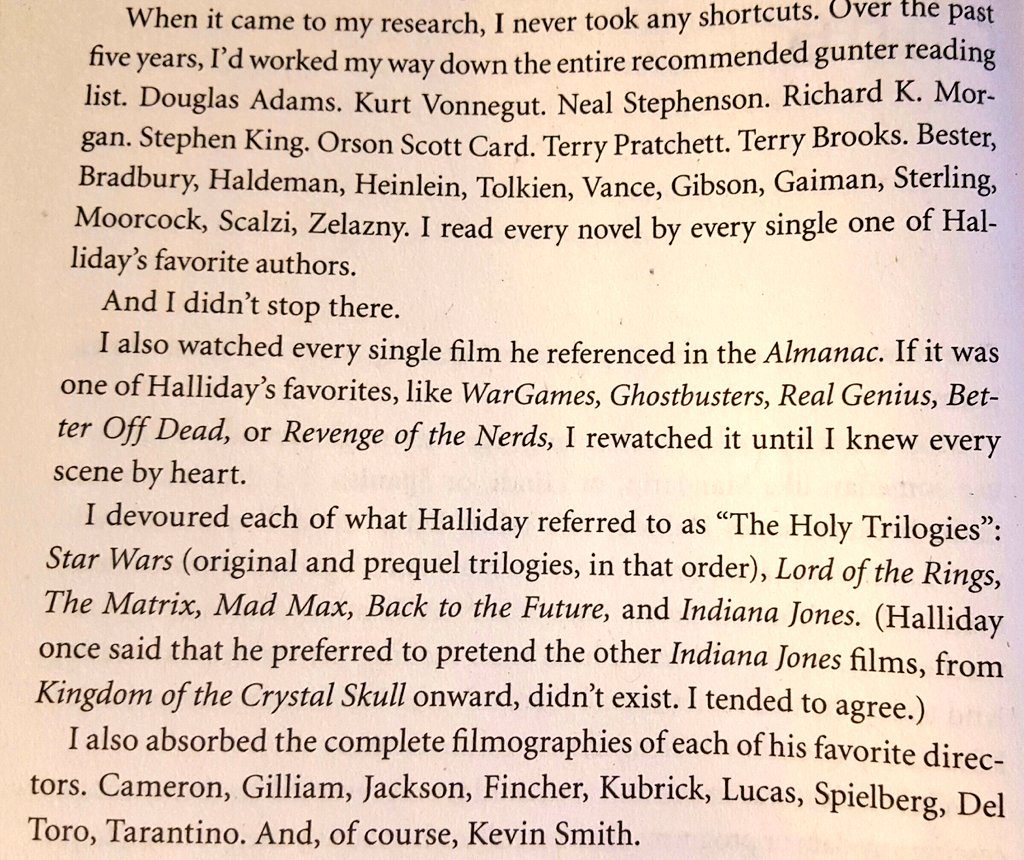
  • And the extract of the Ready Player One book that was going around the net a while back, the one Lee was desperately trying not to judge the book on, is as follows:

Outro music: Born To Be Wild by Steppenwolf from Easy Rider (1969)

The latest episode of Hell Is For Hyphenates, featuring Noah Segan talking the films of Dennis Hopper, can be heard on Stitcher Smart Radio, subscribed to on iTunes, or downloaded/streamed directly from our website.

Hell Is For Hyphenates – March 2018

Noah Segan joins us to talk the films of Dennis Hopper!

Rochelle and Lee look back at some of the key films from this month, including Steven Spielberg’s pop culture paean Ready Player One (00:46), Aki Kaurismäki’s wry Finnish comedy-drama The Other Side of Hope (05:49), Ruben Östlund’s wry Swedish comedy-drama The Square (08:08), Armando Iannucci’s wry Russian comedy-satire The Death of Stalin (11:51), and Garth Davis’s non-wry Biblical drama Mary Magdalene (14:32).

We’re then joined by this month’s guest, actor Noah Segan! Noah talks about what it’s like to go from being a fan of classic films to the star of future classics. Is there a cognitive dissonance that comes from growing up on Star Wars and then suddenly finding yourself piloting an X-Wing? (17:05)

Then, Noah takes us through the films directed by the legendary Dennis Hopper! Hopper appeared in some of the most iconic movies of all time, but with his directorial debut Easy Rider he proved he was just as capable of making modern masterpieces himself. His subsequent career as a director did not quite hit the heights of that first film, but what followed still proved Hopper to be a fascinating filmmaker with a unique point of view. Noah talks about what these films meant to him, and reveals the very specific influence Hopper had on his own career. (30:12)

The Dennis Hopper Cheat Sheet

Want to become an instant expert in our filmmaker of the month without committing yourself to an entire filmography? Then you need the Hell Is For Hyphenates Cheat Sheet: we program you a double feature that will not only make for a great evening's viewing, but will bring you suitably up-to-speed before our next episode lands…
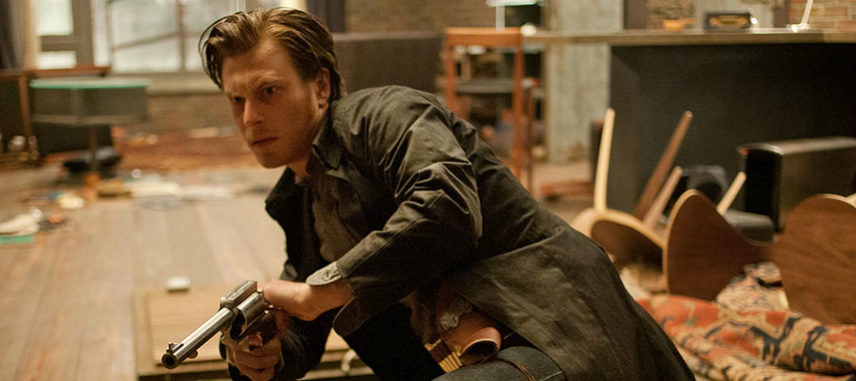
EASY RIDER (1969) and COLORS (1988)

Not all filmmakers create a work that changes cinema and continues to resonate for the next five decades, and those that do rarely achieve such a feat with their debut. Dennis Hopper was no mere vanity actor-turned-director, launching Easy Rider into the zeitgeist and creating a work that served as an icon for both the counterculture movement as well as its inevitable death. Nothing but respect for my Captain America. Once you've finished watching that film, throw on Colors. This intense crime drama stars Sean Penn and Robert Duvall as unlikely partners, upending the cliché of the experienced elder cop and the brash young upstart even as the genre was taking root. It's a product of its time, but it's not dated the way it might have… or perhaps even the way it should have, given the issues it's dealing with could easily be ripped from today's headlines. It's remarkably nuanced work from Hopper, who perhaps should get as many plaudits for this work as he does Easy Rider. Either way, this is a hell of a double.

Substitutions: If you can't get or have already seen Easy Rider, seek out The Last Movie (1971). It's not exactly a beloved film, and its reputation is that of a total disaster, but the same dystopic 1970s feel that drove Easy Rider drives The Last Movie. It is a film of excess, a difficult and indulgent second album, and really worth a watch. If you can't get or have already seen Colors, get your hands on The Hot Spot (1990). This gritty film noir set in a sun-drenched small town stars Don Johnson, Virginia Madsen and Jennifer Connelly, and is definitely a minor classic, particularly if you're a fan of '90s thrillers.

The Hidden Gem: Want to see something off the beaten path, a title rarely mentioned when people talk about the films of Dennis Hopper? Then you should track down Out of the Blue (1980). This drama about a young girl whose obsession with music helps distract her from domestic dramas is remarkably nuanced work from Hopper, and deserves to be ranked with his best.

The next episode of Hell Is For Hyphenates, featuring Noah Segan talking the films of Dennis Hopper, will be released on 31 March 2018.

Our Next Hyphenate Noah Segan

Actor and Hi4H March 2018 guest host Noah Segan

Our next guest has appeared in everything from Dawson's Creek to NCIS, from Cabin Fever 2: Spring Fever to Fanboys. But let's not bury the lede here: you know him best as the frequent collaborator of filmmaker Rian Johnson, appearing as stoner Dode in instant cult classic Brick (2005), The Duke in The Brothers Bloom (2008), and Kid Blue in Looper (2012). He had a cameo in Johnson's classic Breaking Bad episode Ozymandias (2013), and as X-Wing fighter pilot Stomeroni Starck he was the true hero of Star Wars: The Last Jedi (2017).

When Noah Segan is not busy appearing in cult classics, he's also a proper film nerd in his own right, as proven by his regular guest columns on movie website Birth. Movies. Death. Here he is talking about the acting craft in Face/Off, and here he reveals Michael J Pollard's alternate Billy the Kid in forgotten New Hollywood western Dirty Little Billy. Noah knows his stuff.

So as he prepares for the greatest role of his career - that of Hyphenates guest host - which filmmaker has he chosen to talk about on the show?

None other than Dennis Hopper!

That's right.

We have one Kid Blue talking another Kid Blue.

We have a bloke from Looper discussing King Koopa.

We have the guy who appeared in The Last Jedi talking the guy who directed The Last Movie.

Okay, we'll stop now.

We all know Dennis Hopper as the Hollywood legend who starred in everything from Rebel Without a Cause (1955) and Giant (1956) to Cool Hand Luke (1967) and Mad Dog Morgan (1976) and Apocalypse Now (1979) and Blue Velvet (1986) and Red Rock West (1993) and Land of the Dead (2005). But did you know he was also a filmmaker himself? If you're the sort of person who listens to our show, you absolutely do.

From the iconic debut Easy Rider (1969), Hopper went on to make films like The Last Movie (1971), Out of the Blue (1980), Colors (1988) and The Hot Spot (1990). His filmography includes all-time classics and Alan Smithee disasters, and it's a part of his career that's rarely talked about.

So why has Noah chosen to talk about Hopper's directorial career on the show? Joins us on March 31 when we find out!

Our next filmmaker of the month, Dennis Hopper

Walker On Friedkin

“Partly, I didn't work on anything for [Friedkin] because I didn't want to disappoint him.”

Seven is one of the greatest procedural films of all time. A dystopic vision of the present, a philosophical examination of justice and punishment, and perhaps the bleakest vision of optimism ever filmed. No, really. All of that came from the script, and the script came from Andrew Kevin Walker.

Andrew was not only gracious enough to join us on this month's show, but also allowed us to probe his mind regarding the murkier aspects of screenwriting. Some screenwriters see their original works filmed, and others see them languish on the shelf. Some are hired to rewrite someone else's work, and others find themselves rewritten. Some work on big budget tent-pole scripts only to see the studio abandon the project, and then sometimes come back to it with a new team at the helm. Andrew is one of the few scriptwriters who has been in every situation we just mentioned. If you're a budding writer, or even vaguely interested in the process, you're going to want to hear his insights.

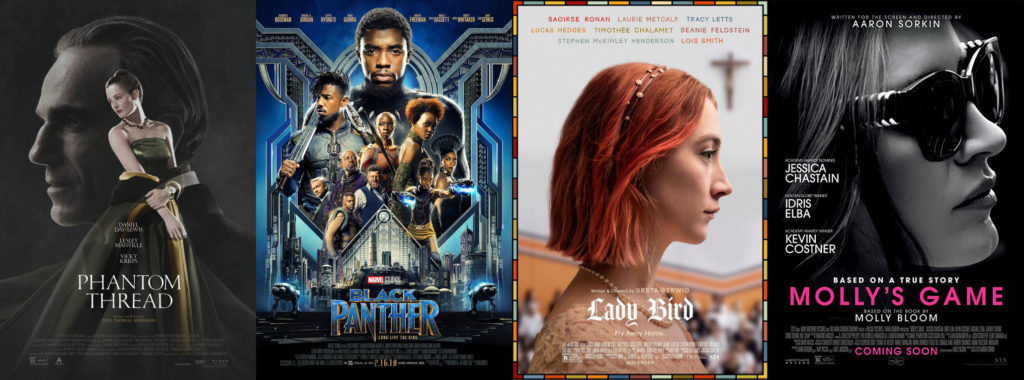
But before that happens, Rochelle and Lee kick off the episode by chatting about some of this month's most notable films. What did they make of Paul Thomas Anderson's sartorial melodrama Phantom Thread? Were they won over by Ryan Coogler's progressive African superhero blockbuster Black Panther? Did they recognise anything of themselves in Greta Gerwig's northern California Catholic schoolgirl comedy-drama Lady Bird? Was Lee enamoured by, with, of, or near Aaron Sorkin's directorial debut biopic Molly's Game, and did Rochelle see it or skip it?

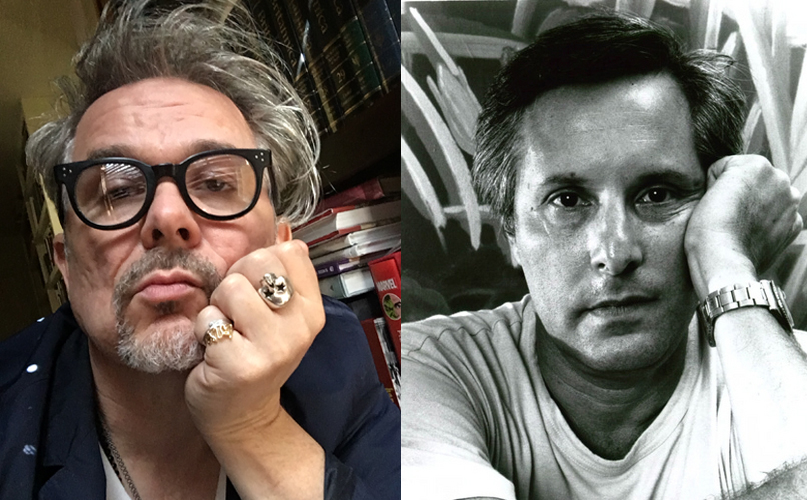
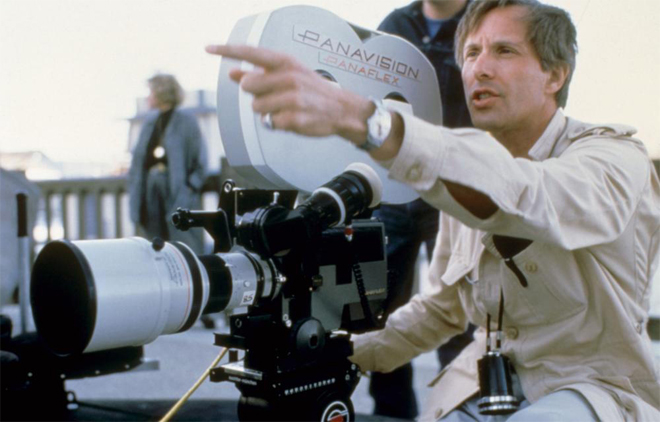
But most importantly, what does everyone think of William Friedkin? Andrew's filmmaker of the month is one of New Hollywood's most striking visionaries, with just as many all-time classics to his name as obscure curiosities. For someone who made films that are so indelibly branded into pop-consciousness, Friedkin's filmography is peppered with works both tonally and stylistically unlike anything we think of when someone mentions his name. There were many more strings to his bow than even many of his ardent fans may realise. And hey, that's what this show is for, right?

If all of that sounds like a lot for one episode, it is. That's why we used special magnets to pack it into a single hour. Plus there are some jokes. Go listen now.

Further reading:

  • Did you enjoy us chatting about Paul Thomas Anderson's Phantom Thread? Then you might want to go back and check out the show devoted to the entire Paul Thomas Anderson filmography, such as it was when we 
    recorded.
  • You're definitely going to want to head over to Neighbourhood Paper, where Rochelle writes about Phantom Thread and the everyday sadism of marriage.
  • Then for SBS Film, Rochelle lists some of the worst takes about Phantom Thread, and why so many reviews may have totally missed the point of the film.
  • And still on SBS Film, Rochelle goes into more detail on the glories of Greta Gerwig's Lady Bird.
  • We highly recommend you visit Andrew Kevin Walker's personal website. As he mentions on the show, you'll be able to read the first drafts of his films, including Se7en, 8mm, Sleepy Hollow, and so many others. It's an extraordinary resource, and one hell of a treasure trove.
  • If you'd like to know more about the tricky Hollywood screenwriting arbitration process, this blog post at The Bitter Script Reader should give you a good head start.
  • There are so many articles about Friedkin's Cruising, we almost didn't know where to start linking. But there are a couple of irresistible pieces, including this original New York Times report from September 1979 in which Friedkin defends the film. And then there's this entertaining tidbit regarding the missing 40 minutes of footage from the film.
  • We enjoy a good coincidence, and it was only after recording was complete that we realised actor and playwright Tracy Letts got two unrelated shouts-out in this episode: first as actor, in Lady Bird, then later as the writer of both Bug (2006) and Killer Joe (2011) for Friedkin. No article to link to here, we just wanted to point it out.
  • We mention the so-called “Exorcist curse”, and because we couldn't find a satisfactory article about it, here's a link to a Bloody Disgusting article which basically refutes the whole mystery, although not really.
  • We couldn't find an archive of the Pauline Kael Boys in the Band review, but here's a New York Magazine piece that quotes it.
  • And for the record, Lee did in fact check his copy of Cruising to see if that sound reappeared at the end - and it did not! Time to reinvest in VHS.
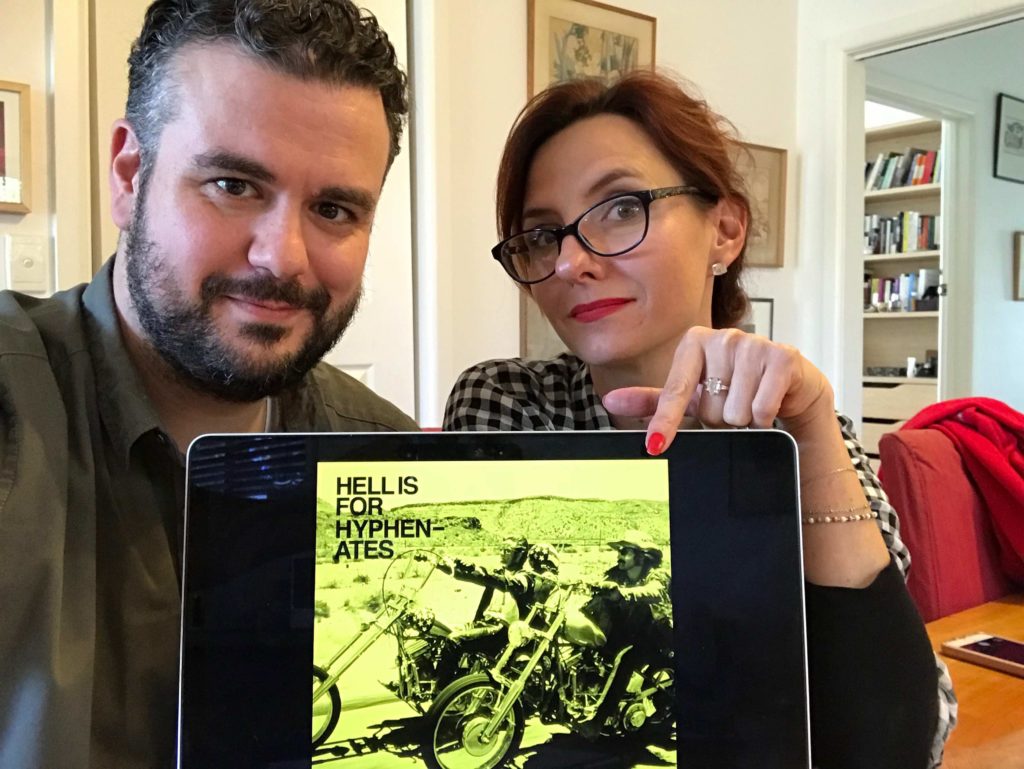
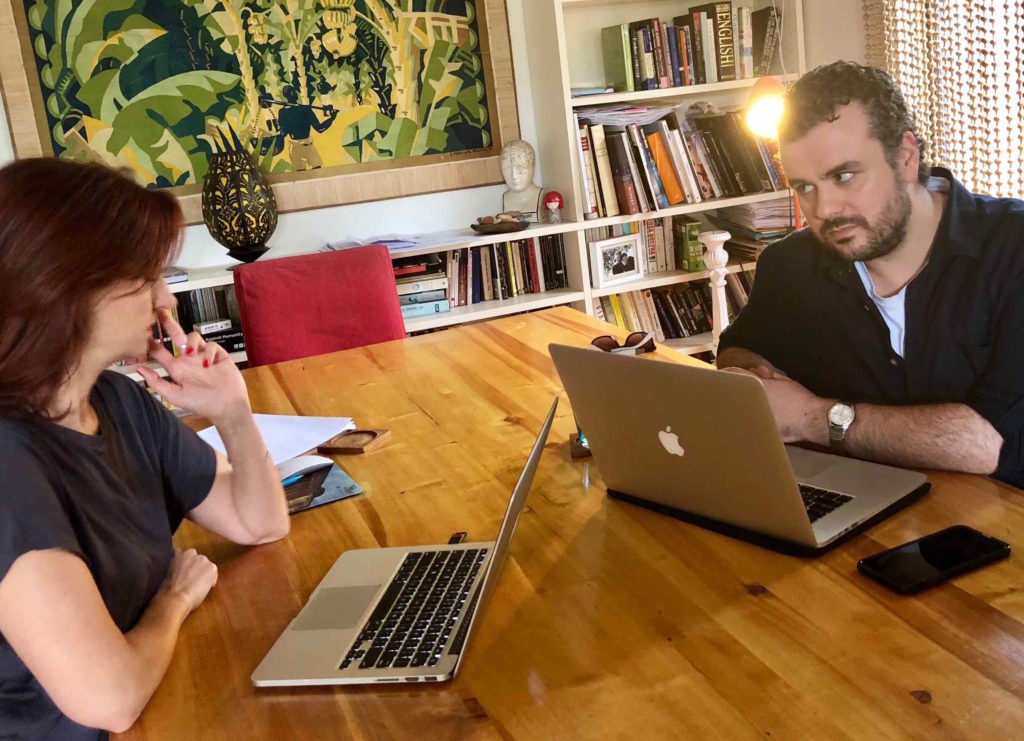
Rochelle and Lee look at one another with deep concern as they record this month’s episode

Outro music: Tubular Bells by Mike Oldfield from The Exorcist (1973)

The latest episode of Hell Is For Hyphenates, featuring Andrew Kevin Walker talking the films of William Friedkin, can be heard on Stitcher Smart Radio, subscribed to on iTunes, or downloaded/streamed directly from our website

Hell Is For Hyphenates – February 2018

Andrew Kevin Walker joins us to talk the films of William Friedkin!

Rochelle and Lee kick off this month by looking back at some of its key releases, including Paul Thomas Anderson’s sartorial melodrama Phantom Thread (00:58), Ryan Coogler’s game-changing superhero film Black Panther (05:19), Greta Gerwig’s coming-of-age comedy-drama Lady Bird (11:09), and Aaron Sorkin’s directorial debut biopic Molly’s Game (14:41).

Lee then welcomes this episode’s guest host, screenwriter Andrew Kevin Walker! They discuss how much or how little the on-screen film credits can reflect the work a screenwriter actually does on a project, the complicated system of arbitration, and what it’s like to both rewrite someone else’s work and be rewritten yourself. (18:11)

Then, Andrew takes us through the works and career of his filmmaker of the month, William Friedkin! Friedkin was one of the New Hollywood movement’s most striking voices, with a string of all-time classics to his name, as well as some very surprising and little-seen works in-between. Andrew talks about his most beloved Friedkin films, and the massive influence they had on him. (29:52)

Then Lee checks back in with Rochelle, and they wrap up the show with their thoughts on the films of William Friedkin, and what they discovered in going back through his career. (55:33)

The William Friedkin Cheat Sheet

Want to become an instant expert in our filmmaker of the month without committing yourself to an entire filmography? Then you need the Hell Is For Hyphenates Cheat Sheet: we program you a double feature that will not only make for a great evening's viewing, but will bring you suitably up-to-speed before our next episode lands…
THE FRENCH CONNECTION (1971) and THE EXORCIST (1973)

It's not a slight on William Friedkin's later career that we picked two films from the 1970s. It's just that, well, how do you not go with these titles? The French Connection is a procedural crime film best remembered for featuring one of the greatest and most tension-filled car chases of all time, but there's so much more to it than that. It's hard to think of many other films of this ilk with characters, dialogue and detail this complex, which is probably why it gets exponentially better on every viewing. Once you've finished watching the adventures of Popeye Doyle, pop on a copy of The Exorcist. If this is your first viewing, then we won't spoil the surprises that are to come. You already know its reputation as one of the most terrifying and genre-changing horror films of all time, and its impact has certainly not been lessened with time. Watch these two films back-to-back and you'll not only have the best possible night in, but you'll gain a good understanding of what made Friedkin one of the greats.

Substitutions: If you can't get or have already seen The French Connection, seek out Cruising (1980). The film about cop Al Pacino investigating a serial killer targeting gay men was controversial upon its release, and its reputation remains contentious. But the procedural detail that drove French Connection drives this film, and it's certainly one you can't afford to let pass you by. If you can't get or have already seen The Exorcist, get your hands on Sorcerer (1977). Based on the same Georges Arnaud novel that inspired Henri-Georges Clouzot's Wages of Fear (1953), Sorcerer follows a group of men tasked with transporting unstable explosives over brutally rough terrain. If you can, see it as big and as loud as possible. And try good luck extracting your fingers from the arm rests afterwards.

The Hidden Gem: Want to see something off the beaten path, a title rarely mentioned when people talk about the films of William Friedkin? Then you should track down The Boys in the Band (1970). Adapted by Mart Crowley from his own play, the film is about… actually, we'll let imdb take on the responsibility of synopsising: “Tempers fray and true selves are revealed when a heterosexual is accidentally invited to a homosexual party.” It goes without saying that much of the content will look dated to a 2018 audience, but that's true of all films, and should not put you off checking it out.

The next episode of Hell Is For Hyphenates, featuring Andrew Kevin Walker talking the films of William Friedkin, will be released on 28 February 2018.