Category Archives: blogs

The Guy Maddin Cheat Sheet

Guy Maddin

Want to be knowledgeable about our filmmaker of the month without committing yourself to an entire filmography? Then you need the Hell Is For Hyphenates Cheat Sheet: a suggested double that will make you an insta-expert in the director we're about to discuss…

GM Films

THE HEART OF THE WORLD (2000) and MY WINNIPEG (2007)

Guy Maddin has a style unlike any other filmmaker working today. Imagine an MTV music video director got sent back in time to the silent era, and you’ll have a good starting point to appreciate what it is he does. He is even more prolific as a director of short films than as a director of feature films, so we suggest a double that mixes the two. The Heart of the World is only six minutes long, but it's the perfect film if you want to understand what makes Maddin tick. Meanwhile, his 2007 quasi-documentary My Winnipeg is an hilarious, surreal, addictive look back at his upbringing. It's one of the most entertaining films you'll ever see, and its moments of obvious exaggeration are as revealing as the moments of autobiographical truth. This is about as fun as homework gets.

Substitutions: If you can't get The Heart of the World, try his first ever short film The Dead Father (1985). If you can't get My Winnipeg, try Brand Upon the Brain! (2006).

The Hidden Gem: If you want to go for something off the trodden path, be sure to seek out Maddin's 2002 film Dracula: Pages From a Virgin's Diary. It's one of the most incredible adaptations of the legend, and at only 73 minutes, you'll probably want to watch it twice.

The next episode of Hell Is For Hyphenates, featuring Hayley Inch talking Guy Maddin, will be released on the morning of October 31 (AEST).

Our Next Hyphenate: Hayley Inch

Festival programmer, film critic and October 2014 Hyphenate Hayley Inch

You see a lot of familiar faces at film festivals. This is, the films aside, one of the best things about them. Especially when one of the familiar faces belongs to the Melbourne International Film Festival's Membership Coordinator Hayley Inch. Running into Hayley at MIFF is always wonderful: whether you passionately agree or disagree on the quality of the film you just saw, it's always a joy to chat with her. So of course we had to ask her onto the show.

In addition to working for MIFF, Hayley is the Shorts Manager at the Human Rights Arts and Film Festival. She was Broadsheet's resident film writer from 2012 to 2014, and runs her own film criticism site at the brilliantly-named Herzog's Chicken.

Hayley has chosen to speak about the works of Canadian auteur Guy Maddin. If you've never seen any Maddin before, you are in for a treat. It's safe to say nobody else in the world makes films the way Guy Maddin does, and when we publish our forthcoming Cheat Sheet, those currently unfamiliar with him will see why.

But that's not all!

Long-term listeners will remember that in 2012 we introduced the “mini-Hyphenate” segment. Due to the fact that we introduced a rule saying the Filmmakers of the Month must have made more than five films, we realised this would exclude a whole lot of notable directors. No one could, for instance, choose Charles Laughton, whose only directed film was the Robert Mitchum classic The Night of the Hunter. Therefore, we introduced a semi-regular segment in which, in addition to the Filmmaker of the Month, we discuss the works of a director who has (a) made five films or fewer, and (b) has a finite filmography.

To date, we've spoken about the films of Sarah Watt, Jean Vigo, Elaine May, Fabián Bielinsky, Adrienne Shelly, Zucker-Abrahams-Zucker and Alice Guy-Blaché.

We had to rest the segment for much of this year, largely due to the epic workload involved in watching the films of Robert Altman simultaneous to the films of Luc Besson, Alejandro Jodorowsky, Harold Ramis and Jim Jarmusch. So when Hayley picked Maddin - a director with numerous credits, but only about ten feature films - we thought this would be a good month to introduce another mini-Hyphenate.

And so, in our next episode, we shall also be talking about the films of comic filmmaker Jacques Tati!

We're bending our own rules a little (and not for the first time): although Tati made five features, he also made numerous significant short films, and one feature-length film, Parade, that was produced for television. So he's slipping through on a technicality. But when Madman Entertainment released the epic Jacques Tati box set this year, we couldn't resist exploring the works of this fascinating comedian-filmmaker-performer.

If you want to play along at home, our Cheat Sheet will be released in a couple of weeks, ensuring you can become an instant expert in only one evening. The episode featuring Jacques Tati, Guy Maddin and special guest Hayley Inch will be released on the morning of October 31 AEST via iTunes, Stitcher Smart Radio and our website.

Tati Maddin
Next episode’s two filmmakers: France’s Jacques Tati (left) and Canada’s Guy Maddin (right)

Shelton on Denis

Shelton on Denis
Lynn Shelton (left), and her filmmaker of the month Claire Denis (right)

Allow us to do away with modesty for a moment and theorise on why our show works: it's not that we talk about the works of great filmmakers, it's that each filmmaker is told through the unique perspective of that month's guest. Over in the Alt-U section, you'll see that Julia Zemiro might have gone with Susanne Bier had we not already covered her with Kristy Best a few months earlier. Julia talking about Bier would have been totally different from Kristy talking about Bier. One would not have necessarily been better than the other: the point is that it's not just the filmmaker, it's the guest who chooses them.

This month's guest is Lynn Shelton, one of US independent cinema's most interesting and exciting voices. We became aware of her when she made the excellent Humpday, and followed that up with the brilliant Your Sister's Sister. She's continuing to do great work across both film (Touchy Feely, Laggies) and television (Mad Men, The New Girl, The Mindy Project), and we were delighted when she agreed to come on the show. Talking to someone you admire and finding out who they admire is always fascinating, and so when Lynn picked Claire Denis, we were keen to find out why.

It turns out the story was more personal than we'd realised. We were completely unaware that Lynn's filmmaking career actually was kicked off by Claire Denis. This is a story that even Claire Denis probably doesn’t know.

It's those connections that make discussing filmmakers' careers so much more interesting, and this month's episode is a perfect example of that. If you want to know a little more about the films of Claire Denis, check out our Cheat Sheet here, and then download the latest episode of Hell Is For Hyphenates, featuring Lynn Shelton talking the films of Claire Denis.

Special thanks to Lynn Shelton for generously giving us her time, and to Adam Kersch at Brigade Marketing for his wonderful help.

The Claire Denis Cheat Sheet

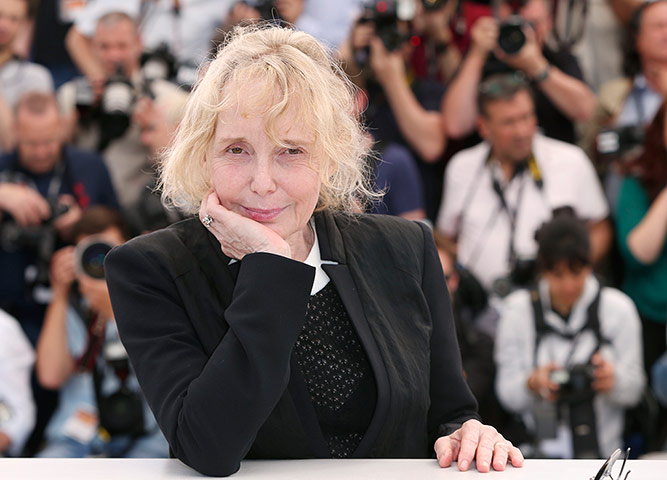
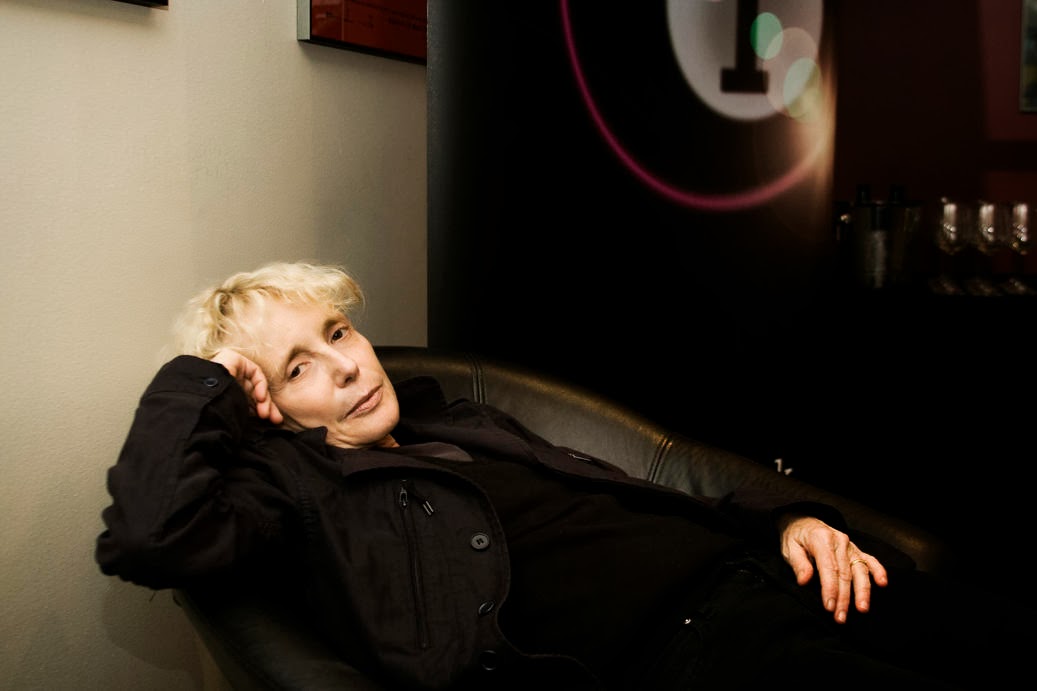
Director Claire Denis at the photo call for her film Les Salauds (Bastards)

Want to be knowledgeable about our filmmaker of the month without committing yourself to an entire filmography? Then you need the Hell Is For Hyphenates Cheat Sheet: a suggested double that will make you an insta-expert in the director we're about to discuss…

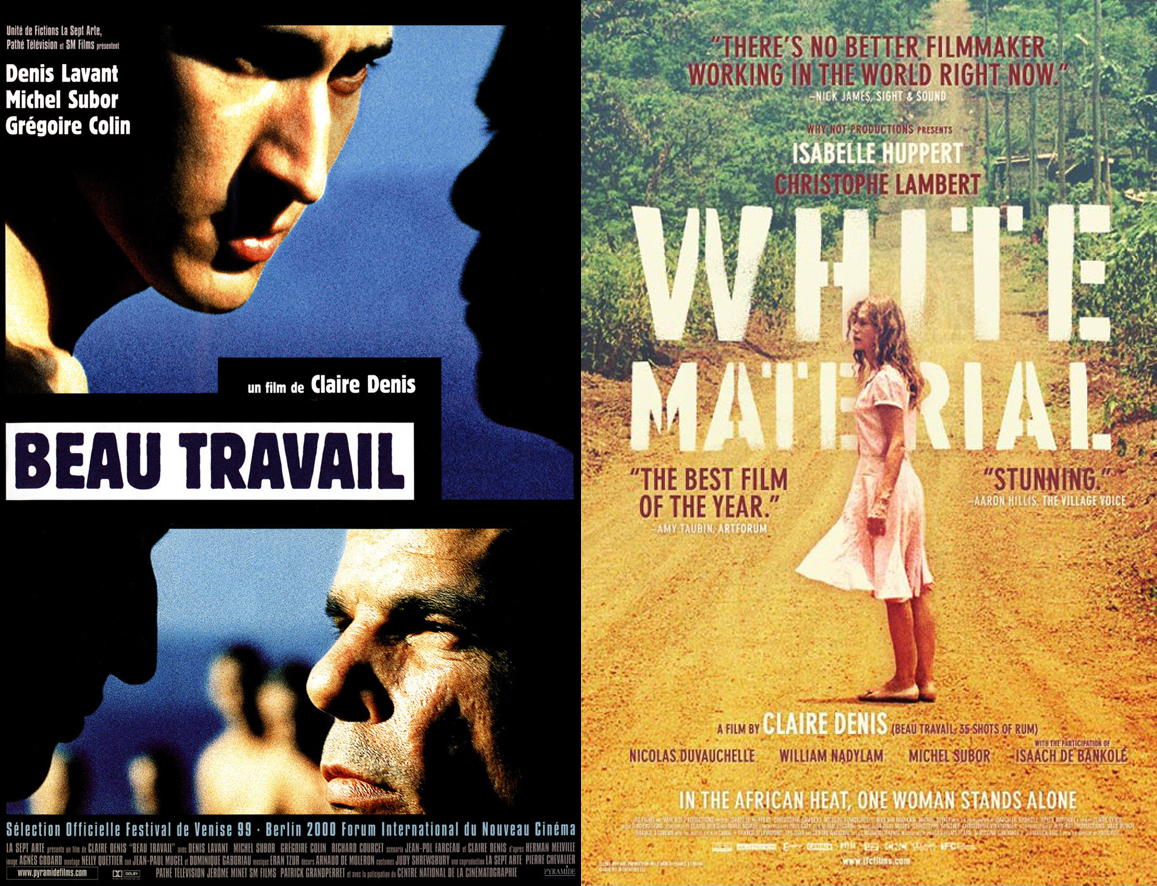
CD Films BEAU TRAVAIL (1999) and WHITE MATERIAL (2009)

Director Claire Denis was raised in colonial French Africa, and many of her films reflect this in some way. Beau Travail is a sublimely beautiful work about an ex-French Foreign Legion officer reminiscing about his time leading soldiers in Africa. It stars Denis Lavant, a newly-minted cult figure thanks to his now-legendary work in Leos Carax's 2012 film Holy Motors. Following Beau Travail, you'll want to put on White Material. The always-brilliant Isabelle Huppert is the matriarch of a white family about to be kicked off their African plantation, trying desperately to hold onto the crop of coffee beans they've grown as their lives hang in danger. Both films are truly stunning, managing to convey a sense danger while drawing you in and lulling you to spend more time in these worlds. These two brilliant works, made ten years apart, should give you a solid understanding of the style of Claire Denis.

Substitutions: If you can't get Beau Travail, try Chocolat (1988). If you can't get White Material, try 35 Shots of Rum (2008).

The Hidden Gem: If you want to go for something off the trodden path, you have to check out her 2001 film Trouble Every Day. It features Vincent Gallo and Béatrice Dalle, and is equal parts sexy and horrific. Not for the faint of heart.

The next episode of Hell Is For Hyphenates, featuring Lynn Shelton talking Claire Denis, will be released on the morning of September 30 (AEST).

Five Came Back

Five Came Back

[show_author shortcode: please set id/email attribute]
LEE

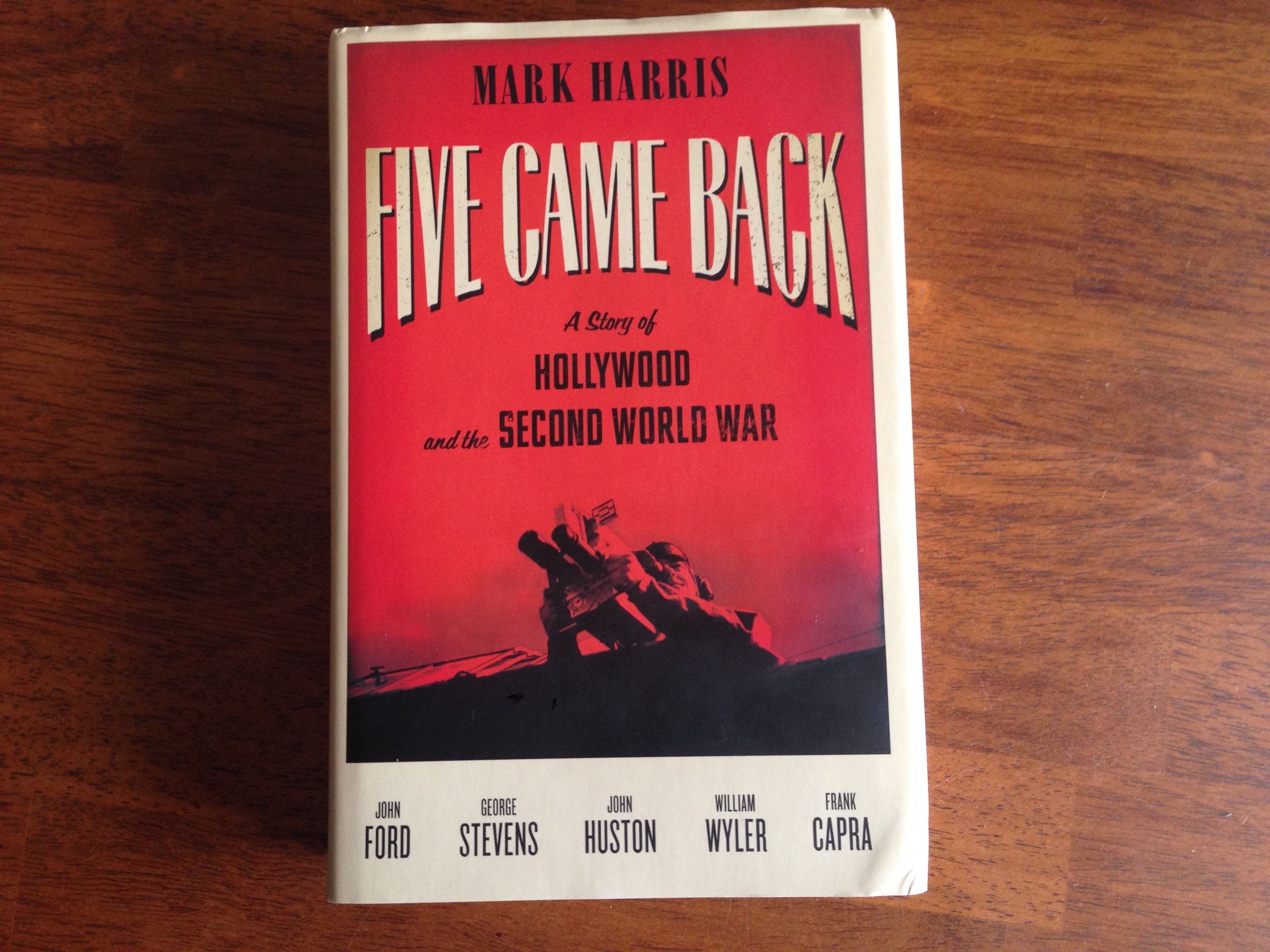
Every time I’d walk into my local bookstore over recent months, I'd stare covetously at Mark Harris's Five Came Back: A Story of Hollywood and the Second World War. The jacket boasted the names John Ford, George Stevens, John Huston, William Wyler and Frank Capra, five incredible golden age directors whose assembly elicited an instant Pavlovian response from both myself and, eventually, my wallet.

The further we get from World War Two, the more difficult it is for we in the present to relate to the sense of shared responsibility the world once experienced: that everyone would devote themselves fully to the war effort unless they had a good reason not to. Can you imagine modern day directors and movie stars signing up to the armed forces? Not every one of the directors discussed in this book was necessarily keen to join up, but all felt a strong duty to do so. All five joined not as soldiers, but as part of the film unit, working alongside the troops on the ground and documenting the battles that would later be turned into films to rally audiences back home.

The book itself is a curious mix of straightforward prose and dense research. At first, I felt there was almost too much research: that Harris had taken absolutely every scrap of information he'd found and merely laid it end-to-end. But as it progressed, the style emerged. It was undeniable that the research was impeccable: Harris had gone through and verified or debunked every single scrap of information, every recorded word uttered from one person to another. That which he couldn't verify one way or the other was clearly marked. The sum of these parts was a story that felt all the more remarkable because of its verisimilitude: there is little doubt that what you're reading is an unembellished, unpretentious account of five filmmakers who gave up their careers for a greater good.

I'd anticipated a story about returning soldiers, five directors who returned from the war as conquering heroes, and who, with a fresh perspective on the world, would help transform Hollywood into something that more closely reflected the experience of human life.

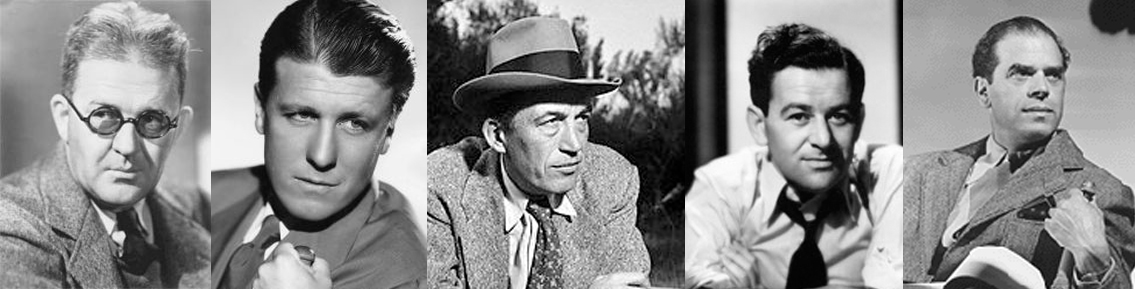
John Ford, George Stevens, John Huston, William Wyler, Frank Capra
John Ford, George Stevens, John Huston, William Wyler and Frank Capra

The reality was much different. They were all changed by the war, but the manner in which they experienced it, from the battles between Washington bureaucracy and Hollywood business to the reality of being on the ground with the troops as they marched into Germany, created five distinct tales.

Each of these men had completely different expectations going in to the war. Each of them had different experiences. Each of them was changed in markedly distinct ways. This is a story that does not mistake their recording of the war as being more important than the war itself, that does not treat the advancement of their filmmaking careers as the most significant outcome; in doing so, it avoids the mistakes of so many of these tales that put its own interests front and centre. This is a story with a very level-headed perspective on the relative importance of everything it discusses.

That said, the impact that the war had on the directors' careers and the films they made is, nonetheless, incredibly interesting, and the end result is a fascinating, unique account of the complex and tumultuous relationship between Hollywood and World War Two.

We've not yet covered these five amazing filmmakers on the show (soon, hopefully!), but if you're interested in a tremendous piece of writing that illuminates a side of film history rarely discussed in such vivid detail, this is a must read.

Our Next Hyphenate: Lynn Shelton

Writer-director-producer-editor-actress and September 2014 Hyphenate Lynn Shelton!
Writer-director-producer-editor-actress and September 2014 Hyphenate Lynn Shelton

When Humpday came out in 2009, we were pretty enamoured. Although we were hardly experts in the mumblecore movement*, what we’d seen of it had not been hugely inspiring, and Humpday single-handedly changed that: the film was so funny, endearing, and brilliantly-constructed, it single-handedly turned us around on the whole sub-genre. The casual, handheld camera work was an aesthetic that added to the story, rather than feeling like it was simply the only method of production available.

From that moment, we committed writer/director Lynn Shelton's name to memory, and eagerly awaited her next film. That next film - 2011's Your Sister's Sister - was even better: a perfectly-executed film that took an outrageous setup and invested us in it wholly, subverting clichés in all the right ways.

So you can imagine we were pretty chuffed when Lynn agreed to be our next guest on the show, and we were very keen to find out who she would choose as her filmmaker. Who inspires one of independent cinema’s most exciting voices?

She has chosen French director Claire Denis, best known for films such as Beau Travail (1999), 35 Shots of Rum (2008) and White Material (2009). It's a fascinating choice, and we're really looking forward to watching or rewatching her films in preparation.

As always, the episode will be out on the last day of the month, so stock yourselves up on Shelton and Denis films and we'll meet you back here then.

Claire Denis
Legendary French filmmaker Claire Denis, the subject of our next episode

* Is “mumblecore” considered a legitimate term for the sub-genre, or a pejorative? We should look into that.

Swanberg on Mazursky

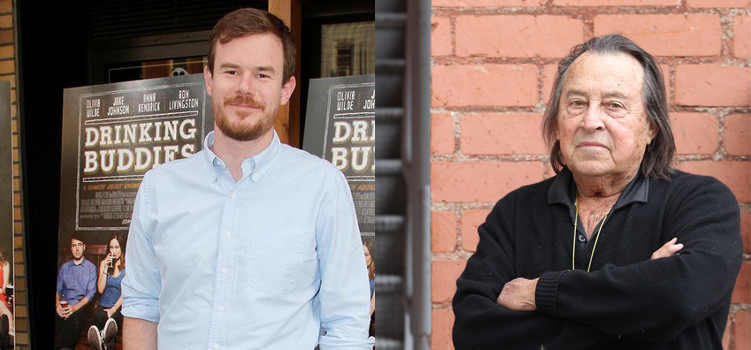
Joe Swanberg (left), and the director of his favourite film, Paul Mazursky (right)

Funny story: we had some informal talks with the Melbourne International Film Festival earlier this year about possibly doing a show in conjunction with them, much like our live Sydney Film Festival show in June. For various reasons, we were unable to make it work, and so we set about pursuing some of the other names on our overly-long wishlist of guests.

Joe Swanberg, director of last year's outstanding Drinking Buddies, immediately agreed to be on the show. We were pretty excited about this, and started organising a time to record the US-based filmmaker via Skype.

“I will be in Melbourne in August for the film festival,” he replied. “Can we do it then?”

So, entirely by accident, we ended up doing a show with MIFF. The festival was excellent about our accidental booking of their guest, and slotted us in to Joe's press schedule. He was out here to introduce and promote his latest film, Happy Christmas, starring Anna Kendrick, Melanie Lynskey, Lena Dunham and himself.

At first, we thought his choice of Paul Mazursky might have been a sentimental one given Mazursky had passed away only a month earlier, but interviews such as this one from January of this year proved that Joe has been extolling the virtues of Mazursky's films all along.

For us, Mazursky’s filmography hit at just the right time. After several months of being neck-deep in Robert Altman films, we were feeling massive Altman withdrawal symptoms at Hi4H HQ. So it was fitting to find Mazursky's films - particularly his early ones - had a real Altmanesque feel to them: long, observational takes and a strong focus on performance, not to mention a roster of Atlman actors including Elliott Gould, Donald Sutherland, George Segal and Michael Murphy. That’s not to suggest Mazursky was just Altman Lite; he definitely had a style all his own. The work he did throughout the 1970s feels so groundbreaking and original and exciting, it’s difficult to understand why so many of his films have slipped out of the conversation.

Joe had a chance to talk with Mazursky on stage and the insight he brings to a filmmaker whose name should be as fondly remembered as all the greats of the 1970s is incredible.

If you haven't seen any Paul Mazursky films, check out our cheat sheet here, then listen to the latest episode of Hell Is For Hyphenates.

Thanks to the Melbourne International Film Festival for their wonderful assistance, and to Joe Swanberg for his generosity.

Paul (left), Joe (middle) and Lee (right) recording the episode of 7 August 2014 in Melbourne

The Mazursky Cheat Sheet

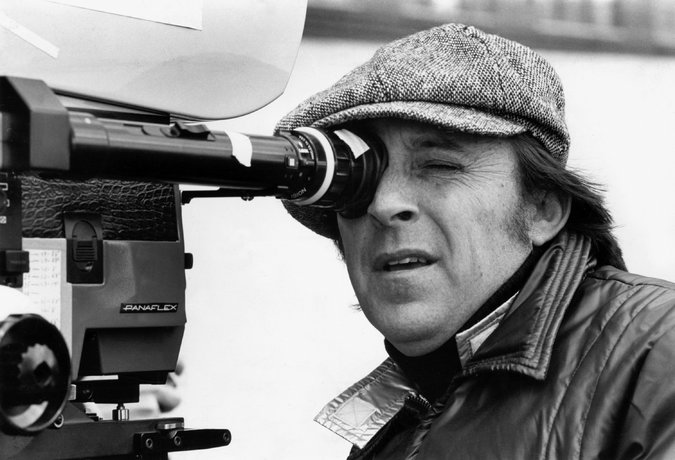
Paul Mazursky

Early last year, we abandoned our original system whereby we wouldn't announce the guest or the filmmaker they were discussing until the day the podcast was out. On the urging of some of our listeners, we decided to change it up and announce both guest and filmmaker nearly a month before the episode launched. That way, anyone who wanted to play along at home could watch the works of our filmmaker-of-the-month and have a whole month to catch themselves up, much in the same way we ourselves do.

This isn’t always practical. Even our most committed listeners probably wouldn't be able to marathon all of, say, Billy Wilder or Robert Altman's filmography in time, so we've come up with a new idea. About a week or so before Hyphenates comes out, we're going to suggest a double feature that encapsulates the essential spirit of the filmmaker. Two films you can easily watch on a Friday night in order to get a good sense of the director we’ll be talking about.

So with the Paul Mazursky episode only a few days away, here are a couple of films you might want to seek out over the weekend.

PM Films

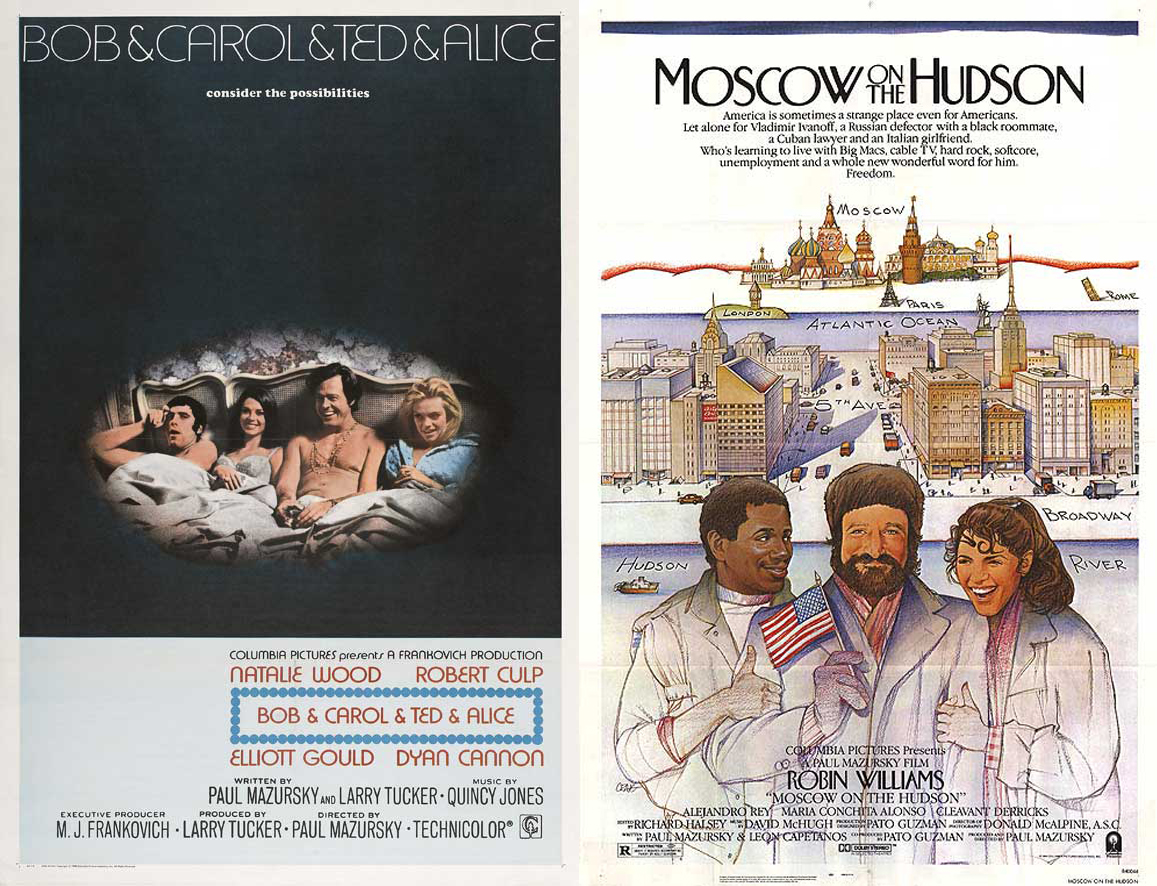
BOB & CAROL & TED & ALICE (1969) and MOSCOW ON THE HUDSON (1984)

Bob & Carol & Ted & Alice is the main reason we're talking about Mazursky. In the upcoming episode, guest Joe Swanberg reveals that Bob & Carol & Ted & Alice is his favourite film of all time, and talks about the influence it had on Swanberg’s biggest hit, 2013's Drinking Buddies. Bob & Carol was Mazursky's first ever film, and was a critical and commercial hit. To understand Mazursky's career, this film is essential. Then, to get a feeling for where he went next after his amazing run of 1970s zetigeist-capturing comedy-dramas, watch 1984's Moscow on the Hudson, about a Russian circus performer (Robin Williams) who experiences life outside of Soviet Russia during a fateful trip to New York. It's broader and glossier than his earlier work, but still an interesting work, and a good indication of how Mazursky’s style progressed.

Substitutions: If you can't get Bob & Carol & Ted & Alice, try An Unmarried Woman (1978). If you can't get Moscow on the Hudson, try Down and Out In Beverly Hills (1986).

The Hidden Gem: Want to add in one of Mazursky's lesser-known films, one that (in our humble opinion) ranks amongst his best despite never being discussed? Try Tempest (1982), his loose, modern-day adaptation of Shakespeare's final play, with John Cassavetes, Gena Rowlands, Susan Sarandon, Raul Julia, and, in her first ever film, Molly Ringwald.

The next episode of Hell Is For Hyphenates, featuring Joe Swanberg talking Paul Mazursky, will be released on the morning of August 31.

Thoroughly MIFFed – 2014 edition

[show_author shortcode: please set id/email attribute]
PAUL

It is with a heavy heart and exhausted body that I wish my yearly time of worship - known to most as the Melbourne International Film Festival, and more often abbreviated as MIFF - farewell for another year. 2014's crop of films proved a customarily diverse, intriguing lot, although lacking in big name titles - Boyhood, What We Do In The Shadows, The Grandmaster, Nick Cave: 20,000 Years on Earth and Two Days, One Night were the biggest lightning rods… all of which had screened at the Sydney Film Festival two months earlier. Thankfully, all of these titles seemed to deliver on the hype (I only saw Grandmaster - and, well, I nearly saw Boyhood, but more on that later), wowing Melbourne audiences as powerfully as they had up north. However, the cruise missiles this year were delivered, for this viewer anyway, by a 37 year old remastered masterpiece and the world's most ferociously precocious auteur…

All 43 feature films I saw at MIFF 2014, ranked from my personal best to worst:
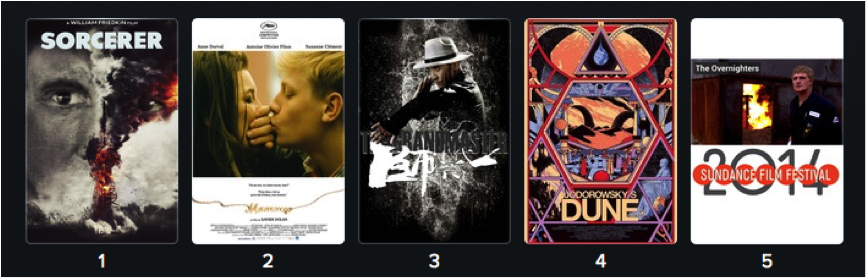
Image 1

1. SORCERER: Peerless thriller of men trapped by greed, against backdrop of Third World exploitation, is optimum 1970s studio filmmaking.

2. MOMMY: Brilliant, shattering drama filled with Dolan’s complex, lived-in characters, bold cinematic style and stunning performances.

3. THE GRANDMASTER: Cinema’s prime sensualist delivers a thrilling, sumptuous elegy, emotionally valid digressions and godlike battles.

4. JODOROWSKY’S DUNE: Detailing a true auteur’s failed project shouldn’t be this delightful, funny or inspirational, but that’s Jodo.

(Allow me to stop here for a second: these four films were, far and away, my favourite of the fest – Friedkin's merciless tension underscored by anger at the US' political exploitation of the third world, Dolan's seemingly boundless talent continuing to tell shattering stories of people you wouldn't expect him to have insight into, Wong Kar Wai's powerfully luscious visuals and epic focus on moments and gestures, teamed with Yuen Wu Ping's phenomenal fight choreography, and the hilariously effervescent Alejandro Jodorowsky, to whom I could listen discussing his incredible cinematic vision for DUNE all day and night - all delivered the kind of moving, thrilling experiences I seek from a film festival. Now, on with the show…)

5. THE OVERNIGHTERS: Interrogation of a church’s societal role turns into damning document of a US crumbling under capitalism and fear.

Image 26. BLIND: Excellent character study deftly, playfully weaves fantasy and reality, wielding a stunning knack for surgical observation.

7. LIFE ITSELF: Extraordinarily moving tribute to Ebert, unafraid to show his sharper edges whilst celebrating his indomitable voice.

8. LOCKE: Terrific examination of a man taken apart by a single mistake; rich with detail, slick lensing and Hardy’s great performance.

9. STARRED UP: Riveting father-son melodrama dressed up as bracing, sobering social realist prison drama, with cracking performances.

10. BABYLON: Cracking TV pilot channels Iannucci-like personal scorn as it hilariously critiques the faulty lines of our connected world.
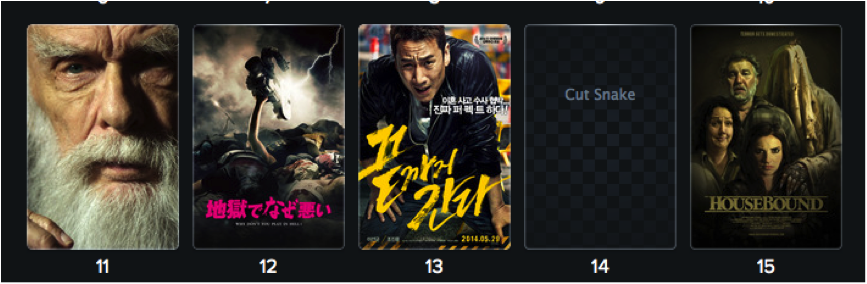
Image 311. AN HONEST LIAR: Straight-up profile of James Randi transforms into fascinating tale of professional/personal truth-seeking and deception.

12. WHY DON’T YOU PLAY IN HELL?: The most anarchic, funny and bloody valentine to filmmaking yet seen; Sono goes damn near full cartoon.

13. A HARD DAY: A shaky start and uneven pacing aside, this gleefully silly action-comedy is a relentless blast, with virtuoso comic timing.

14. CUT SNAKE: Different spin on usual crime drama, and better for it; strong relationship focus, mixing menace and pathos with aplomb.

15. HOUSEBOUND: Gets a bit tangled in wayward narrative gymnastics, but otherwise a fresh angle on some very Kiwi horror-comedy fun.
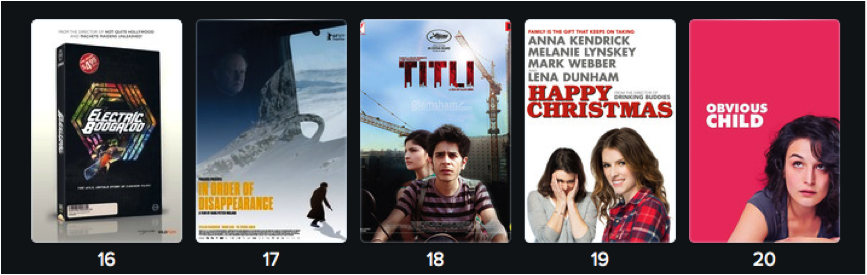
Image 4
16. ELECTRIC BOOGALOO: THE WILD, UNTOLD STORY OF CANNON FILMS: Hartley fetes schlockmeisters in fittingly hilarious, exuberant style. Great fun, bursting with insane footage and killer anecdotes.

17. IN ORDER OF DISAPPEARANCE: Quirky, bloody Nordic noir feels oddly slight, given its wonderful character moments, but still fun.

18. TITLI: Engrossing, grimy tale of young man’s desperation to escape legacy of crime solidly critiques patriarchal, classist India.

19. HAPPY CHRISTMAS: Light and laconic but lovely take on responsibility; dug natural performances and 16mm grain. Joe’s kid is hilarious.

20. OBVIOUS CHILD: Despite its love for cheap bodily function gags, sharp rom-com reversal treats a tricky topic with gravity and charm.
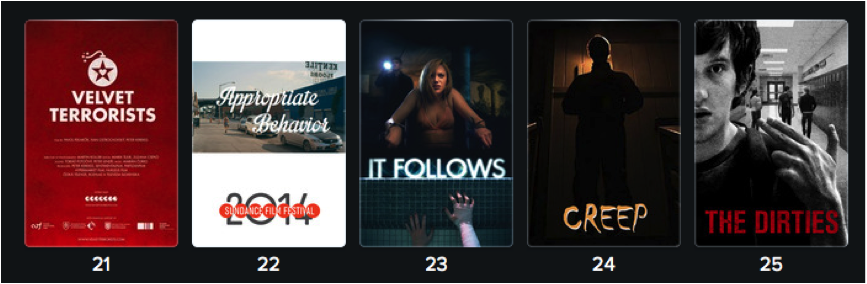
Image 5
21. VELVET TERRORISTS: Disarmingly odd, amusingly domestic doc’s quaintly punk philosophy makes up for what it may lack in revelation.

22. IT FOLLOWS: Vaguely unsettling horror intrigues with intelligence and style, but its intention muddies the more one considers it.

23. APPROPRIATE BEHAVIOUR: Cute, light debut from a slightly different POV, with solid comic timing and a winning new screen presence.

24. CREEP: Narrative and found-footage conceit don’t entirely hold, but there’s enough mischievous spirit and Mark Duplass to make it work.

25. THE DIRTIES: There’s a terrific film in here – discomforting, awkward, painful – when not stumbling over its “found footage” form.
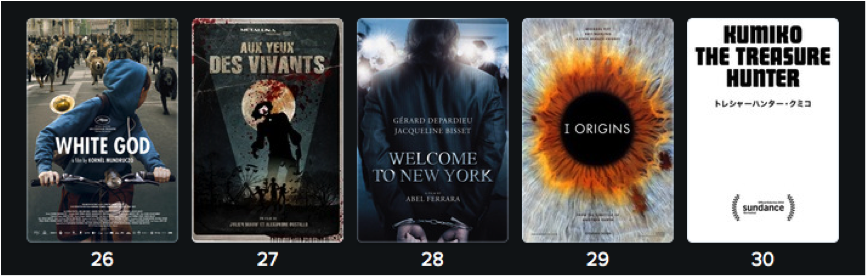
Image 6
26. WHITE GOD: Canine parable of hostility to Romanies is winningly bold, if broadly absurd; wish it had courage to play straighter.

27. AMONG THE LIVING: Plays like Horror’s Greatest Hits, so predictability ensues, but cuts down on gore and packs some serious jolts.

28. WELCOME TO NEW YORK: Ferrara’s take on DSK case finds diminishing drama in sex, process and arguments, but Depardieu is brilliant.

29. I ORIGINS: Sci-fi search for the soul is diverting enough, but too often slips on clunky writing and a big case of the Shyamalans.

30. KUMIKO THE TREASURE HUNTER: Interesting ideas here- on pop myths, mental illness & meta-culture- but fails to really explore them.
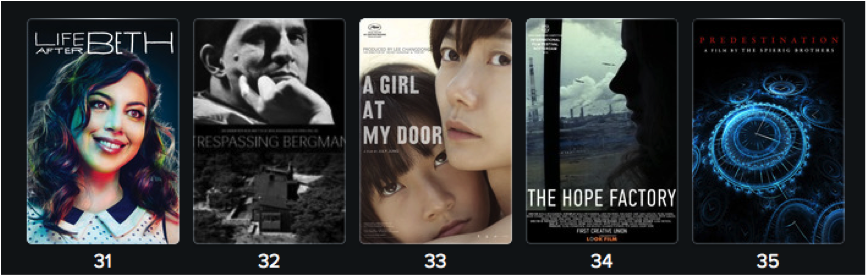
Image 7
31. LIFE AFTER BETH: Brisk zom-com of a relationship transcending its own death throes is fun enough, but refuses to go dark or deep.

32. TRESPASSING BERGMAN: Studded with star talking heads & nice moments, but bloated, with uncertain focus & a repetitious narrative.

33. A GIRL AT MY DOOR: Sensitive, classically crafted tale of bruised souls uniting, ’til it gets twisty, loses its brain & collapses.

34. THE HOPE FACTORY: Rambling portrait of girl seeking to leave desolate town feels overly familiar, with increasingly petulant lead.

35. PREDESTINATION: Excellent production values and astonishing lead performance from Snook masks a predictable, ultimately pointless story.
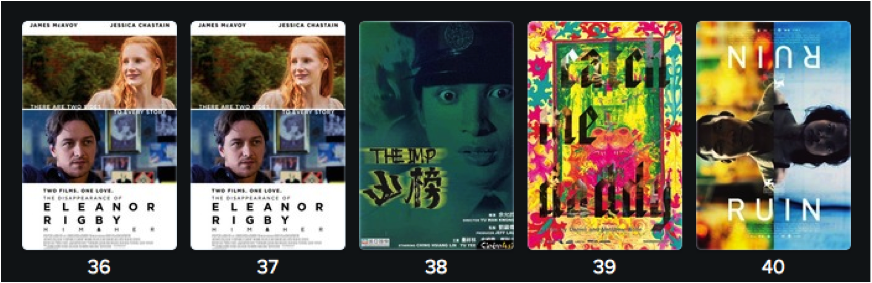
Image 8
36. THE DISAPPEARANCE OF ELEANOR RIGBY: HER: Some terrific ideas are raised here but not particularly well-explored, with distractingly florid dialogue. Chastain and McAvoy are terrific, though.

37. THE DISAPPEARANCE OF ELEANOR RIGBY: HIM: One good film stretched to two, doing little with second POV and insisting on having characters speak in screeds. Great leads are, again, its high point.

38. THE IMP: Silly, often slipshod horror/comedy inarticulately explores fear of fatherhood – but, wow, that final image is something.

39. CATCH ME DADDY: Incredibly tense but endlessly bleak dirge shows horror minus nuance or exploration. Subtitle glitch didn’t help.

40. RUIN: Unflinching tour of modern misery aims for higher truth, but needed fuller, more engaging characters to guide us through it.

41. THE DISTANCE: Gorgeous vistas aside, deadpan but empty art-sci-fi-heist-com exhausts most of its ideas in first 30 minutes, tumbling into tedium.

42. PHASE IV: A smattering of trippy visuals and microphotographic ant wrangling do not a great film make; moribund, talky and drama-free.

43. BLACK COAL, THIN ICE: Drearily dull noir throws some jabs at patriarchal Chinese society, but otherwise limps along sans interest.

My 44th and final film of the festival was shaping up to be Richard Linklater's Boyhood, a film I'd been anticipating for months and looked to be a perfect film to go out on. 24 minutes in, I was really enjoying it, getting into these lived-in characters Linklater and his cast had built, when… a young Hoyts employee stepped in front of the audience and told us all to evacuate. It seems a Melbourne Central fire alarm had gone off, and evacuation procedures were in place. After walking outside and being told to wait across the street for who knows how long, and knowing most of my friends were drinking happily in the warmth of the glorious Forum Theatre Mandala Festival Lounge, I decided to cut my losses, catch Boyhood when it hits theatres only a few weeks later and celebrate - despite its ignominious end - another terrific festival. Bring on MIFF 2015!

PAN
More Hyphens Than Ever

Hyphenates Menu

You wouldn't think that a one hour monthly podcast would need such an elaborate website with ten different pages, but you'd be wrong. If we hadn't run out of space on the menu, we'd have twenty pages by now. We're joking, but not really.

So, what are all these pages and why do you need them? We'll avoid the obvious ones (“Home”, “About Us”) and take a look at what exactly the Hell Is For Hyphenates website can do you for you:

Blog: Did you know we have a blog? You should do, you're reading it right now. There are so many stories and addenda and extras we want to share with you outside of the main show, and now we finally can.

About Our Guests: This page has been long overdue. Despite the amazing guests we've had on the show, we've never actually told you much about who they are or what they've done. So here, in alphabetical order, is all fifty (and counting) of the Hi4H alumni, all of whom are far too good for our humble show but came on anyway.

Gallery: Take a look at some of the behind-the-scenes photos from the show, from our low-key beginnings in the corner of a friend's house, to our significantly-higher-key live show at the Sydney Film Festival.

Covers: Our incredible artist-in-resident Caroline McCurdy creates a new Hi4H-themed cover image for every filmmaker we discuss (including our mini-Hyphenates!). They are collected in their collated glory here.

Alt-U: To celebrate episode 50, we glimpsed into an alternate universe to see what the Hi4H doppelganger might look like. Read more about this here (includes ace Gwyneth Paltrow joke).

Index: Probably the most essential page on the whole site. If you're daunted by number of Hyphenates episodes, and want to listen to a favourite guest or filmmaker, we index them alphabetically here. Marvel at the fact that we've discussed Michael Bay but not Stanley Kubrick! We are forever at the mercy of our guests' filmmaker choices, and we wouldn't have it any other way.

Links: Look, you know what a links page is. You've seen them before. But just in case: features links.

Podcasts: The monthly wait for new Hi4H episodes is excruciating, we know. So to fill the time, why not listen to these other film and pop culture themed podcasts produced by our amazing and funny guests?

And while we have you, don't forget to like us on Facebook, follow us on Twitter, and hit us up on Grindr. Er, forget that last one.

Happy browsing!