Author Archives: The Hyphenates

Stenders On Weir

Stenders On Weir

This month's episode was a little tricky to record. With Kriv in Brisbane for pre-production on his movie Australia Day and Sophie on holiday in North America, scheduling proved difficult, and we were unable to find a time they were both available. So Lee - who had nothing of note going on in August - recorded separately with both of them, and the result was edited into the seamless episode you can now hear.

But we embraced the tumult, and threw our traditional reviews segment out the window. Ignoring the month's releases, Lee talks about all the best films he saw at the Melbourne International Film Festival, and Sophie talks about an incredible film she saw in a plane over the Atlantic.

After the review, we dive into the works of Peter Weir, and dig deep into what connects films like Picnic At Hanging Rock and Gallipoli to Dead Poets Society and The Truman Show. Is it possible he's exploring a single theme throughout these wildly different films? You'll have to listen to find out!

Outro music: “The Far Side of the World” from Master and Commander: The Far Side of the World (2003), composed by Iva Davies, Christopher Gordon and Richard Tognetti

The latest episode of Hell Is For Hyphenates, featuring Kriv Stenders talking the films of Peter Weir, can be subscribed to via iTunes, heard at Stitcher Smart Radio, or downloaded/streamed directly from our website.

Hell Is For Hyphenates – August 2016

Director Kriv Stenders (Red DogKill Me Three Times) joins the Hyphenates for our August 2016 episode. Lee runs through some of the highlights from the Melbourne International Film Festival, including Pedro Almodovar’s Julieta, Ben Wheatley’s High-Rise, Sergei Loznitsa’s The Event, Kelly Reichardt’s Certain Women, Rohan Spong’s Winter At Westbeth, Asghar Farhadi’s The Salesman, Nicholas Winding Refn’s The Neon Demon and Oliver Assayas’s Personal Shopper, and Sophie talks about Patricia Rozema’s Into the Forest. Then Kriv takes us through the works and career of Australian New Wave pioneer and acclaimed filmmaker Peter Weir.

The Peter Weir Cheat Sheet

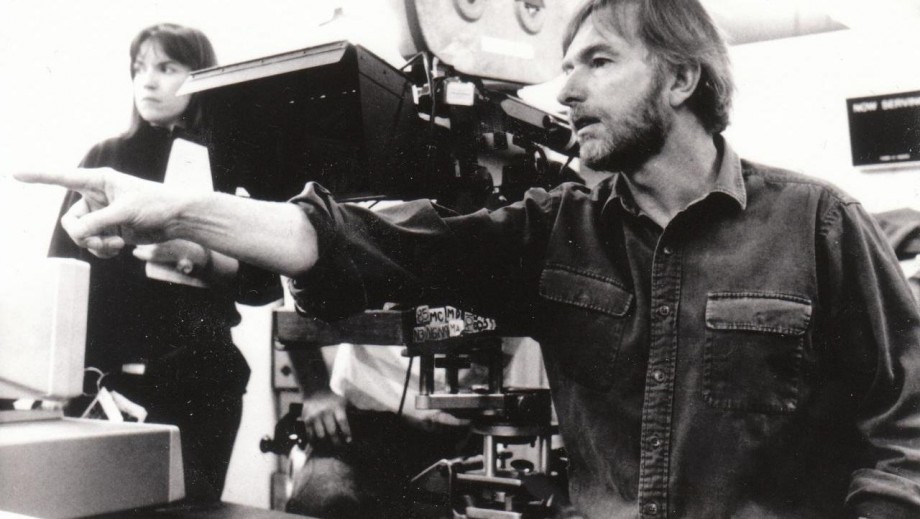
Peter Weir Directs

Want to become an instant expert in our filmmaker of the month without committing yourself to an entire filmography? Then you need the Hell Is For Hyphenates Cheat Sheet: we program you a double that will not only make for a great evening's viewing, but bring you suitably up-to-speed before our next episode lands…

Peter Weir Films

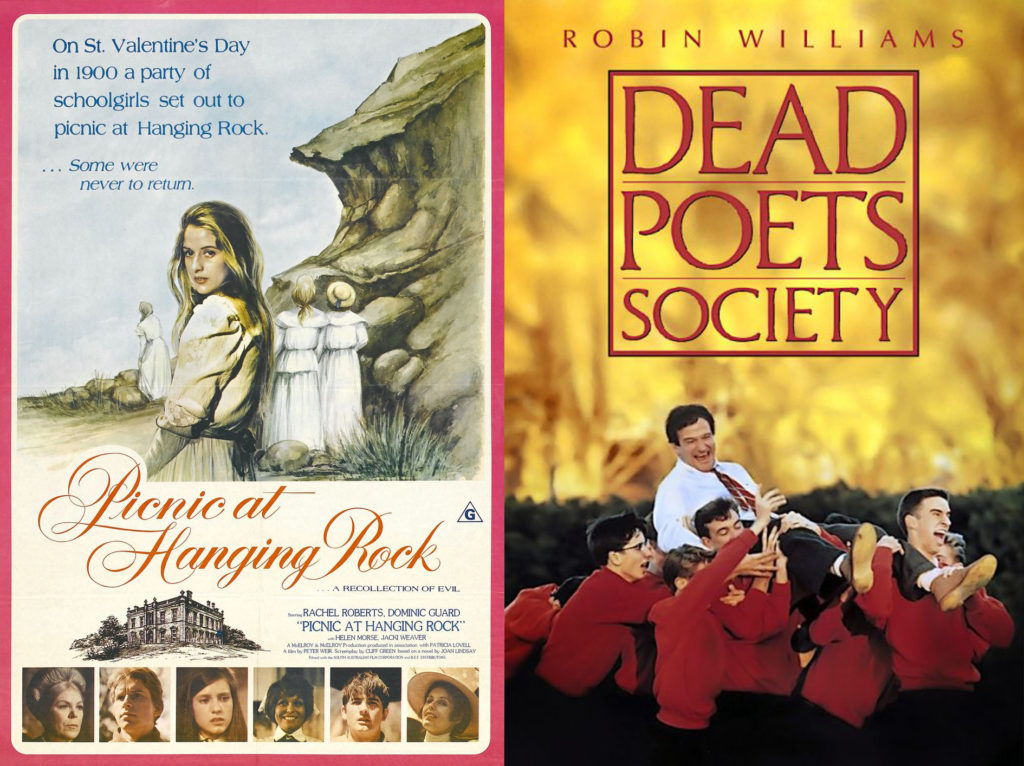
PICNIC AT HANGING ROCK (1975) and DEAD POETS SOCIETY (1989)

It's back-to-school this week so let's prep with two sad, strange and magical school stories from Peter Weir, a director who loves sad, strange communities and the weirdness that occurs therein. These are films that mark people's memories: if you saw either when you were a teenager, they will have lingered in how you think about the passions and persecutions of your schooldays. If you haven't, no worries, they'll haunt you now. Picnic at Hanging Rock, Weir's third full-length feature, is every bit as mysterious and daring as it was forty years ago: its central enigma (not based on a true story, despite rumours) remains unsolved (and unspoilered here). Filmmakers like Carol Morley (The Falling) and Lucile Hadzihalilovic (Innocence) have recently revisited its dreamy strangeness of Edgar Allen Poe-quoting girl crushes and fairy-tale references. Dead Poets Society reflects, likewise, that adolescence is no picnic - but for a brief moment, it can be painfully glorious, with Robin Williams channeling Walt Whitman at the front of the classroom. It jump-started the careers of Ethan Hawke, Robert Sean Leonard and Josh Charles as the hormonal hornets' nests given a jolt of inspiration by Williams' English teacher John Keating (named after Australia's then-Treasurer?), who tells them poetry was invented to woo women. These films will definitely seduce you.

Substitutions: If you can't get or have already seen Picnic at Hanging Rock, go for Gallipoli, which can't be held responsible for Mel Gibson. If you didn't watch it as part of the 100th anniversary of the battle of Gallipoli last year, watch it now. Brutal, moving, truthful, the film put this ANZAC story on the international map. If you can't get or have already seen Dead Poets Society, you must watch The Truman Show, which was pipped by Dead Poets to the Cheat Sheet post by the still-palpable loss of Robin Williams. Like an extended version and inversion of God calling to ask for girls at Helton, The Truman Show is a quintessentially Weir-ian film that starts out quiet and normal and ends up epically uncanny: a tale of an ordinary life that encounters the impossible. And that's just the idea that Laura Linney would really be married to Jim Carrey (as if)…

The Hidden Gem: Want something a little off the beaten path? Then you'll need to check out the 1979 telemovie The Plumber. One of the earliest examples of Weir finding the thrilling in the simple, the film follows the a woman as she is subjected to a series of mind games by a man claiming to be a plumber. If you think you know how the film will play out based on that premise, then you really need to seek out this film, which subverts its Hitchcockian premise at every turn.

The next episode of Hell Is For Hyphenates, featuring Kriv Stenders talking Peter Weir, will be released on the morning of August 31 (AEST).

Our Next Hyphenate Kriv Stenders

Kriv Stenders
Australian filmmaker and August 2016 Hyphenate Kriv Stenders

We are delighted to announce that this month our guest will be Australian director Kriv Stenders!

Whether you know him from 2011's smash hit Red Dog, or last year's critically lauded mini-series The Principal, or his 2005 debut The Illustrated Family Doctor, or 2014's Simon Pegg-as-hitman action-comedy Kill Me Three Times, or 2007's criminally underrated Boxing Day, you've certainly seen at least one thing he's made.

Given Kriv can comfortably switch between serious drama, family adventure and action comedy, which filmmaker is it that inspires him?

This month, Kriv will be joining us to talk about one of Australia's most beloved filmmakers: Peter Weir!

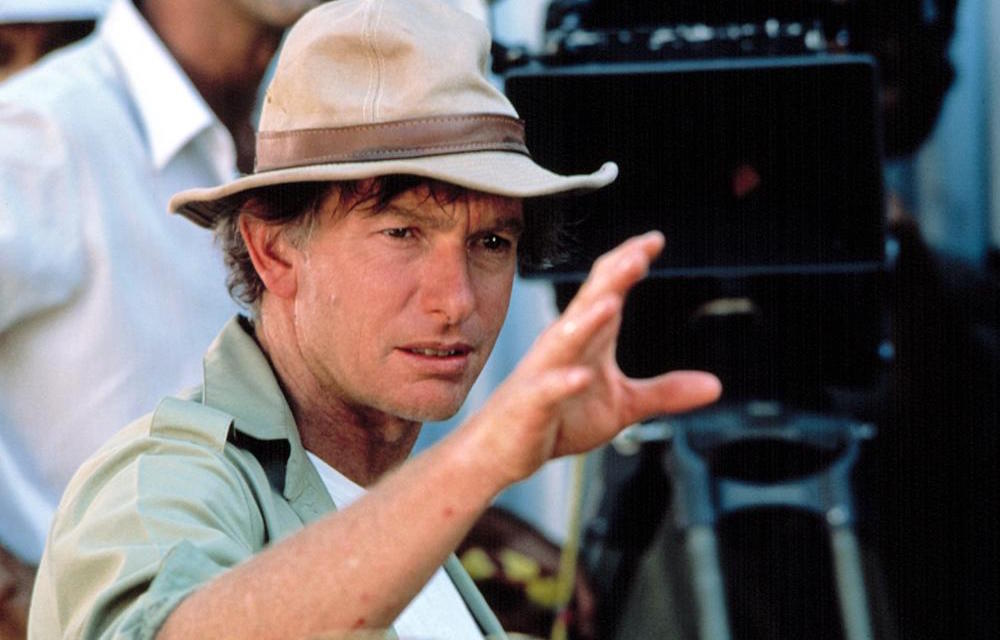
Directed by Peter WeirPeter Weir rose to prominence during the Australian New Wave movement with 1974's The Cars That Ate Paris and 1975's Picnic At Hanging Rock. He continued making films in Australia including 1977's The Last Wave, 1981's Gallipoli and 1982's The Year of Living Dangerously.

When he went to the USA, he continued his streak with 1985's Witness, 1989's Dead Poets Society, 1998's The Truman Show, and many others. Nearly every film he has made has slipped effortlessly into pop culture consciousness. But what is it about his films that Kriv enjoys so much?

Join us on August 30 when we find out!

Our next filmmaker of the month, Peter Weir

Harkins-Cross On Fassbinder

Harkins Cross On Fassbinder

“At the end of the film he just picks up a lampshade and bludgeons everyone in his house to death, and it's this awful despairing moment but it's kind of funny as well, like that's the most levity you can hope for in a Fassbinder film.”

Given he appears to have influenced everyone from Quentin Tarantino to Lars von Trier, we don't talk about Rainer Werner Fassbinder nearly enough.

Fassbinder died at the shockingly young age of 37, and yet his output was prodigious: forty feature films, two television series, multiple short films, stage plays, radio plays, and performances in numerous films, by both himself and others.

So who was this mysterious, workaholic figure of the German New Wave? Rebecca Harkins-Cross joins us for a discussion that will be of interest to both Fassbinder experts and those who have never heard of him before.

But before we dig into Fassbinder, we look back at some of the films of this past month, including Steven Spielberg and Melissa Mathison's adaptation of Roald Dahl's classic The BFG, the continuing adventures of the USS Enterprise in Star Trek Beyond, and Paul Feig's reboot of Ghostbusters. Our reactions to these films may surprise you.

For further reading, check out Fassbinder's own top ten films of all time to get an idea of which films and filmmakers influenced him.

And finally, we take our research very, very seriously on Hell Is For Hyphenates. It's not enough to simply watch the films, we now travel to the global locations where key works were filmed! A few months ago, Lee checked out the place that one of Fassbinder's best-known works was named for:

Lee takes the Fassbinder prep way too seriously and visits Berlin Alexanderplatz

Outro music: “I Can’t Control Myself”, written by Reg Presley and performed by The Troggs, from Das Klein Chaos (1966)

Download or stream the episode from our website, listen via Stitcher Smart Radio, or subscribe on iTunes!

Hell Is For Hyphenates – July 2016

Writer, editor and critic Rebecca Harkins-Cross joins the Hyphenates to talk some of the key films of July 2016, including Steven Spielberg’s The BFG, Justin Lin’s Star Trek Beyond and Paul Feig’s Ghostbusters. Then Rebecca takes us through the extraordinary, unbelievable filmography of German New Wave’s enfant terrible writer/director/actor Rainer Werner Fassbinder.

The Rainer Werner Fassbinder Cheat Sheet

Rainer Werner Fassbinder

Want to become an instant expert in our filmmaker of the month without committing yourself to an entire filmography? Then you need the Hell Is For Hyphenates Cheat Sheet: we program you a double that will not only make for a great evening's viewing, but bring you suitably up-to-speed before our next episode lands…

RWF Films

ALI: FEAR EATS THE SOUL (1974) and CHINESE ROULETTE (1976)

This was a particularly difficult cheat sheet to do. Not because there weren't enough options, but because there were too many. There are so many combinations of great Fassbinder films that would be equally valid, but we're pretty happy programming this particular pairing. We kick your evening off with Ali: Fear Eats the Soul. For a director with a reputation as an edgy provocateur, it's something of a surprise to see a film as gentle and beautiful as Ali. It follows the unlikely relationship that forms between a 60-year-old widowed cleaning woman, and a younger Moroccan immigrant. Fassbinder's love of Douglas Sirk films are apparent, and Ali is often hailed as his masterpiece. Follow that up with Chinese Roulette, a tremendously-engaging psychological thriller about a married man and woman who simultaneously discover they are cheating on one another. They decide to try to be civil and spend the weekend together as a foursome, but things are complicated when their young daughter and her governess unexpectedly appear. It's dramatic, thrilling and a must-watch.

Substitutions: Can't get or have already seen Ali: Fear Eats the Soul? Then seek out 1975's Fox and his Friends, a superb drama starring Fassbinder as a decidedly unsophisticated circus performer who wins the lottery and falls in love with the son of an industrialist. If you can't get or have already seen Chinese Roulette, check out 1972's The Bitter Tears of Petra Von Kant. The film takes place within the bedroom of the titular Petra, a fashion designer who falls obsessively in love with a cunning, working-class young woman seeking a career in modeling. It's a twisty psychological drama ever bit as compelling as Chinese Roulette.

The Hidden Gem: Want to see something from off the beaten path? Check out 1973's World on a Wire. This was Fassbinder's only science fiction film, adapted from Daniel F Galouye's Simulacron-3 and made as a two-part TV series. You'll be amazed at how many modern science fiction classics were so obviously inspired by this fantastic work.

The next episode of Hell Is For Hyphenates, featuring Rebecca Harkins-Cross talking Rainer Werner Fassbinder, will be released on the morning of July 31 (AEST).

Our Next Hyphenate Rebecca Harkins-Cross

Rebecca Harkins Cross
Writer, critic and July 2016 Hyphenate Rebecca Harkins-Cross

It’s okay, you’re not experiencing deja vu. Well, look, you might be, we can’t know what’s inside your head. But yes, we have announced Rebecca a couple of time in the past, and have been thwarted both times (one time by a legit volcano). But after checking on all the potential volcanos around the world, we felt confident that this would be the month we would have her on board!

Rebecca is the film editor at The Big Issue, the theatre critic for The Age, and writes regularly for The Lifted Brow. Her work has also appeared in The Saturday Paper, The Australian, Meanjin, The Lifted Brow, Crikey, Senses of Cinema, and numerous other. And we are very excited to have her on board.

So which prolific director has Rebecca picked?

None other than German New Wave director Rainer Werner Fassbinder!
Directed By Fassbinder

Fassbinder is a bit of a legendary figure; prolific and influential, and yet still not really a household name, even in the households of many affirmed film fanatics.

Despite only living to 37, Fassbinder managed to make a whopping forty feature films, and that was in addition to his two television series, three short films, twenty-four stage plays, four radio plays, and plenty more. His output was prodigious, especially given he stopped around the age that so many get started.

If you're a fan of his work, this show should be right up your alley. If you've only seen a couple of his films, or even if you've never seen any, or even if you've never heard of him, then it'll be up your alley too: this episode will be a crash course in who Fassbinder was and what made him such an iconic filmmaker.

But what is it about Fassbinder and his films that appeals to Rebecca? Tune in on July 31 to find out!

Rainer Werner Fassbinder
Our next filmmaker of the month, Rainer Werner Fassbinder

Lewis On Del Toro

Lews On Del Toro

“I feel like you're breaking through an invisible wall when you get to go on a podcast that you're a fan of.”

We're very happy that Maria is a fan of the show, but does that explain why she tries to rename the show less than ten minutes into the recording? You'll have to listen to this month's episode of Boob Support to find out.

We think you'll enjoy this episode. We look at this month's films (according to UK release dates), which include Shane Black's detective buddy comedy The Nice Guys, Studio Ghibli's animated drama When Marnie Was There, and the Australian adaptation of Timothy Conigrave's memoir Holding the Man.

Then, we look at something relatively unprecedented in the world of intellectual property: Paramount has introduced guidelines for Star Trek fan films, and if the films adhere to these rules they will not be threatened with legal action. Is this a restriction on creativity, or is Paramount doing fans a solid? We debate this point, and you can scroll down to check out the actual rules below.

Finally, Maria takes us through the cult films of the beloved filmmaker, Guillermo del Toro! From science fiction to fantasy horror to dark gothic fairytales, del Toro is steeped in genre cinema, and we look at what it is about his work that has won over so many.

There are many reasons to listen to this, including a piece of inside gossip about an unrealised del Toro film that we don’t think has been revealed before, as well as the time Maria quite literally ran into GDT.

We also talk about GDT being known as much for his love of film as the films he is made, and this tweetstorm he did a month ago in which he expresses his love for the works of John Carpenter (a filmmaker we also expressed our love for only a few short months back!) is a great example of this.

Oh, and in the show we speculate (jokingly) that Russell Crowe might not have been cool with potential homoeroticism in The Nice Guys. In fairness to Crowe, we should point out he did play an openly gay dude in 1994's The Sum of Us. (Time for a sequel? The Multiplication of Us could totally work.)

Okay, those Star Trek fan film guidelines can be found by clicking here, or by reading down the page. What do you make of these?

CBS and Paramount Pictures are big believers in reasonable fan fiction and fan creativity, and, in particular, want amateur fan filmmakers to showcase their passion for Star Trek.  Therefore, CBS and Paramount Pictures will not object to, or take legal action against, Star Trek fan productions that are non-professional and amateur and meet the following guidelines.

Guidelines for Avoiding Objections:


The fan production must be less than 15 minutes for a single self-contained story, or no more than 2 segments, episodes or parts, not to exceed 30 minutes total, with no additional seasons, episodes, parts, sequels or remakes.

  • The title of the fan production or any parts cannot include the name “Star Trek.” However, the title must contain a subtitle with the phrase: “A STAR TREK FAN PRODUCTION” in plain typeface. The fan production cannot use the term “official” in either its title or subtitle or in any marketing, promotions or social media for the fan production.
  • The content in the fan production must be original, not reproductions, recreations or clips from any Star Trek If non-Star Trekthird party content is used, all necessary permissions for any third party content should be obtained in writing.
  • If the fan production uses commercially-available Star Trekuniforms, accessories, toys and props, these items must be official merchandise and not bootleg items or imitations of such commercially available products.
  • The fan production must be a real “fan” production, i.e., creators, actors and all other participants must be amateurs, cannot be compensated for their services, and cannot be currently or previously employed on any Star Trekseries, films, production of DVDs or with any of CBS or Paramount Pictures' licensees.
  • The fan production must be non-commercial:
    • CBS and Paramount Pictures do not object to limited fundraising for the creation of a fan production, whether 1 or 2 segments and consistent with these guidelines, so long as the total amount does not exceed $50,000, including all platform fees, and when the $50,000 goal is reached, all fundraising must cease.
    • The fan production must only be exhibited or distributed on a no-charge basis and/or shared via streaming services without generating revenue.
    • The fan production cannot be distributed in a physical format such as DVD or Blu-ray.
    • The fan production cannot be used to derive advertising revenue including, but not limited to, through for example, the use of pre or post-roll advertising, click-through advertising banners, that is associated with the fan production.
    • No unlicensed Star Trek-related or fan production-related merchandise or services can be offered for sale or given away as premiums, perks or rewards or in connection with the fan production fundraising.
    • The fan production cannot derive revenue by selling or licensing fan-created production sets, props or costumes.
  • The fan production must be family friendly and suitable for public presentation. Videos must not include profanity, nudity, obscenity, pornography, depictions of drugs, alcohol, tobacco, or any harmful or illegal activity, or any material that is offensive, fraudulent, defamatory, libelous, disparaging, sexually explicit, threatening, hateful, or any other inappropriate content. The content of the fan production cannot violate any individual's right of privacy.
  • The fan production must display the following disclaimer in the on-screen credits of the fan productions and on any marketing material including the fan production website or page hosting the fan production:
  • “Star Trekand all related marks, logos and characters are solely owned by CBS Studios Inc. This fan production is not endorsed by, sponsored by, nor affiliated with CBS, Paramount Pictures, or any other Star Trek franchise, and is a non-commercial fan-made film intended for recreational use.  No commercial exhibition or distribution is permitted. No alleged independent rights will be asserted against CBS or Paramount Pictures.”
  • Creators of fan productions must not seek to register their works, nor any elements of the works, under copyright or trademark law.
  • Fan productions cannot create or imply any association or endorsement by CBS or Paramount Pictures.

Outro music: score from Pan’s Labyrinth (2006), composed by Javier Navarrete

You can stream or download this episode on our website, listen at Stitcher Smart Radio, or subscribe via iTunes!
Hell Is For Hyphenates – June 2016

Author and journalist Maria Lewis joins us to look back at the films of June 2016 (according to UK release dates!): Shane Black’s The Nice Guys, Studio Ghibli’s latest animated drama When Marnie Was There, and the adaptation of Timothy Conigrave’s memoir Holding the Man. They then check out the unprecedented rules that Paramount has announced for Star Trek fan films. Finally, Maria enthuses about the films of modern genre favourite Guillermo Del Toro.